
Offshore Cryptocurrency Exchanges Enable AML Gaps and Sanctions Evasion, FATF Cautions
According to a newly released FATF report, cryptocurrency exchanges based in offshore jurisdictions are creating vulnerabilities in anti-money laundering systems, complicating regulatory efforts to monitor illegal transactions.

The Financial Action Task Force (FATF) has released a new report highlighting the dangers posed by offshore-based crypto service providers, warning that these entities facilitate money laundering, enable sanctions circumvention and contribute to various forms of illicit financial operations.
According to the report, which carries the title "Understanding and Mitigating the Risks of Offshore Virtual Asset Service Providers (oVASPs)," the FATF highlighted how certain offshore entities take advantage of disparities and weaknesses in regulatory frameworks and supervisory oversight, creating obstacles for authorities attempting to track transactions and implement Anti-Money Laundering (AML) and Counter-Terrorist Financing regulations.
"As a result, effective international co-operation may not be possible, including with the relevant oVASP supervisor, thereby limiting the effectiveness of domestic risk-mitigation measures," the report said.
According to the watchdog, the challenge becomes even more complex due to the multi-jurisdictional nature of many offshore cryptocurrency businesses. These entities might be legally registered in one nation, maintain their technical infrastructure and servers in a different country, and simultaneously provide services to a global customer base via internet-based platforms, creating confusion among regulators about jurisdictional authority and oversight responsibility.
Regulators struggle to track offshore crypto
The FATF additionally noted that numerous nations face difficulties in detecting offshore platforms that deliver services to residents within their borders. In the absence of a physical legal entity or office in the country, regulatory authorities often lack adequate insight into these operations or the financial transactions they facilitate.
In order to tackle this challenge, FATF encouraged nations to enhance their regulatory supervision of cryptocurrency companies that provide services to their populations, regardless of whether these entities maintain their headquarters in foreign territories.
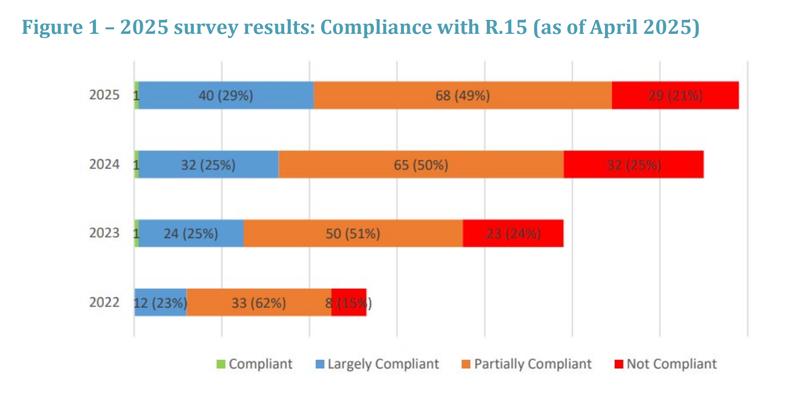
The international organization put forward recommendations that national governments should mandate offshore VASPs to complete registration procedures or secure appropriate licenses when they provide services to citizens and residents within domestic markets. The organization further emphasized the need for enhanced coordination and collaborative efforts between regulatory bodies and law enforcement institutions operating across international boundaries.
FATF flags P2P stablecoin transfers
This recent warning comes on the heels of another FATF report published last week focusing on stablecoins and unhosted wallets, which highlighted concerns that peer-to-peer transfer mechanisms can undermine AML monitoring systems when financial transactions take place outside the purview of regulated intermediary institutions such as exchanges or custodial service providers.
According to the FATF, this particular framework generates vulnerabilities in AML monitoring systems, especially as stablecoins continue to gain traction in the payments sector and cross-border money transfer services. The international watchdog called upon member countries to conduct comprehensive risk evaluations and implement appropriate protective measures.