
BTC Approaches $74K Threshold While Market Indicators Point to Continued Bearish Trend
Despite displaying impressive resilience during the week, Bitcoin's tight connection to technology equities and responsive spot ETF movements indicate the bearish phase remains active.

Essential highlights:
- Bitcoin maintains its position above $71,000 amid disappointing US economic indicators and the ongoing US and Israel-Iran conflict, pushing investors toward assets with limited supply.
- The correlation between technology stocks and BTC, combined with climbing oil prices, hints that the 5-month downward movement from $126,000 may still be in progress.
Bitcoin (BTC) surged past $73,000 on Friday, effectively securing the 70,000 level as support throughout the week. This upward movement coincided with the United States releasing disappointing economic performance figures, sparking worries about a looming recession as the Iranian conflict persists without resolution.
Despite socio-economic factors and institutional capital inflows potentially contributing to Bitcoin's upward trajectory, market participants continue to debate whether the bearish cycle has genuinely concluded.
Economic instability, increasing investor demand for BTC support Bitcoin's surge
Between October and December 2025, the US economy expanded by only 0.7%, representing a substantial decrease from earlier projections, as stated in a report published by the US Commerce Department on Friday. Although the conclusive report is scheduled for release on April 9, the likelihood of a recession extending through 2026 has grown, pushing investors to exit US Treasuries.
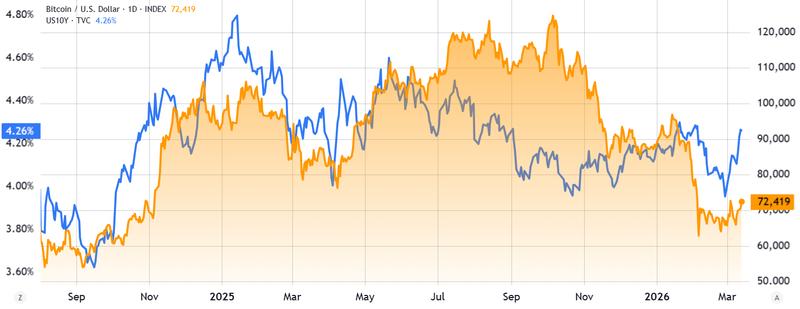
The US 10-year Treasury yields climbed to 4.26%, indicating that investors are requiring greater returns to maintain ownership of these assets. The simple threat of additional liquidity prompts traders to pursue refuge in assets with limited availability. This offers a partial explanation for why the S&P 500 remained just 5% beneath its record high notwithstanding the deteriorating economic landscape.
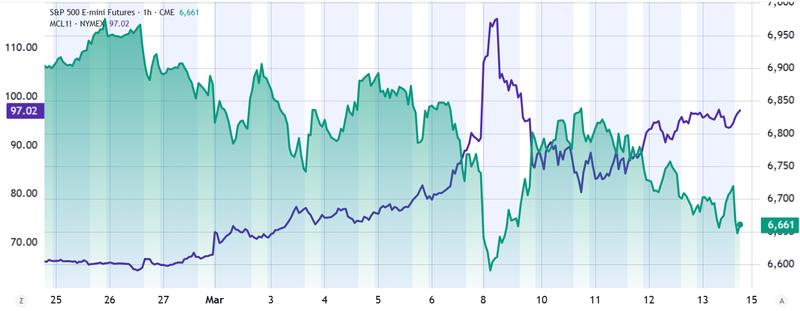
The S&P 500 futures dropped on Monday to their lowest points in more than three months following a brief spike in oil prices to $119.50. The United States' decision to temporarily permit the acquisition of Russian oil currently stranded at sea contributed to reducing some of these concerns. This action, which US Treasury Secretary Scott Bessent announced on Friday, provided relief to markets' immediate worries.
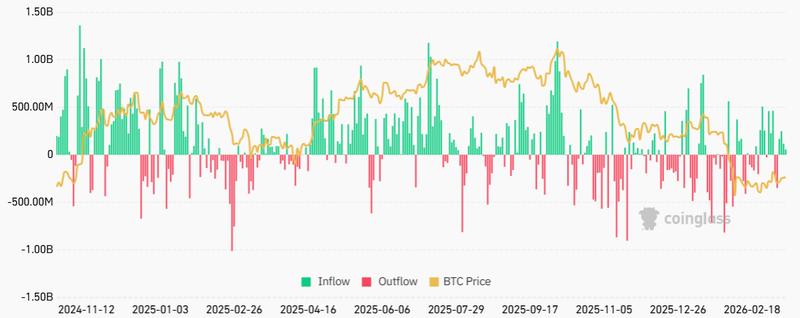
Institutional appetite for Bitcoin has been identified as another possible catalyst behind the recent upward price movement. Exchange-traded funds (ETFs) based on spot prices experienced four consecutive trading days of net inflows amounting to $583 million, while industry analysts project that Strategy (MSTR) amassed more than $900 million via the yield-bearing STRC financial instrument.
Bitcoin's price action shifted to bullish territory, yet the bearish market persists
Initially, the economic environment appears to indicate liquidity additions and growing institutional participation in Bitcoin. Nevertheless, this doesn't automatically signify that the five-month downward correction that followed the $126,000 high in October 2025 has reached its conclusion.
The 50-day correlation between Bitcoin and the Nasdaq 100 stands at 84%. With mounting worries regarding persistent inflation and stagnant economic expansion, the probability of a stock market retreat grows. Market participants are hesitant to utilize Bitcoin as a protective hedge, particularly considering its recent inferior performance relative to gold.
Compounding these concerns, oil prices continue to trade $30 above the levels observed prior to the commencement of the Iran war. These elevated fuel expenses negatively impact consumer expenditure and generate inflationary pressures, thereby diminishing the available capital that retail investors can allocate to cryptocurrency investments.
Capital inflows to the spot BTC ETFs experienced a significant increase as $2.14 billion flowed into the ETFs during the period from Feb. 24 to March 4, fueling a 14% price increase. Nevertheless, prices declined 10% during the subsequent four days as these flows moved in the opposite direction. This pattern indicates spot ETF activity is merely responding to Bitcoin's price movements instead of serving as a predictive indicator.
Whether Bitcoin maintains its position above $70,000 throughout the weekend might not necessarily alter investor outlook. Although a five-week period of consolidation and multiple tests of the $64,000 support level demonstrate bulls' resilience, the latest price movements haven't provided a definitive signal indicating a genuine breakout.
This article does not contain investment advice or recommendations. Every investment and trading move involves risk, and readers should conduct their own research when making a decision.