
Blockchain Networks Race to Dominate Perpetual Futures Trading
Blockchain platforms are rolling out their own perp DEXs in a bid to attract trading volume, though past patterns indicate liquidity typically concentrates on just a few dominant exchanges.

The newest chapter in cryptocurrency's infrastructure competition has blockchains vying to become home to perpetual futures trading platforms. Numerous networks are now developing or nurturing their own decentralized derivatives marketplaces, despite the continued supremacy of centralized alternatives.
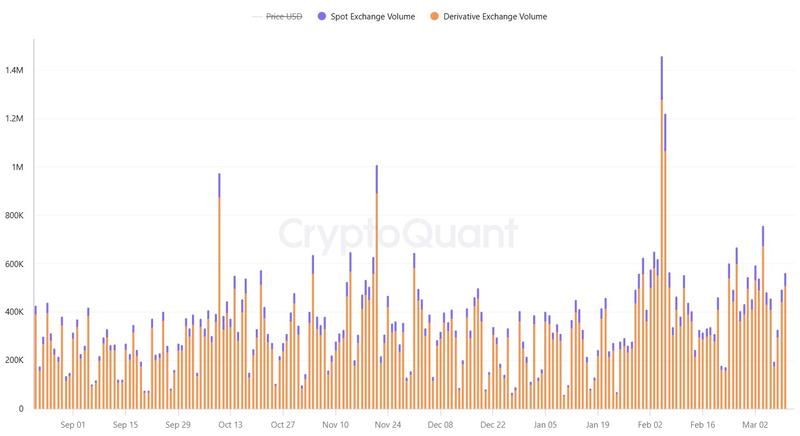
The derivatives sector constitutes the lion's share of current cryptocurrency trading volume, frequently representing the bulk of total market activity. Data from CryptoQuant shows that on Tuesday, spot trading volume for Bitcoin (BTC) on centralized exchanges hit approximately 55,230 BTC, whereas derivatives volume surpassed 506,600 BTC.
According to Nina Rong, executive director of growth at BNB Chain, perpetual decentralized exchanges—commonly known as perp DEXs—have emerged as essential infrastructure by providing traders, market makers and institutional participants with pathways to leveraged trading products.
"When these players are active on a chain, they bring liquidity, hedging activity, and arbitrage flows, which significantly increase overall onchain volume and strengthen the ecosystem's trading environment," she told Cointelegraph.
Despite multiple blockchains pursuing their own derivatives platforms, simply launching such a venue doesn't guarantee substantial or enduring trading volumes. Historical patterns show that derivatives liquidity tends to gather around a limited number of leading exchanges instead of distributing uniformly across various platforms.
Blockchains begin building or incubating their own perp DEXs
The reasoning behind this trend is fairly clear-cut. Given that derivatives account for a substantial portion of cryptocurrency trading volumes, hosting a perp DEX can potentially draw greater trading activity to a blockchain network.
"In many ways, it has become a competitive race: the chains that host the largest number of successful derivatives platforms are more likely to attract and sustain higher trading volume within their ecosystem," said Rong.
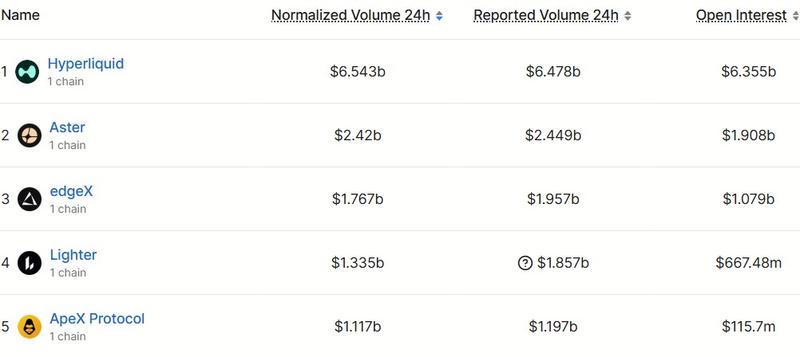
BNB Chain has chosen Aster as its platform of choice. DeFiLlama data from Thursday showed Aster ranked second in terms of open interest among perpetual DEXs. According to Rong, Aster's growth trajectory has bolstered BNB's capacity to preserve its position in the market.
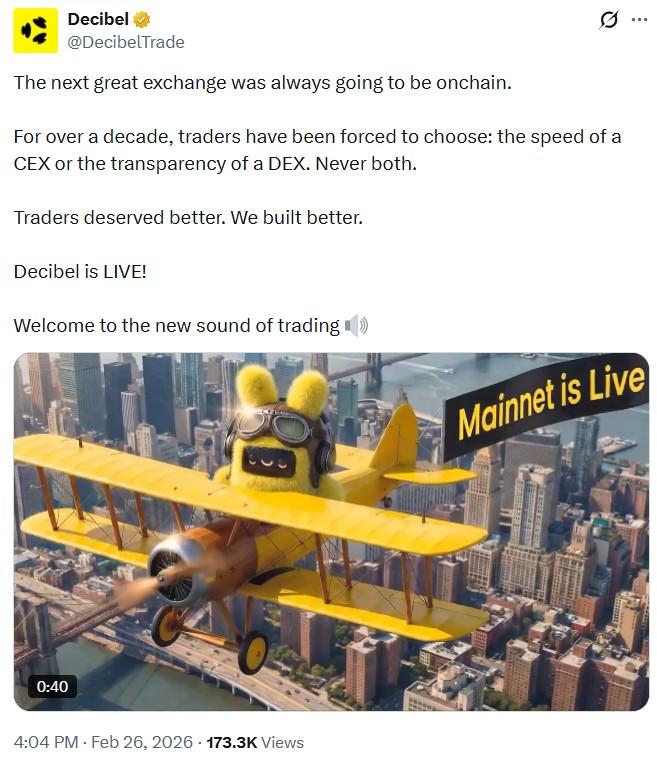
Rather than waiting for external development teams to choose their infrastructure, certain blockchain networks are proactively nurturing perp DEXs in-house. Decibel represents one such case, having launched on the Aptos mainnet on Feb. 26.
"What you actually see in the crypto ecosystem as a whole is different L1s and different blockchains starting to think about what is actually going to use the block space," Brylee Whatley, the head of Decibel Foundation, told Cointelegraph.
"A lot of L1 teams realize they are in the best position to understand the mechanics of their own chains and build applications on top of them," he said.
According to Whatley, Decibel wasn't merely following the recent wave of blockchains racing to deploy perp DEXs. The Aptos team had been cultivating Decibel for roughly a year, well ahead of the period when Hyperliquid, Aster and Lighter began competing for market leadership.
Liquidity tends to consolidate around dominant venues
Simply deploying a perp DEX offers no assurance of continuous, abundant liquidity. Stephan Lutz, CEO of BitMEX, points out that derivatives trading has historically demonstrated a tendency to concentrate on a limited number of platforms.
"All markets (derivatives and spot) rely heavily on market makers and strong risk management systems. These participants usually favor platforms that already have liquidity and a track record," Lutz told Cointelegraph.
"This means in the long run, it is inefficient to separate trading venues per chain or coin. Given that traders often trade across multiple chains and coins, we believe that consolidation is an almost natural process."
Traditional financial markets have witnessed a comparable trend unfold over the last thirty years. The transition to electronic trading during the 1990s sparked an influx of new exchanges and alternative trading platforms. Eventually, liquidity frequently reconcentrated at venues offering deeper order books, tighter spreads and more dependable infrastructure, based on research published by the Bank of International Settlements.
In traditional finance today, Chicago Mercantile Exchange (CME) commands much of the futures market activity in the United States. The Intercontinental Exchange holds the leading position in energy derivatives, while Eurex Exchange serves as a primary venue for European index futures.
Within the cryptocurrency space, the preponderance of Bitcoin and Ether (ETH) derivatives trading has historically clustered on several major exchanges including Binance, OKX, Bybit and Deribit. In more recent times, decentralized venues like Hyperliquid have risen as prominent contenders in the perpetual futures arena.
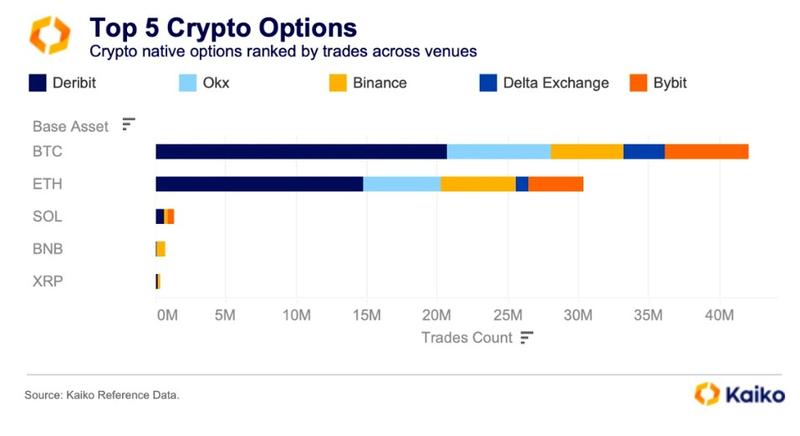
According to Sidrah Fariq, head of retail sales at Deribit, centralized exchanges maintain certain benefits including superior order handling, risk management capabilities, liquidity depth and trading infrastructure, whereas entirely onchain platforms face constraints from block times that result in delays and slippage, she told Cointelegraph.
"In addition, centralized exchanges can offer greater privacy, which can be important for institutional traders," she added.
On the other hand, advocates for onchain trading platforms maintain that decentralization and composability enable derivatives liquidity to integrate naturally within particular ecosystems.
"Your order book is on the blockchain and verifiable, and order matching follows price-time priority set by the blockchain itself," said Decibel's Whatley.
"When you send an order you know exactly how it's getting matched and that it's entering the order book fairly instead of being routed somewhere else," he said.
The "U" shape of derivatives markets
The future trajectory of derivatives markets may hinge on whether perp DEXs manage to distinguish themselves across different networks or merely duplicate identical products. According to Rong of BNB Chain, blockchain networks providing distinctive characteristics may possess a competitive edge.
"Chains win by offering unique yield opportunities or distinctive trading venues that are not available elsewhere," she said. However, if comparable platforms proliferate across all networks, "the result will likely be fragmentation across multiple ecosystems, rather than a single dominant hub."
Simultaneously, underlying market forces may ultimately drive liquidity back toward a more concentrated set of trading venues. According to Lutz from BitMEX, market makers along with professional trading operations tend to congregate where they can allocate capital most effectively and handle risk across numerous assets without navigating between multiple platforms.
"If liquidity is too spread out across several derivatives platforms, it often leads to wider spreads and more volatile markets," he said.
This underlying dynamic could generate what Lutz characterized as a cyclical pattern for blockchain ecosystems launching their own derivative trading platforms.
"We expect a U-shaped technical liquidity development per ecosystem," he said, where newly launched venues experience an initial spike in trading activity that subsequently diminishes over time.
Perpetual futures marketplaces are now shaping where liquidity concentrates, how market participants hedge their risk exposure and which platforms emerge as dominant forces in trading activity. With blockchain networks competing fiercely to host these markets, derivatives trading is progressively becoming fundamental infrastructure within cryptocurrency ecosystems.