Small Solana validators exit as network sees 68% plunge in node operators
The number of Solana validators has plummeted 68% from 2023 levels as escalating operational expenses and zero-commission competition force independent node operators to shut down.

The validator count on the Solana blockchain network has experienced a dramatic decline throughout the last three years, sparking worries about network decentralization as the financial realities of operating validation nodes force smaller participants to exit the ecosystem.
Data from Solanacompass reveals that Solana's validator population plummeted 68% from its all-time high of 2,560 validator nodes recorded in March 2023 down to just 795 validators as of Wednesday.
These validators serve a critical function by adding fresh blocks to the chain and confirming transactions within proposed blocks, representing an essential component in maintaining the operations of this decentralized ledger system.
Although a portion of this decrease can be attributed to the elimination of dormant or "zombie" nodes that were no longer active, participants within the industry indicate that escalating operational expenses combined with intense fee-based competition are progressively driving smaller validation operations out of business.
A Solana validator operator running an independent node who goes by the username Moo explained in an X platform post that numerous small-scale validators are contemplating shutting down their operations due to the deteriorating economic conditions.
Many small validators are actively considering shutting down (including us). Not due to lack of belief in Solana, but because the economics no longer work.
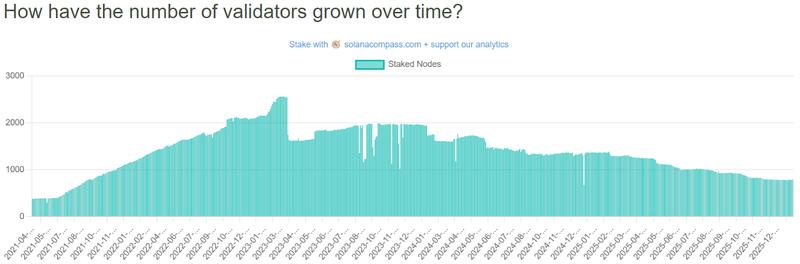
According to Moo, larger validation operations that implement 0% commission structures are eliminating profitability for smaller validators, rendering it financially impossible to maintain continued node operations.
We started validating to support decentralization. But without economic viability, decentralization becomes charity.
Moo
This emerging pattern indicates that independent retail validators are no longer able to maintain sustainable participation in network security operations. The data further demonstrates that Solana's validator nodes are progressively being controlled by larger institutional operators, eliminating smaller participants from the ecosystem and generating potential concerns regarding the overall decentralization level of the network.
Solana's Nakamoto Coefficient sees 35% decline
Coinciding with the decreasing validator numbers, Solana's Nakamoto Coefficient has also experienced a 35% reduction throughout the identical timeframe, dropping from 31 in March 2023 down to 20 as of Wednesday, based on data from Solanacompass.
The Nakamoto Coefficient functions as a metric for blockchain decentralization by calculating the smallest number of independent entities, including validators or miners, needed to compromise the network. This declining figure indicates that the distribution of staked Solana supply is becoming increasingly concentrated and the network is experiencing reduced decentralization.
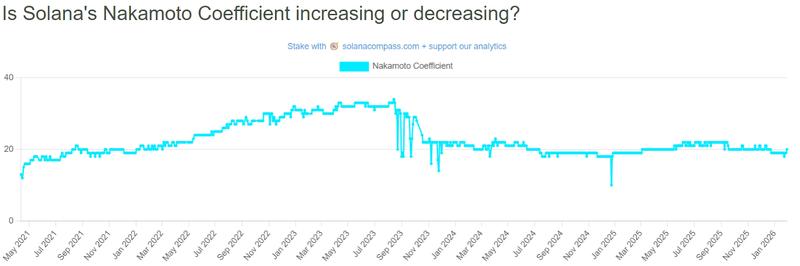
One explanation for this deterioration could be the increasing expenses associated with operating a validator node that generates profit, which have risen substantially throughout the previous three years in tandem with the appreciation of the Solana (SOL) token price.
Not including hardware acquisition and server maintenance expenses, validator operators require a minimum initial capital investment of $49,000 worth of SOL tokens for their first year of operation, necessitating a minimum of 401 SOL annually to cover voting fees and maintain operational status.
This financial requirement exists because validators must engage in the protocol's consensus mechanism, obligating them to broadcast a vote transaction for every block that the validator validates, which can accumulate costs of up to 1.1 SOL per day, as documented in technical materials published by Solana validator Agave.
Cointelegraph reached out to the Solana Foundation requesting comment on these developments, but had not received a response by the time of publication.