Historical Yen Interventions Preceded 30% Bitcoin Drops — Here's What Comes Next
Historical data reveals BTC experienced 30% corrections following yen market interventions before surging over 100%, a recurring trend investors are monitoring amid renewed Japanese intervention speculation.

Should the increasing speculation surrounding Japanese yen (JPY) intervention materialize into concrete action, Bitcoin (BTC) could be headed for another significant correction, as historical intervention events have consistently aligned with approximately 30% declines in BTC valuation.
Key takeaways:
- Historical Japanese yen market shocks resulted in approximately 30% BTC declines, followed by recoveries exceeding 100%.
- Blockchain-based metrics indicate Bitcoin has not yet established a confirmed bottom.
Historical yen pattern reveals 30% corrections preceding major rallies
Japanese yen intervention occurs when governmental authorities in Japan enter foreign exchange markets with the goal of affecting currency valuation, typically through the sale of US dollars and purchase of yen to halt the currency's rapid depreciation.
Market participants remained vigilant throughout the weekend following news that the New York Fed executed "rate checks" in the USD/JPY pair, a move frequently interpreted by currency traders as an indicator of impending coordinated intervention.
This development came after official statements highlighting the importance of close currency coordination between the United States and Japan.
During the two previous intervention periods, BTC experienced approximately 30% sell-offs from local peak levels before establishing support, attributed to the liquidation of "yen carry trades."
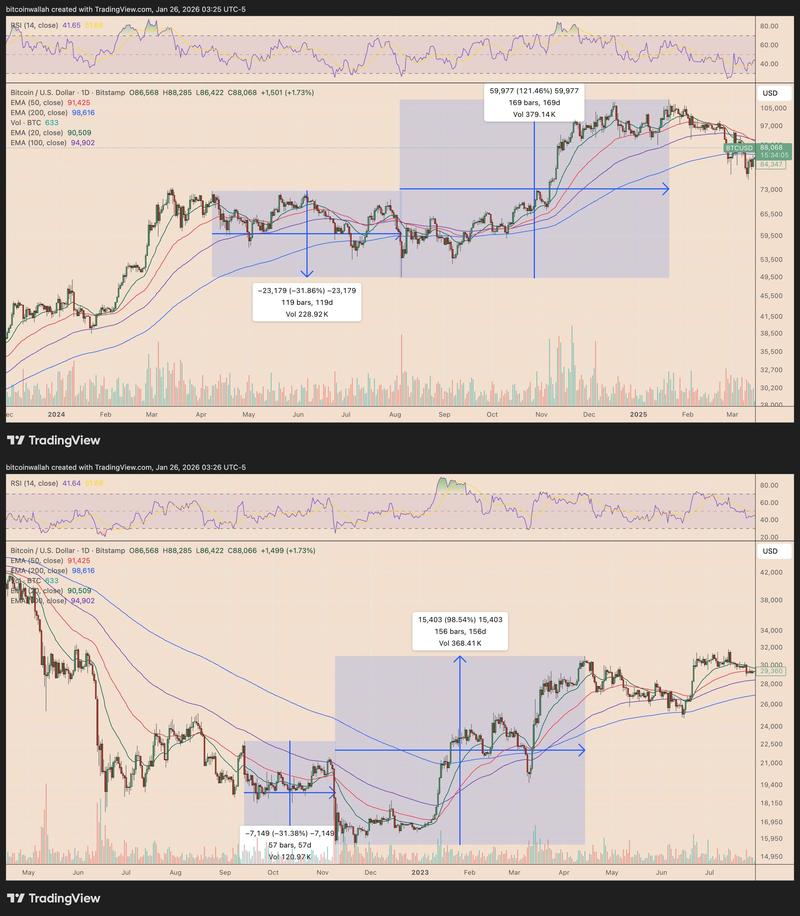
In each historical instance, the subsequent recovery following the initial shakeout ultimately transformed into a sustained rally delivering gains of 100% or greater.
Analyst Mikybull Crypto stated "The same scenario is about to occur now," further noting that the BTC price "will first dump and rally afterward."
Should the yen pattern repeat as historical data suggests, Bitcoin faces potential decline toward the $65,000–$70,000 price zone.
Blockchain data supports continued bearish perspective
According to analytics platform Alphractal, Bitcoin has yet to experience complete capitulation and has not established a "true bottom" in the current cycle.
Among the metrics supporting this assessment is the net unrealized profit/loss (NUPL) indicator, which monitors whether Bitcoin investors are currently holding unrealized gains or unrealized losses on their positions.
As of Monday's analysis, NUPL showed a declining trend but maintained a position above the zero threshold, indicating the overall market continues to hold net "in profit" positions despite the recent price correction.
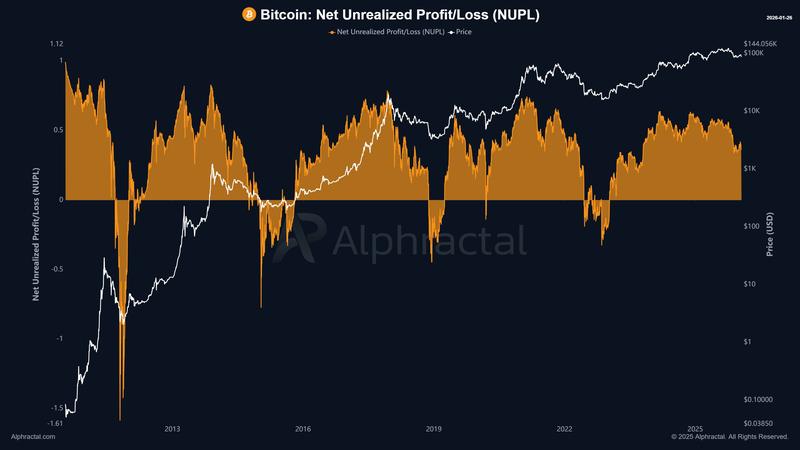
Throughout previous market cycles, Bitcoin established its final bottoms only after the NUPL metric crossed into negative territory. This crossover signaled that the majority of market participants were holding underwater positions, indicating that selling pressure had been substantially exhausted.
According to Cointelegraph's previous coverage, the current supply in profit stands at 62% — representing the lowest reading since September 2024, when Bitcoin was trading near the $30,000 level.
Simultaneously, Bitcoin's delta growth rate has crossed into negative territory.
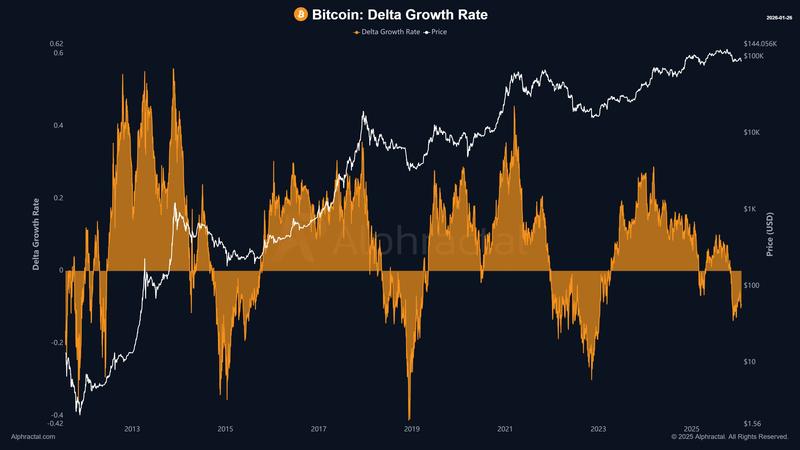
This particular metric establishes a comparison between Bitcoin's current market capitalization and its realized market value.
When this indicator falls beneath zero, it indicates the price is approaching (or has already fallen below) the network's collective cost basis, representing a market environment that is transitioning from speculative activity toward accumulation behavior.
To put it plainly, the available data indicates the market is entering a cooling phase and remains susceptible to additional downward price movement before a sustainable bottom can be established.
According to Alphractal, while this process can prove challenging for investors, it frequently creates "generational buying opportunities," an assessment that aligns with the historical yen-intervention pattern analysis.