A7A5 Stablecoin Builds Alternative Financial Infrastructure for Entities Under Sanctions
The A7A5 stablecoin platform is under scrutiny for allegations of circumventing sanctions, with industry experts suggesting it represents the development of a parallel financial system operating outside conventional restrictions.
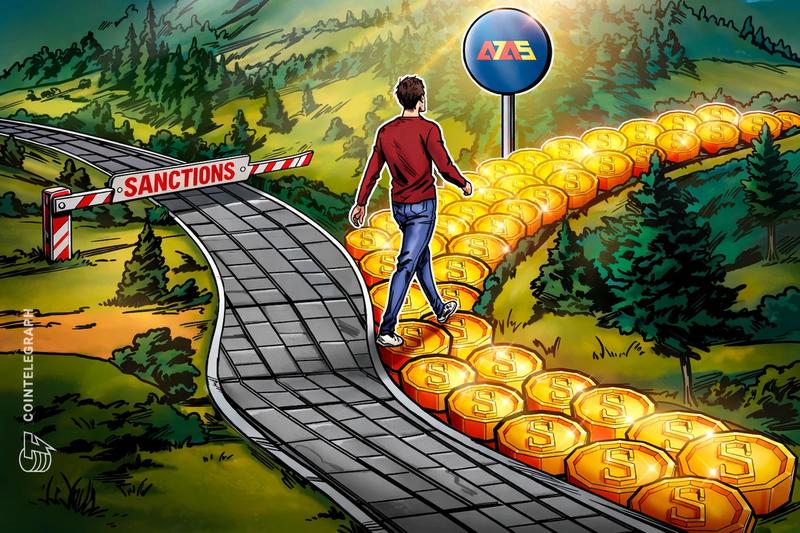
While digital currencies continue their deeper integration into conventional finance, they are simultaneously establishing the infrastructure for a separate, underground economic system operating in parallel.
According to a January analysis published by TRM Labs, illicit and illegal cryptocurrency utilization skyrocketed to a record-breaking $158 billion. A substantial portion of this growth came from digital currency transactions connected to circumventing international sanctions.
The primary driver of this trend was A7A5, a stablecoin pegged to the Russian ruble and introduced by Russian enterprise A7. The A7 wallet cluster was responsible for approximately $39 billion in crypto transactions related to sanctions evasion.
Rather than functioning as a minor, clandestine network for prohibited transactions, A7A5 has enabled commercial activity worth billions of dollars, establishing a "shadow" economic infrastructure powered by cryptocurrency.
Sanctions and the rise of A7A5
Following Russia's invasion of Ukraine in February 2022, the nation encountered extensive sanctions that prohibited the country and its domestic enterprises from accessing the international financial infrastructure.
Visa and Mastercard halted international services for cards that had been issued within Russia, and cards that were issued outside the country ceased working within Russian borders. Access to SWIFT was also blocked for Russian financial institutions, drastically restricting the capacity of Russia-based businesses to engage in international trade.
As these dominant Western payment systems were blocked, replacement solutions emerged. The Russian-developed payment network Mir, which was established in 2017, grew its market presence following the withdrawal of Visa and Mastercard.
Cryptocurrency also became a tool for Russia's international trade activities. In December 2024, Anton Siluanov, Russia's Finance Minister, announced that legislation had been enacted permitting foreign commerce using "digital financial assets" and Bitcoin (BTC) produced within Russia. Although Siluanov discouraged crypto as an investment vehicle, he declared it represented "the future" for international payment settlements.
This set the stage for A7A5. The digital coin made its debut in February 2025 through the A7 financial platform of the same name. Based on information from Astraea Group, a legal and professional services organization, A7 has joint ownership by Ilan Shor, a Moldovan oligarch who is himself under sanctions and living in Russia, and Promsvyazbank (PSB), a state-controlled institution with significant connections to Russia's military-industrial sector.
A network of companies operating in strategically vital industries including oil, gas, metals, chemicals and defense technologies was established by Shor and PSB. Among these entities are A7-Agent, A7 Goldinvest and A71.
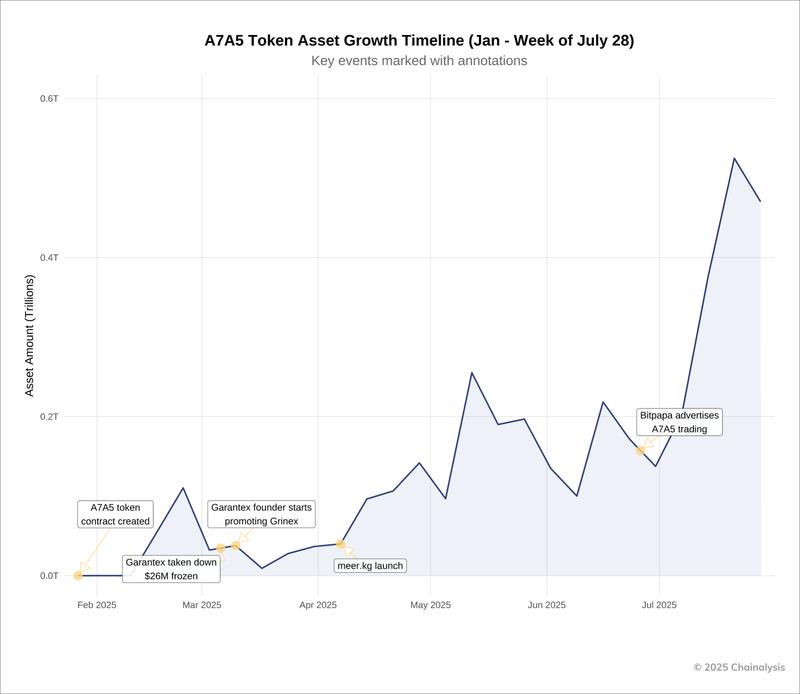
The blockchain contract for A7A5 went live in February 2025 and quickly started being traded on Garantex, a Moscow-located exchange that was later sanctioned and forced to cease operations.
Trade activity has persisted on Grinex. Based on Chainalysis data, this exchange based in Kyrgyzstan is the verified successor to its Russian predecessor and began accepting transfers from Garantex right after its sanctions-driven shutdown.
The token additionally launched on Meer, a platform based in Kyrgyzstan, along with Bitpapa. Even with sanctions imposed by the Office of Foreign Assets Control (OFAC) targeting these platforms, the token's asset expansion surged dramatically throughout 2025.
Creating an alternative, sanctions-proof system
Industry analysts have observed that the illicit cryptocurrency economy has progressed beyond darknet markets and ransomware operations, transforming into a distinct, resilient financial infrastructure serving sanctioned entities.
According to Ari Redbord, global head of policy at TRM Labs, "State-aligned actors, professional criminals and sanctions evaders are no longer experimenting with crypto; they're operating durable financial infrastructure onchain."
He added that during 2025, Russia's illicit cryptocurrency infrastructure "evolved into something far more deliberate ... Wallets tied to the A7 network alone accounted for at least $39 billion, reflecting coordinated, state-aligned financial infrastructure built for sanctions evasion, not broad market use."
Evidence of state coordination with A7A5 and its integration with Russia's wider financial marketplace is further demonstrated through daily asset transaction patterns, as reported by Chainalysis. The overwhelming majority of trading activity takes place from Monday through Friday, with peak trading volumes concentrated at the week's start.
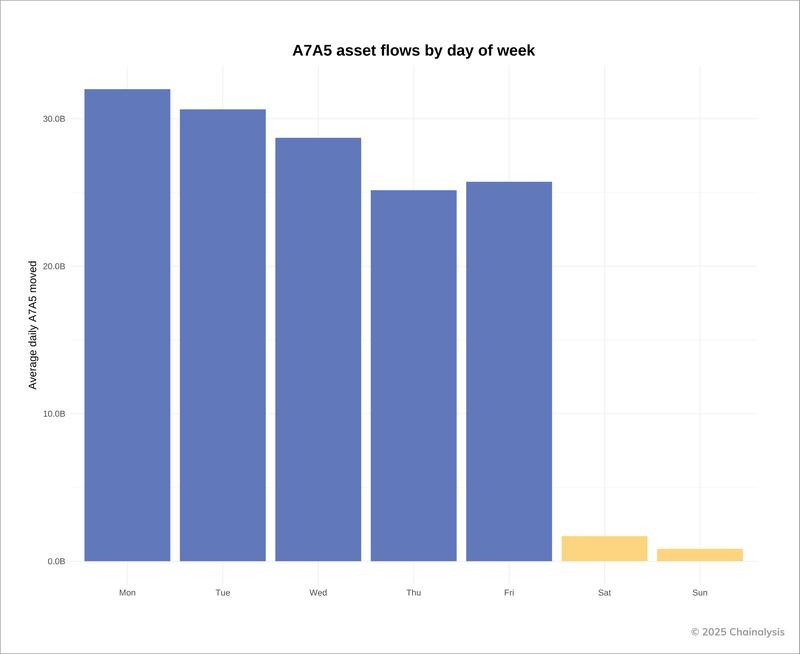
"These trading patterns suggest that A7A5 is primarily being used by businesses operating Monday through Friday, which would align with Russia's legislative goals of facilitating cross-border transfers for Russian businesses via cryptocurrency," wrote Chainalysis.
In December 2025, Andrew Firman, head of national security at Chainalysis, told Radio Free Europe, "The A7A5 token development seems like Russia's next logical step in Russia's efforts to develop alternative payment systems to circumvent sanctions."
The TRM Labs report indicated that transaction volumes involving A7A5 represent not just sanctions evasion but sanctioned activity "more broadly, including state-aligned economic flows."
"These dynamics illustrate how Russia-linked actors are increasingly leveraging crypto — particularly stablecoins and higher-risk services — as part of a long-term, nation-state-backed strategy."
Oleg Ogienko, A7A5's director for regulatory and overseas affairs, has told crypto news media that his company is not violating the laws of Kyrgyzstan, where doing business with Russian companies is not prohibited. He added that the company conducts Know Your Customer and Anti-Money Laundering procedures, as well as audits, and doesn't violate Financial Action Task Force principles.
A company spokesperson previously told Cointelegraph that accusations of sanctions evasion "are politicized and lack factual evidence."
"Companies and individuals globally use the A7A5 ruble stablecoin for export-import contracts, cross-border payments and blockchain projects. Its growth reflects a nondiscriminatory approach to value transfer on the blockchain."
Plans for continued expansion within this sector are evident. In July, A7A5 made an announcement that PSB cardholders will be able to purchase tokens with their cards. It plans to extend this service to other banks in the future.
Within the span of twelve months, A7A5 has developed into a functional alternative payment infrastructure for entities subject to sanctions. Whether there exists sufficient demand to expand this system further remains to be seen.