Cryptocurrency Transaction Patterns Could Forecast Fatal Overdose Spikes Months Early: New Research
New analysis from Chainalysis reveals darknet cryptocurrency transactions totaled $2.6 billion in 2025, with declining payments for fentanyl precursors correlating with subsequent drops in overdose fatalities.

Cryptocurrency transaction patterns linked to digital currency payments could serve as an advance indicator of developing drug epidemics, based on fresh findings from Chainalysis, a leading blockchain analytics company.
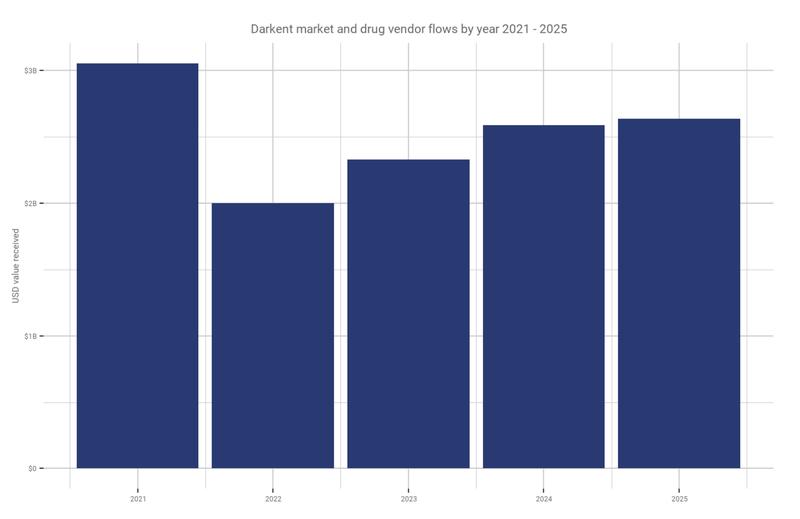
The research, which analyzed illegal marketplace operations throughout darknet narcotics and fraud networks, discovered that cryptocurrency transfers associated with darknet marketplaces totaled approximately $2.6 billion in 2025, demonstrating that digital drug markets remain operational at significant scale even after continuous law-enforcement interventions. Sellers commonly accept payments through personal cryptocurrency wallets and centralized trading platforms.
In addition to quantifying illegal operations, Chainalysis maintained that this data has the capacity to monitor tangible health consequences. Cryptocurrency transactions directed to providers of fentanyl precursor substances dropped dramatically starting in mid-2023. Several months afterward, overdose fatalities similarly decreased in the United States and Canada following their 2023 peak.
Based on the research findings, tracking cryptocurrency transfers connected to precursor chemical vendors might offer three to six months of early detection before overdose patterns emerge in official government health data.
Crypto drug purchases linked to higher hospitalizations
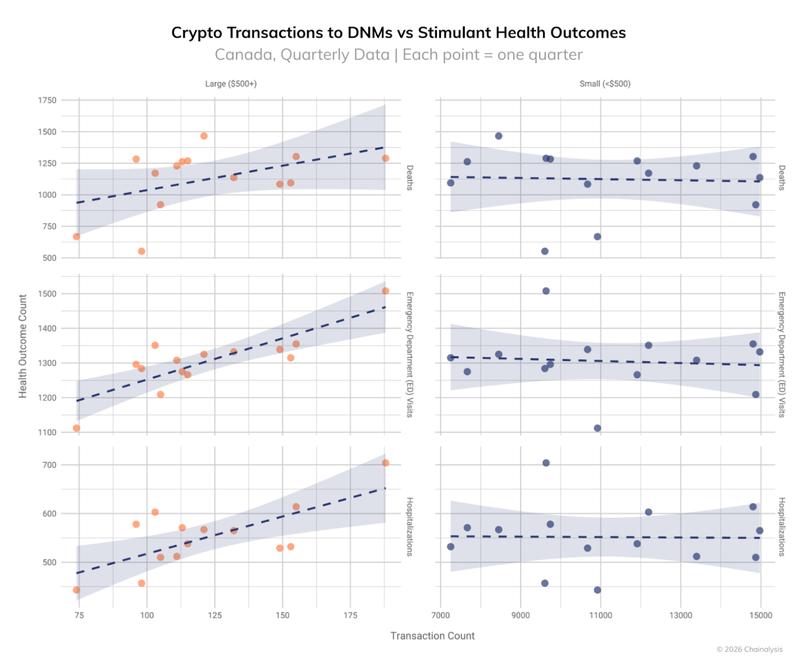
The research additionally correlated transaction information with hospital admission records from Canada. Minor payments under $500 demonstrated no discernible connection with emergency department visits or deaths. More substantial transfers showed correlation with increasing stimulant-related hospital admissions and deaths, indicating the transactions probably represent wholesale acquisitions or distribution networks instead of individual use.
Money moves before the crisis hits. People buy drugs before they redistribute them, and users consume them before they overdose and require medical care.
The analysis further noted that because blockchain ledgers refresh in real-time, they have the potential to function as a precise "early warning system."
The research additionally disclosed that after the shutdown of Abacus Market in July 2025, operations rapidly transferred to replacement platforms including TorZon. The report indicated that marketplace vendors consistently restock inventory across multiple platforms and migrate their operations following enforcement disruptions.
Fraud shop volumes drop to $87.5 million
Fraud-focused marketplaces exhibited an alternative pattern. Onchain transaction volumes declined from approximately $205 million to $87.5 million year-on-year following infrastructure shutdowns, though operations transitioned toward bulk distribution models, especially Chinese-language networks functioning on Telegram that facilitate large-scale transactions of compromised payment card information.
Chainalysis disclosed Friday that cryptocurrency transfers associated with suspected human-trafficking operations increased 85% in 2025, totaling hundreds of millions of dollars. The transactions were predominantly connected to Southeast Asia and had strong links to scam operations, internet gambling platforms and Chinese-language money-laundering organizations, according to the report.