Bitcoin's momentum against gold signals 'risk-embedded opportunity' for investors
Recent market data reveals Bitcoin is beginning to outperform gold, with historical patterns surrounding US midterm elections suggesting a promising opportunity for the cryptocurrency.

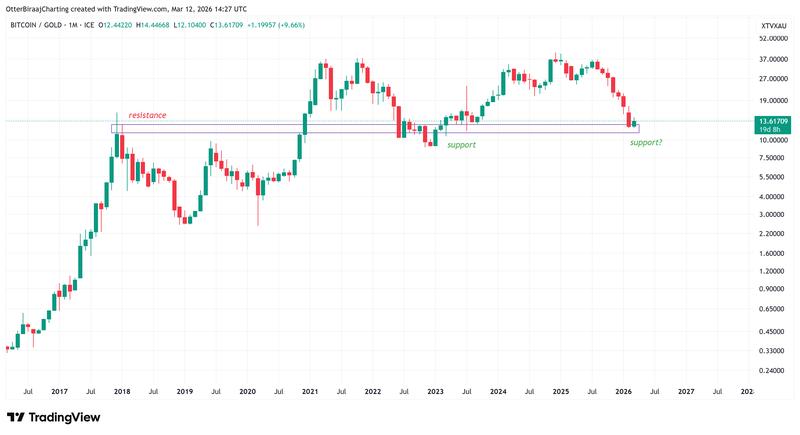
The long-term trajectory of Bitcoin's (BTC) value relative to gold is demonstrating a bullish transformation following a retreat to levels not witnessed since 2017, 2022, and 2023. This emerging trend reversal coincides with what market observers are characterizing as an "opportunity within risk" scenario.
Bitcoin-gold ratio demonstrates bullish divergence pattern
Michaël van de Poppe, who founded MN Capital, observed that the ratio between Bitcoin and gold is displaying notable strength following the formation of a bullish divergence pattern with the relative strength index (RSI) visible on daily timeframe charts.
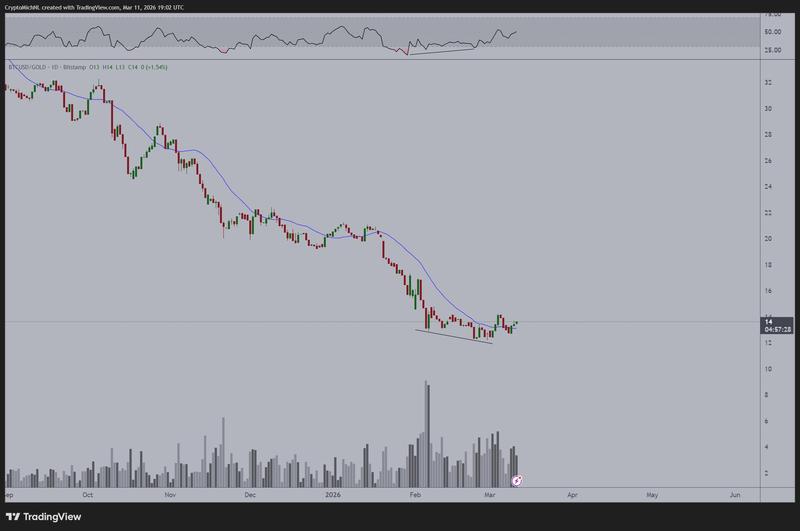
When prices create successively lower lows while momentum indicators like the RSI simultaneously form higher lows, a bullish divergence pattern emerges. This technical formation indicates that selling pressure is diminishing.
During February, the ratio pulled back to a critical support zone in the 12-13 range, which had previously functioned as resistance during 2017 before converting to support throughout 2022 and 2023. Consequently, this current level could potentially represent a long-term floor for Bitcoin's performance versus gold.
An additional factor supporting this scenario is the shift in exchange-traded fund (ETF) flows for both Bitcoin and gold throughout the previous month.
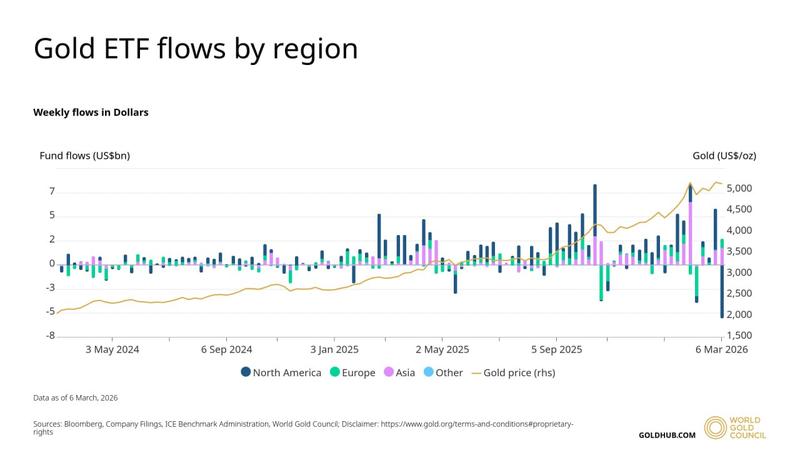
To illustrate, SPDR Gold Shares (GLD), the US-based gold-backed ETF, experienced a $3 billion outflow on March 6. According to The Kobeissi Letter,
"This surpasses any previous large daily outflow seen over the last 2 years by +200%."
In contrast, Bitcoin ETF flows over a 30-day period showed improvement, reaching $906 million in net inflows by March 11, a substantial recovery from the $1.9 billion outflow recorded one month prior.
An additional divergence becomes apparent when examining holdings denominated in native units. Bitcoin ETF balances changed positively over 30 days, improving to 12,909 BTC compared to -34,197 BTC, whereas gold ETF holdings decreased to approximately 606,850 ounces from 1.4 million ounces on Feb. 13.
Macroeconomic environment creates opportunity window for Bitcoin
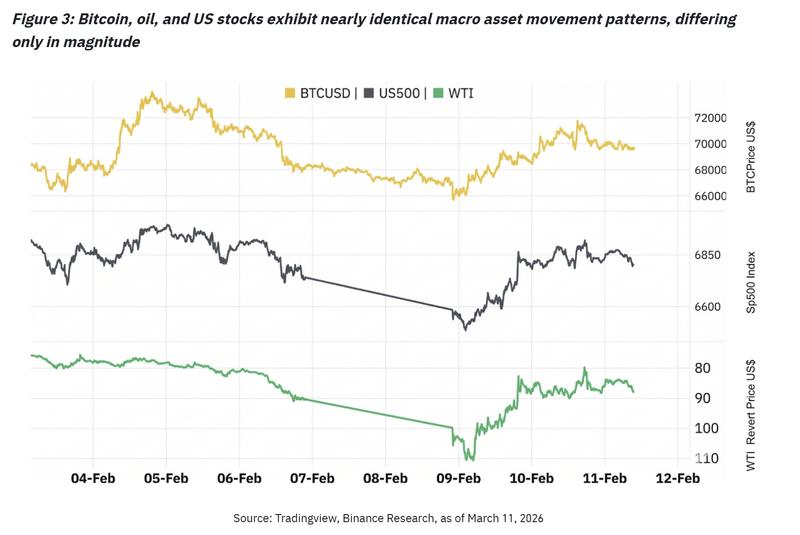
Binance Research suggests that the present macroeconomic volatility could create an "opportunity within risk" scenario for Bitcoin. Their analysis highlighted that BTC has exhibited price movements similar to macro assets including oil and US equities throughout the US-Israel and Iran war, demonstrating how global developments are presently influencing price dynamics.
Nevertheless, capital flows are beginning to return to BTC notwithstanding the volatility. The proportion of Bitcoin trading volume originating from US spot ETFs has experienced recent growth, indicating heightened institutional participation.
However, ETFs currently account for merely approximately 9% of total BTC spot trading volume, substantially lower than the 30–40% ETF-to-total equity trading volume observed in US equity markets, which implies considerable potential for institutional expansion.
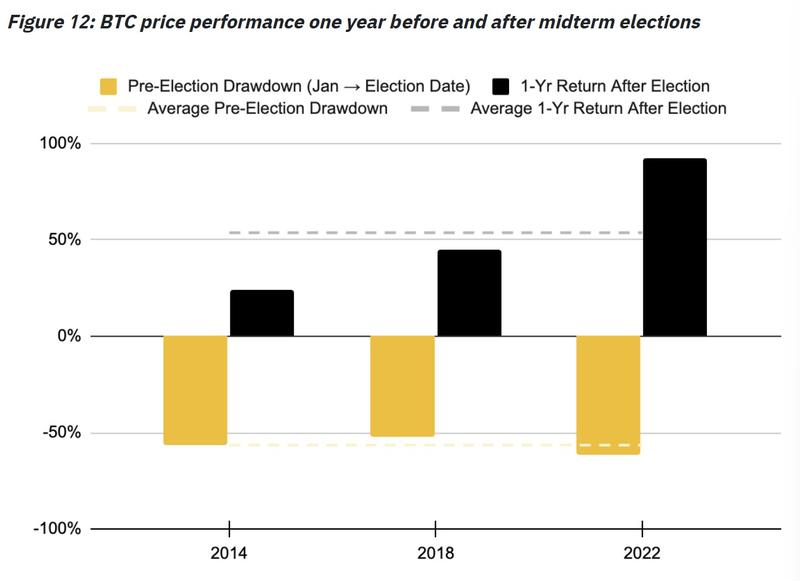
Throughout history, episodes of geopolitical upheaval have frequently preceded robust market recoveries. As an example, years featuring US midterm elections typically experience market corrections, with the S&P 500 registering an average 16% peak-to-trough decline. Meanwhile, Bitcoin has historically experienced declines of approximately 56% during these same cycles.
Nevertheless, the 12-month period following midterm elections has consistently delivered positive S&P 500 returns since 1939, never producing a negative result and averaging gains of 19%, while Bitcoin has surged an average of 54% across all three post-midterm years documented in historical records.
As previously covered by Cointelegraph, the $78,000 price level now represents a crucial threshold for a potential broader trend reversal in the BTC market.