AI-Enhanced Cryptocurrency Kiosk Fraud Jumps 33% to $333M: CertiK Analysis
Fraudulent activity at cryptocurrency ATMs climbed 33% in 2025, reaching $333 million, as artificial intelligence empowered scammers to target senior citizens more effectively, according to FBI data showing 12,000 reported incidents.

Fraudulent transactions at cryptocurrency ATMs reached $333 million throughout the United States during 2025, with the number of complaints filed with the FBI increasing by 33% over the previous year as criminal networks adopted more sophisticated operations and leveraged cutting-edge AI deepfake capabilities.
According to cybersecurity company CertiK in their most recent analysis provided to Cointelegraph this Thursday, crypto ATM fraud represents one of the most rapidly expanding financial crime segments across the United States, noting that criminal enterprises are taking advantage of the "speed and pseudonymity" offered by cryptocurrency ATMs or "kiosks" to drain money from targets at increasingly rapid rates.
Between January and November 2025, the FBI documented over 12,000 complaints, representing a 33% rise compared to the previous year. CertiK highlighted that the United States hosts 78% of the global total of 45,000 cryptocurrency machines.
The capacity to transform cash into cryptocurrency in less than five minutes while requiring minimal identity verification "makes them the lowest-friction extraction channel available to scammers," according to the company.
Elderly more vulnerable to social engineering
The analysis further highlighted an "attribution gap" exists because blockchain technology only captures the operator-to-destination transaction, not the victim's personal information. This creates significant challenges for forensic investigation without obtaining court orders to access operator records.
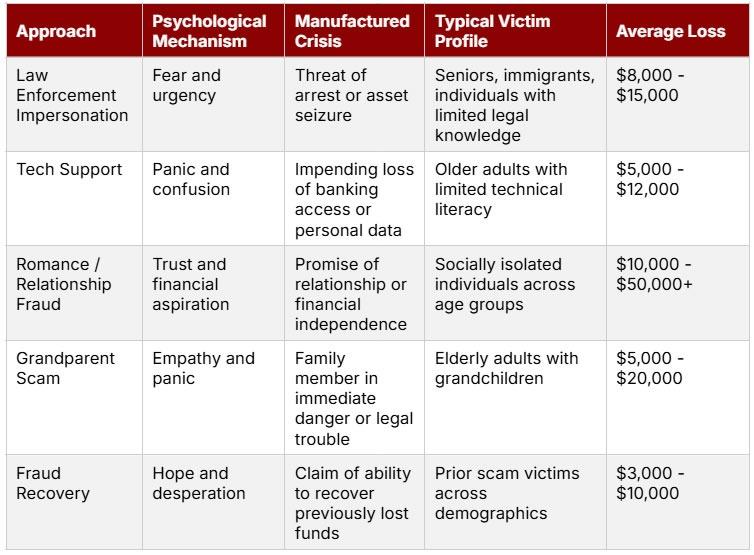
Approximately 86% of financial losses affect victims aged over 60, with senior citizens facing disproportionate vulnerability attributed to "liquid savings," limited cryptocurrency knowledge, and social isolation.
Nevertheless, younger individuals are becoming more frequent victims in romance or investment schemes, often referred to as "pig butchering," representing one of five principal strategies employed by fraudsters.
The remaining four methods consist of government impersonation, tech support fraud, "grandparent scams," and fraudulent fraud recovery offers.
In contrast to phishing or wallet-draining attacks, which require compromising private keys or deceiving users into approving malicious smart contract requests, ATM-based fraud "relies entirely on social engineering to induce the victim to perform a voluntary physical action at a kiosk," according to CertiK.
AI is making things worse
CertiK's research found that AI-enabled social engineering scams generated 4.5 times higher profits compared to traditional methods throughout 2025.
The incorporation of "real-time deepfake synthetic media" into scam and fraud operations constitutes the most "significant near-term escalation," the firm indicated.
"AI-driven personalization tools enable scammers to scrape social media data and construct hyper-targeted scripts that mirror the specific language, appearance, and communication patterns of the victim's trusted contacts."
CertiK also observed that the profile of crypto ATM scammers has evolved from independent actors to structured transnational criminal organizations operating with corporate-level divisions of labor.
"Transnational criminal organizations are industrializing ATM-based extraction at unprecedented scale."
Wyoming Senator Cynthia Lummis stated in September that she hopes the crypto market structure legislation will help tackle ATM fraud by punishing bad actors without limiting innovation.
In February 2025, US Senator Dick Durbin introduced the Crypto ATM Fraud Prevention Act, aiming to introduce safeguards for crypto kiosk users.