$600M in Short Positions Face Liquidation Risk as Bitcoin Eyes $70K Breakout
Bitcoin's network hashrate recovery and emerging onchain security measures suggest potential for a climb to $70,000, even amid persistent bearish sentiment and disappointing US economic indicators.

Key takeaways:
- Bearish traders could face forced liquidations exceeding $600 million if Bitcoin's price climbs just 4.3% to reach $69,600.
- Network hashrate improvements combined with the BIP-360 quantum security initiative are alleviating long-term technological risks.
Over the past week, Bitcoin (BTC) has traded within a constrained corridor between $65,900 and $70,500. This price consolidation has emboldened those with bearish positions, especially given the comparative strength shown by other prominent asset categories. Yet, even should Bitcoin need several months before it can recapture the $90,000 threshold, overconfidence among bears might spark a cascade of forced position closures in the futures markets, quickly reversing momentum in favor of bullish traders.
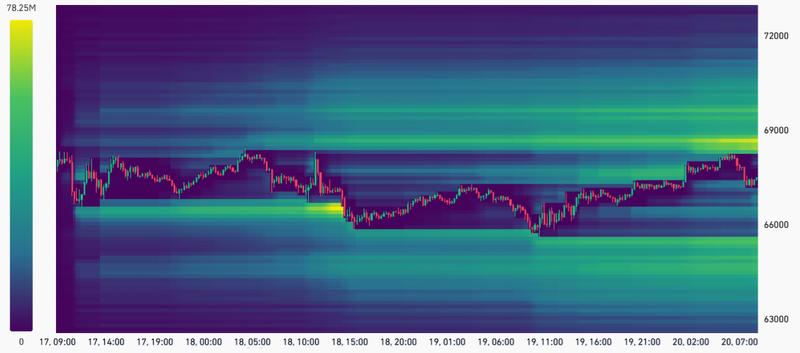
Data from CoinGlass indicates that an upward price movement to $69,600 would result in the liquidation of more than $600 million worth of short positions in BTC futures contracts. To put this in perspective, Bitcoin's previous ascent from $60,200 to $70,560 on Feb. 6 resulted in $385 million in short position liquidations. At present, just a 4.3% upward movement from the $66,700 price point could inflict an even larger setback on traders positioned for continued price declines.
Bullish participants might also discover momentum from deteriorating macroeconomic indicators. Fourth-quarter 2025 gross domestic product growth in the United States came in sluggish, with the annualized rate reaching 1.4% and missing the 2.9% forecast that analysts had anticipated, according to Yahoo Finance. Such tepid economic expansion undermines corporate profitability projections, which generally diminishes investor interest in equity market participation.
At the same time, core US inflation exceeded expectations during December, reducing the likelihood of imminent interest rate reductions. The US personal consumption expenditures price index, which excludes both food and energy components, registered a 0.4% increase on a month-over-month basis. With the S&P 500 experiencing weakening bullish momentum, market participants may find themselves compelled to venture beyond traditional comfort zones in pursuit of superior returns within onchain trading venues.
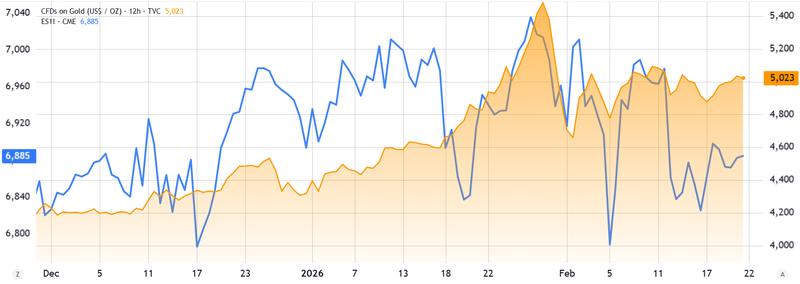
Intensifying geopolitical strife in the Middle East could drive investors toward alternative protective assets, especially following gold's impressive 25% price surge over a three-month period. The market capitalization of gold has expanded to an impressive $35.2 trillion—approaching eight times the valuation of Nvidia (NVDA US), which currently stands at $4.6 trillion.
With Bitcoin currently trading roughly 47% beneath its record peak, the risk-versus-reward equation for the digital currency may grow progressively more appealing to macro-focused trading professionals. Currently, bearish forces maintain dominance, demonstrated by the absence of strong demand for long positions within futures trading venues.
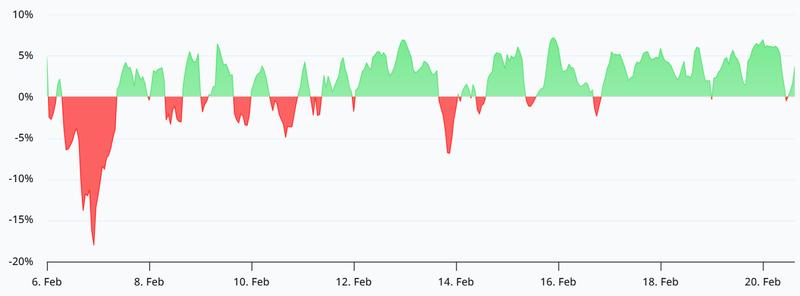
The funding rate for BTC perpetual futures contracts has been unable to maintain levels above the 6% neutral benchmark throughout the previous two-week period. Even more revealing is the recent period showing negative funding rates, indicating that bearish traders remain dedicated to their positions despite Bitcoin testing support near the $66,000 level. Bulls continue to face challenges in rebuilding confidence, having experienced $1.6 billion worth of liquidations throughout the three-day downturn that commenced on Feb. 6.
Recovering hashrate and BIP-360 progress strengthen Bitcoin network security
Although portions of Bitcoin's latest price weakness were linked to apprehensions regarding network security, these concerns are now beginning to fade.
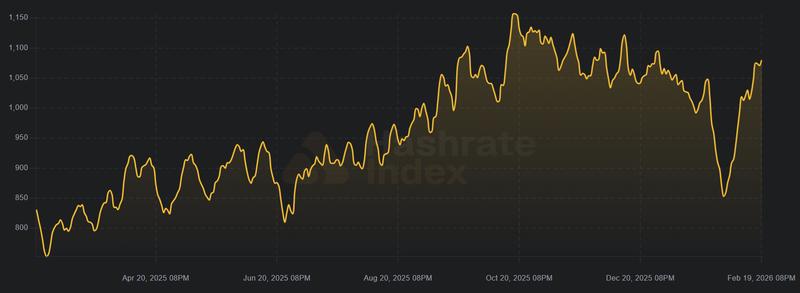
The seven-day moving average for hashrate has rebounded to 1,100 exahashes per second, aligning with measurements recorded during late January. Previous concerns suggesting that mining operations were departing the network in favor of opportunities within the artificial intelligence industry have turned out to be unfounded, with the sector demonstrating exceptional staying power.
Additionally, the implementation of BIP-360 has resolved a substantial portion of the ambiguity regarding potential quantum computing vulnerabilities. This initiative establishes a comprehensive framework for quantum-resistant protection via a backwards-compatible soft fork mechanism. Through the elimination of the susceptible key-path spend present in Taproot, the enhancement keeps public keys hidden onchain until the precise moment of transaction execution.
This technological development blueprint offers a distinct pathway for bullish traders to reclaim the dominant narrative, potentially triggering a short squeeze scenario that could drive Bitcoin back beyond the $70,000 price level.