Gold Purchases by Retail Investors Surge 3x While Institutional Players Exit Positions
The Bank for International Settlements reports that excessive retail enthusiasm for precious metals ETFs and leveraged trading positions triggered the conclusion of the gold and silver price rally.

Individual investor purchases of gold have increased threefold during the past half-year period, even as institutional investors on Wall Street have ramped up their selling activity throughout the most recent four-month stretch, based on information published by the Bank for International Settlements (BIS).
Excessive enthusiasm driven by retail participants, increasingly flowing through exchange-traded funds (ETFs), "set the stage for outsize moves," extending the rally in precious metals that began in 2025, according to findings presented by the BIS in their quarterly review published this past Monday.
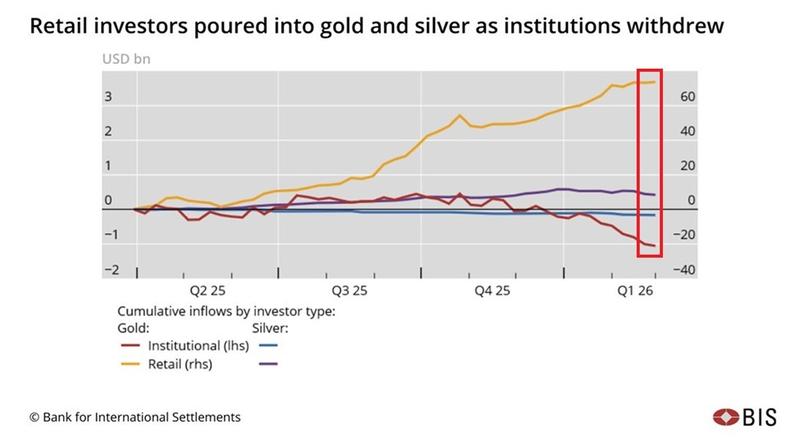
Beginning in Q2 2025, individual investors have accumulated approximately $70 billion worth of gold ETFs, with these acquisitions increasing more than threefold throughout the preceding six-month period, as highlighted by the Kobeissi Letter, which referenced BIS data released on Thursday.
"Retail investors are all-in on precious metals," the analysis pointed out.
The price of gold has experienced a 60% increase during the previous twelve months, leading certain cryptocurrency advocates to hypothesize that this surge occurred at Bitcoin's expense, given that some view Bitcoin as a competing store-of-value asset against gold.
Information from the BIS demonstrates that aggregate retail capital inflows essentially tripled from approximately $20 billion to nearly $60 billion across the six-month span extending from late Q3 2025 through the conclusion of Q1 2026.
Conversely, selling activity by institutional investors commenced around the middle of November and intensified following the precious metals market's correction that began in January, the data reveals.
Leveraged liquidations amplified commodity drops
Bitcoin (BTC) is far from being the sole asset vulnerable to significant volatility stemming from excessively leveraged trading positions.
Valuations for precious metals including gold and silver experienced sudden reversals throughout late January and February 2026, as the "daily rebalancing of leveraged ETFs and margin‑triggered liquidations amplified the swings," with silver being particularly affected, the BIS reported.
Smaller speculative derivatives market participants, referred to as "non-reportables," had accumulated substantially leveraged long positions in silver prior to the market crash, the report further noted.
Current gold prices remain 9% below their all-time peak reached in late January, whereas silver has experienced a significantly steeper decline, plummeting 34% during the identical timeframe, based on data from GoldPrice.
The sudden price deterioration coupled with the surge in precious metal market volatility "point to the role of retail flows, and amplification of price moves due to forced sales by leveraged ETFs, trend-following investors such as commodity trading advisers, and margin dynamics," the BIS explained.
Dollar strengthens as commodities and crypto weakens
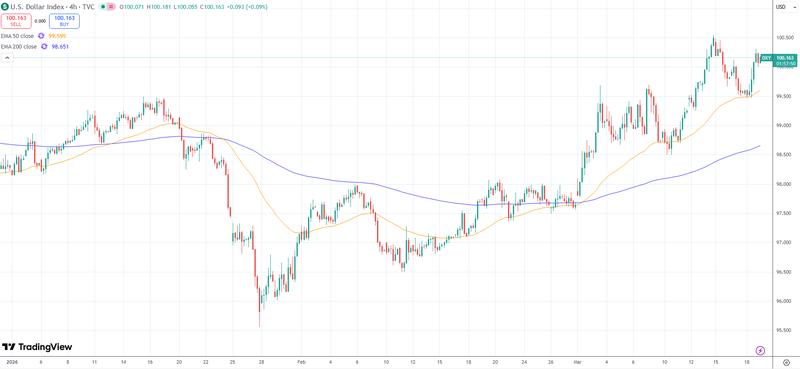
The financial institution determined that the declines in gold and silver aligned with evolving expectations regarding US monetary policy and the US dollar's performance, which has appreciated 4.7% since late January, as measured by the DXY dollar index.
"The precious metals crash seemingly coincided with shifts in expectations about the US dollar and the path of monetary policy, but it was hard to square with broader changes in fundamentals."
In the meantime, cryptocurrency markets have declined approximately 43% from their peak total market capitalization recorded in October, as retail investor sentiment and enthusiasm for digital assets have evaporated and continue to languish at levels typical of bear markets.