
Bitcoin Depot faces Connecticut shutdown as firm slashes 2026 revenue projections
State regulators in Connecticut have suspended Bitcoin Depot's license to operate, as the cryptocurrency kiosk company forecasts significantly reduced revenue for 2026 while grappling with regulatory challenges and plummeting share value.

A publicly listed cryptocurrency ATM operator, Bitcoin Depot, is confronting intensifying regulatory challenges across the United States while simultaneously dealing with a precipitous drop in share value and diminished revenue projections.
On March 9, Connecticut's Banking Commissioner issued a temporary cease-and-desist directive against Bitcoin Depot Operating through the Consumer Credit Division, effectively halting the company's money transmission license within state boundaries.
The directive identifies several purported breaches of Connecticut's Money Transmission Act, encompassing inadequate minimum net worth maintenance, charging excessive transaction fees, and failing to provide complete reimbursements to customers who were defrauded through various scam operations.
In its fourth-quarter 2025 and complete fiscal year financial disclosures published Monday, the company reduced its revenue expectations for 2026. The report highlighted a 56% year-to-date stock price collapse and workforce reductions. As a major kiosk operator across the United States, Bitcoin Depot's financial statement indicates it maintained over 8,400 kiosk installations as of the conclusion of 2025.
Revenue outlook darkens for 2026
For the complete 2025 fiscal year, the company posted revenue totaling $615 million, representing a 7% increase compared to 2024, although net income decreased to $5.1 million from the previous year's $7.8 million.
Fourth-quarter revenue declined to $116 million compared to $136.8 million recorded during the same period the previous year, a decrease the company attributed to recently implemented state-level regulations and strengthened compliance protocols.
Bitcoin Depot additionally cautioned investors about diminished revenue expectations for 2026, pointing to continuing regulatory modifications and compliance obligations that may result in decreased transaction activity:
"The Company expects revenue for the core business in 2026 to be down in the range of 30% to 40%. This estimate reflects the uncertainty presented by the dynamic regulatory environment and enhanced compliance standards."
In an additional March 11 regulatory submission, Bitcoin Depot revealed that Elizabeth Simer, its chief operating officer, had stepped down from her position. The company did not provide an explanation for the departure.
Bitcoin Depot faces actions in multiple states
The cease-and-desist directive from Connecticut arrives as Bitcoin Depot is already contending with enforcement measures in additional states, including a lawsuit filed by the Massachusetts Attorney General during February, which claimed the company enabled cryptocurrency fraud schemes.
Bitcoin Depot also became the subject of legal action in Iowa during February 2025, with Attorney General Brenna Bird filing charges against both the company and CoinFlip for allegedly neglecting to safeguard consumers against crypto ATM fraud operations.
During January, Bitcoin Depot finalized a $1.9 million consent settlement with Maine's Bureau of Consumer Credit Protection to provide restitution to consumers victimized through scams involving its Bitcoin kiosks and to ensure adherence to state licensing requirements.
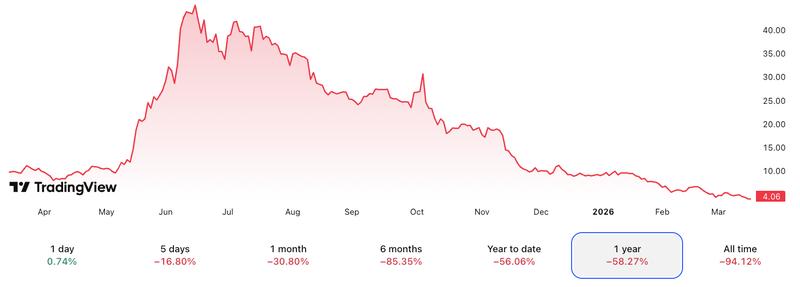
Shares of Bitcoin Depot (BTM) have experienced a downward trajectory beginning in mid-2025, surrendering 91% of their value since reaching a peak of $45.4 during June. The stock has plunged 56% year-to-date, settling at $4.06 on Tuesday, based on TradingView data.
Cointelegraph reached out to Bitcoin Depot seeking commentary on the enforcement actions and regulatory matters, but did not receive a response prior to publication time.