Regulatory Spotlight Intensifies on Crypto While DeFi Remains Unregulated: Finance Redefined
European authorities close cryptocurrency taxation loopholes, American legislators reexamine market framework, while institutional players drive DeFi toward regulatory compliance.
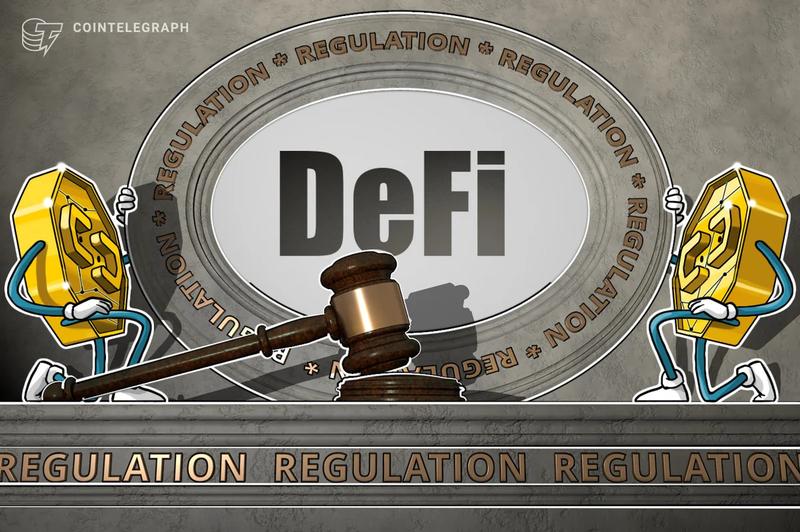
The crypto tax reporting framework under DAC8 introduced by the European Union deliberately targets enforceable entities, keeping decentralized finance (DeFi) beyond its current regulatory reach for the time being.
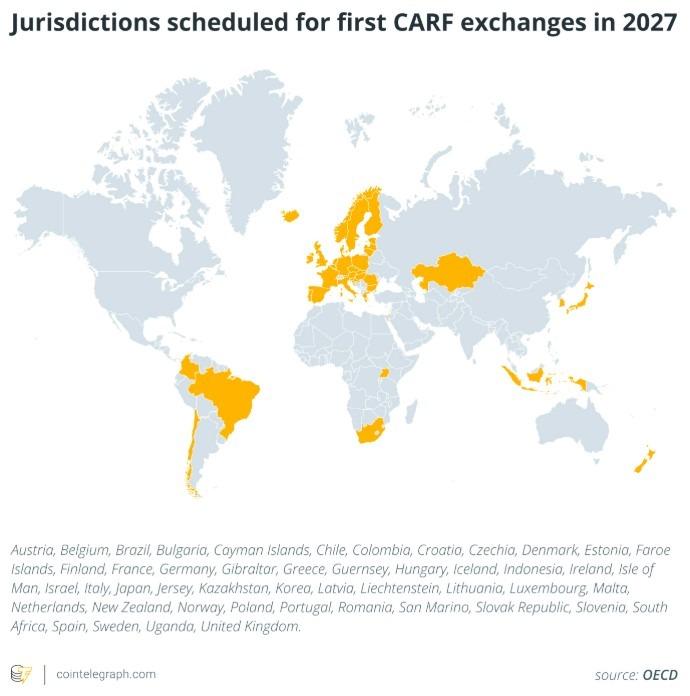
According to Colby Mangels, who previously served as an adviser to the Organisation for Economic Co-operation and Development (OECD) and currently holds the position of global head of government solutions at Taxbit, the regulations concentrate on identifiable intermediaries including custodians and exchanges, entities that will need to gather and submit standardized data on user activities in accordance with the OECD's Crypto Asset Reporting Framework (CARF).
That said, this exemption for DeFi might prove temporary. Tax authorities are progressively leveraging Anti-Money Laundering (AML) frameworks to establish accountability within crypto markets, Mangels noted, adding that regulators are monitoring closely whether DeFi platforms could be designated as virtual asset service providers.
RootstockLabs and Animoca join forces to introduce Bitcoin DeFi solutions to Japanese institutional market
A strategic alliance between Animoca Brands Japan and RootstockLabs aims to deliver Bitcoin-native DeFi solutions to Japanese corporate entities, particularly targeting treasury management applications.
This partnership will adapt Rootstock's institutional program specifically for the Japanese market, allowing corporations to oversee their Bitcoin reserves and utilize onchain financial instruments developed on the Rootstock network, which derives its security from Bitcoin's proof-of-work (PoW) via merged mining.
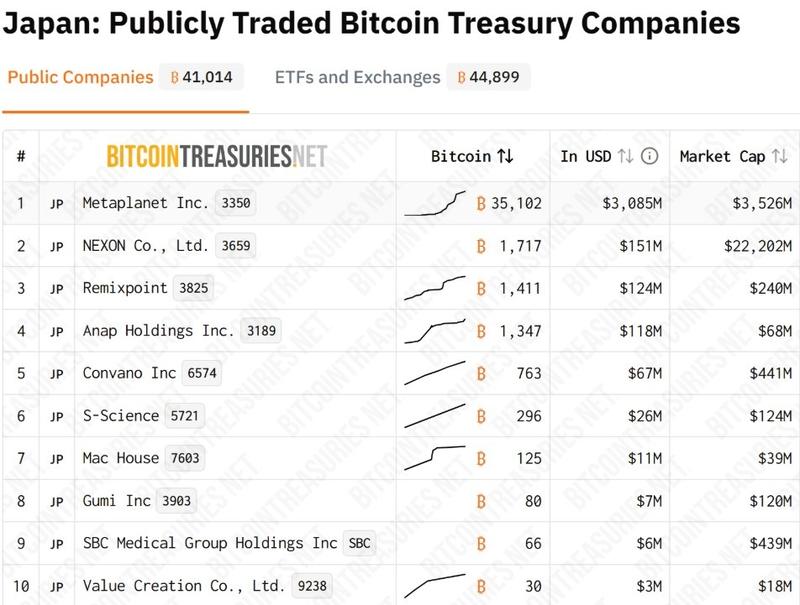
This development underscores the expanding appetite among Japanese corporations for utilizing Bitcoin as a treasury reserve asset, with firms investigating infrastructure solutions that extend beyond basic custody services.
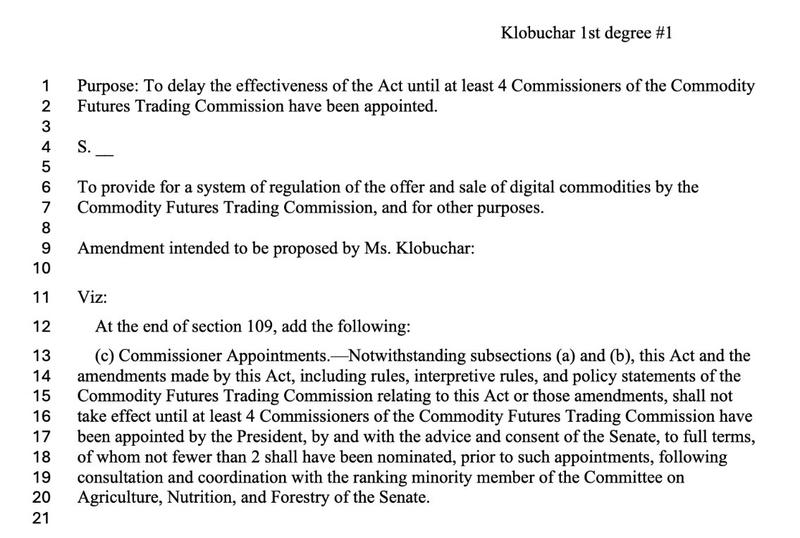
American senators prepare to consider modifications to cryptocurrency market structure legislation, including DeFi provisions
Senators in the United States are getting ready to evaluate proposed amendments to the Digital Commodity Intermediaries Act (DCIA), a highly anticipated crypto market structure legislation, with decentralized finance surfacing as among the contentious topics.
This legislation aims to delineate regulatory responsibilities between the Commodity Futures Trading Commission and the Securities and Exchange Commission, though legislators and industry advocates have expressed reservations regarding how clauses impacting DeFi might be enforced.
This discussion demonstrates that DeFi continues to represent a dividing line in American market structure negotiations, despite lawmakers' efforts to progress a framework following years of postponement.
DePIN sector expands to $10 billion valuation notwithstanding token price decline, according to Messari analysis
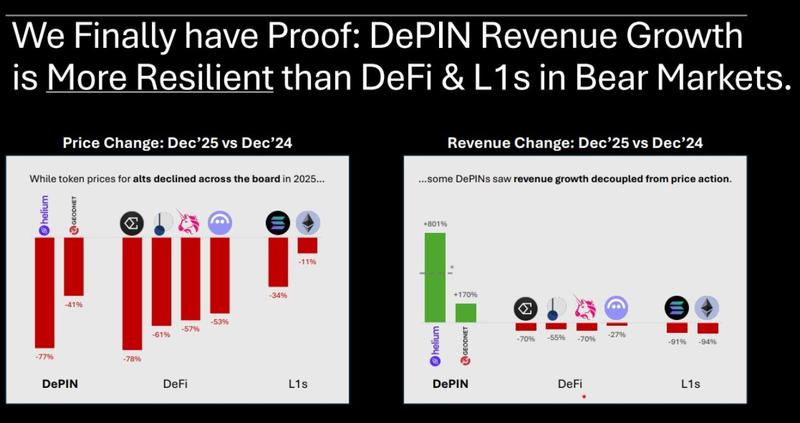
According to a recently published "State of DePIN 2025" report produced by Messari and Escape Velocity, decentralized physical infrastructure networks (DePIN) have discreetly expanded into an approximately $10 billion sector, producing around $72 million in onchain revenue throughout the previous year.
The analysis from Messari indicates that DePIN is transitioning toward an infrastructure-focused business model, in which utilization and cash generation take precedence over token valuations. This characteristic has rendered DePIN revenues more robust compared to DeFi protocols and layer-1 networks throughout the ongoing market downturn, the report states.
Bitcoin block space controversy resurfaces with Citrea ZK-rollup mainnet deployment
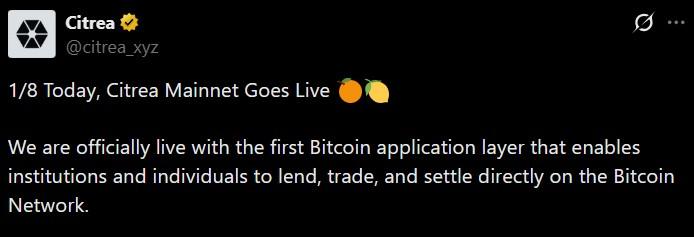
The Bitcoin zero-knowledge rollup mainnet from Citrea went live featuring BTC-backed lending services, structured financial products and a natively launched US dollar stablecoin, ctUSD, establishing Bitcoin as fundamental collateral for DeFi applications and payment systems.
This initiative seeks to transform "economically idle" BTC into productive onchain liquidity while securing proofs and data availability to Bitcoin's foundational layer. The development team anticipates initial DeFi liquidity will achieve $50 million.
This mainnet deployment has rekindled Bitcoin's ongoing block space controversy, given that Citrea's DeFi operations utilize significant Bitcoin bandwidth and prompt discussions about the appropriate level of complexity the base layer ought to accommodate.
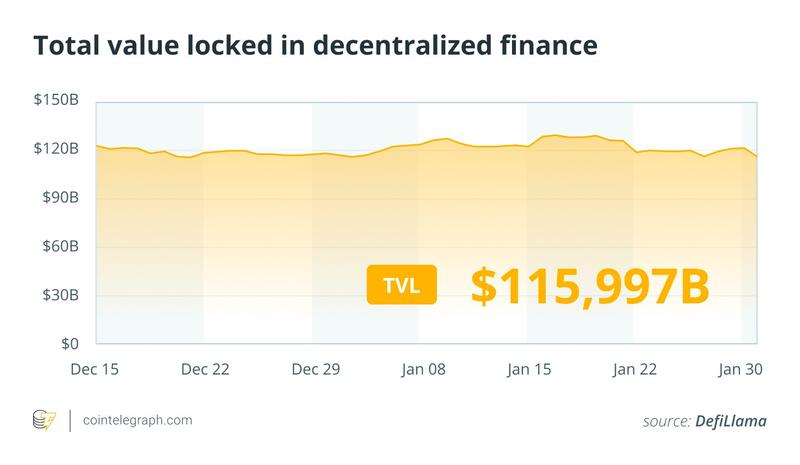
Overview of the DeFi market landscape
Based on information from Cointelegraph Markets Pro and TradingView, the majority of the 100 largest cryptocurrencies ranked by market capitalization concluded the week experiencing losses.
Throughout the week, the Yei Finance (CLO) token experienced a decline exceeding 58%, representing the most significant decrease over the past seven days. Following this was a token identified as Seeker (SKR), which experienced a 55% decline during the previous week.