How 'The Bitcoin Standard' Writer Imagined Decentralized Gold Preventing World War I
Saifedean Ammous presents an alternative historical account of the First World War in The Gold Standard, imagining how a decentralized monetary network could have brought an early end to the conflict.

Saifedean Ammous, the writer behind The Bitcoin Standard, has made the case that fiat currency represents the fundamental issue afflicting modern civilization. "What you see in the 20th century is essentially massive amounts of wealth being extracted from those who created it and fed into the destructive machinery of warfare. This is the essence of what fiat enables," he explained in his conversation with Cointelegraph.
"Remove that mechanism, and you eliminate much of the killing and devastation, while simultaneously generating significantly more prosperity, productive capacity and overall wealth."
His most recent publication, The Gold Standard, delves deeply into this premise. What would have transpired if the civil, political and societal disruptions triggered by the First World War had been prevented? What if a novel, decentralized monetary system had emerged shortly after hostilities commenced in 1915?
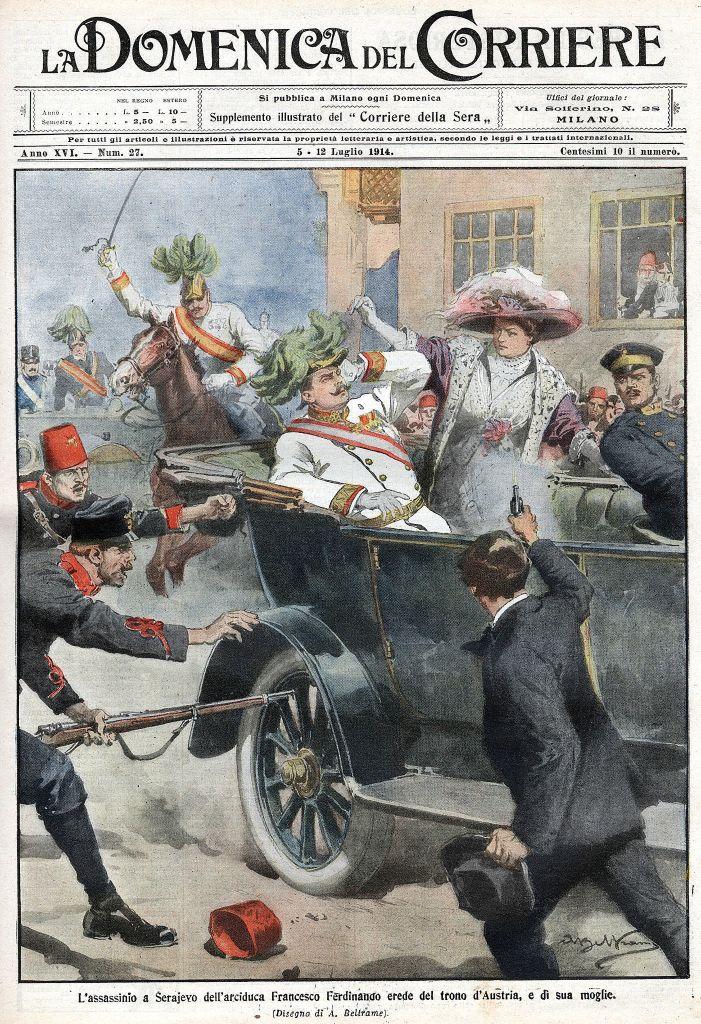
In the actual historical timeline, the conflict lasted four years and devastated the European continent, resulting in a death count surpassing 40 million people across 30 nations involved in the fighting. Revolutionary upheavals swept through Europe in the war's wake. When the carnage finally ceased, the imperial dynasties of Habsburg, Romanov and Hohenzollern had been swept from power. The Ottoman Empire collapsed into internal conflict.
Britain's rigid class structure faced serious challenges, and British women secured voting rights. Previously non-existent independent states such as Finland, Poland, Georgia, Lithuania, Latvia and Estonia came into being. Radical political ideologies including communism and fascism rose to prominence against the backdrop of devastating economic consequences.
The fundamental argument presented in The Gold Standard posits that all these wartime consequences stemmed directly from the fiat banking infrastructure. Ammous constructed an imaginary scenario set in 1915, immediately following the outbreak of the Great War, in which an immutable, decentralized system for transferring value using gold came into existence.
In what ways might this have altered humanity's historical trajectory toward a more positive outcome?
Gold, planes and central banking
The Gold Standard opens by establishing the geopolitical landscape at the conclusion of the Belle Epoque, that prolonged era of economic prosperity coupled with militarized peace throughout Europe spanning from 1871 to 1915.
Ammous outlines the political divisions across Europe and traces the emergence of central banking institutions. Most significantly, he explains how the strength of the classical gold standard "suffered from a fundamental flaw that impeded its ability to operate optimally in its ideal configuration: the continuous expansion of bank credit without matching savings."
According to Ammous' narrative, the European powers stumbled into the First World War through a dangerous combination of imperial aspirations, incompetent leadership decisions, and reckless monetary management.
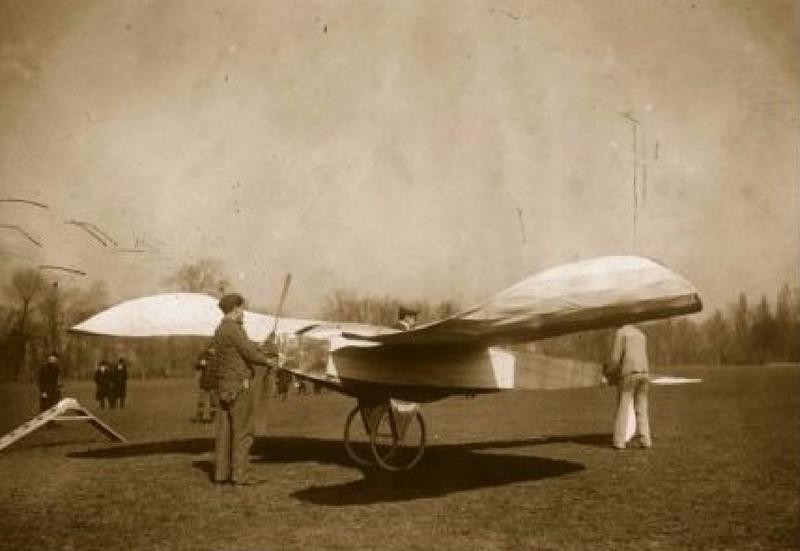
The alternative history diverges in 1915 through an actual historical figure: the French aviation pioneer Louis Blériot. Within The Gold Standard, Blériot recognizes the destructive influence that central banking institutions exert globally, and joins forces with America's Wright brothers to establish the Blériot Transport Corporation (BTC).
Together they develop a remarkable fleet of aircraft that, operated by the leading aviators of the era, transport gold between locations.
"The automobile and aviation industries traded with one another across international borders without having to resort to central banks. As the war raged on and more restrictions were imposed on withdrawing gold, demand steadily increased. Old money became anxious about the banking system. They increasingly demanded that gold be kept on hand and wished to rely on BTC for trade. Most important, perhaps, was that BTC had freed people from having to turn in all their gold to the banks in response to their governments' pleas."
This ultimately triggers a massive capital exodus which, when combined with additional factors, depleted the warring nations' central bank gold reserves entirely. As financing the war effort became increasingly impossible for participating countries, military commanders began withdrawing their forces. Before 1915 had progressed far, weapons fell silent, trenches stood abandoned, and peace returned to the European continent.
The war's conclusion becomes formalized through the "Treaty of Geneva" and the creation of the International Committee for Self-Determination (ICSD).
The lasting peace, made possible by a global, unchangeable gold standard, subsequently generates extraordinary prosperity throughout the 20th century. This produces a dramatic increase in gold's value, termed "hypergoldenization."
A new model of corporate governance-for-hire emerges as the dominant form:
"The tribal considerations of nationality, ethnicity, and religion became increasingly separated from government, and people pragmatically chose to live under the governments that provided them security and services at the lowest cost."
Deprived of central banks to fund their operations, and operating within the ICSD's conflict resolution framework, wars become significantly more challenging and costly to pursue.
The wealth generated by the gold standard has also prevented various historical events, economic crises and natural occurrences that we consider inevitable, including socialism's ascendance, the Second World War, economic depressions, climate change, "fiat food" and joblessness.
The narrative concludes by describing a typical day experienced by London's Smith family in this transformed reality.
"Comfort is taken for granted, and prosperity is ordinary. Technology shortens chores, meat is plentiful and affordable, travel is fast, and energy is so abundant that they barely think about it."
From gold bug to Bitcoin to the trenches
Ammous initially discovered Austrian economics in 2007, "and by the time 2008 arrived I would have confidently identified myself as an Austrian," he shared with Cointelegraph.
At first, his focus was on gold. "I had already developed a strong understanding of inflation's dangers, the flaws inherent in fiat systems. And I was active in those corners of the internet where enthusiasts of Austrian economics debate these topics. Back then, it represented a much smaller community than exists today."
This online community introduced him to Bitcoin within the framework of "sound money" or "hard money." He remained skeptical of the technology until 2014, when reading about Bitcoin mining changed his perspective. Not long afterward, he authored the widely-read book The Bitcoin Standard.
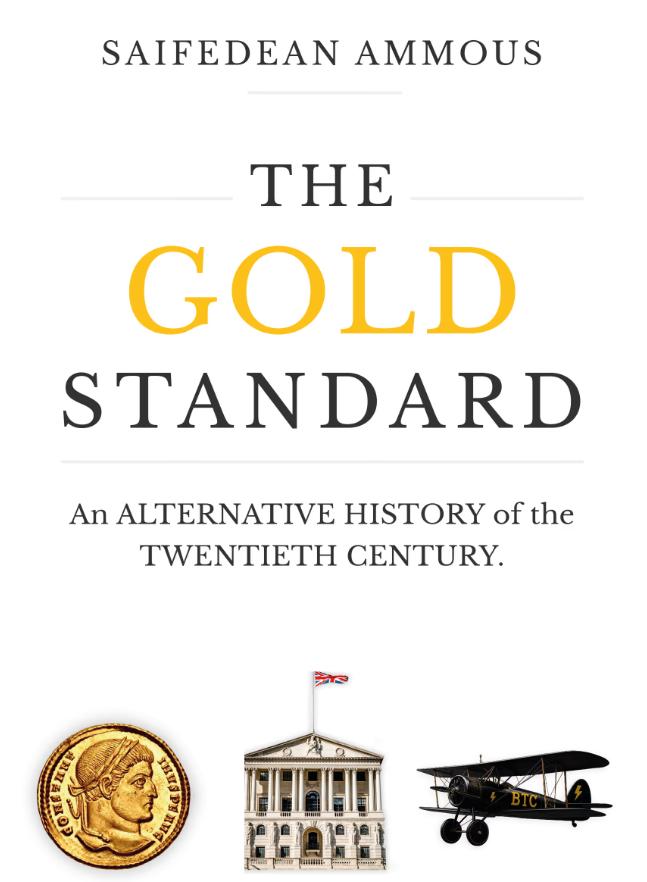
The Gold Standard, his most recent work, diverges from his typical approach by presenting a reimagined version of modern history's most consequential event.
"World War One has always captivated me more than any other historical subject," Saifedean Ammous explained. "When you examine World War One closely, you recognize that World War Two fundamentally represents just a continuation of the same conflict. But the real pivotal moment was World War One."
The book's core argument maintains that the war's atrocities, alongside the accompanying social and political transformations, resulted fundamentally from the fiat banking infrastructure. After being neutralized by "BTC," humanity's historical path shifts dramatically.
However, constructing a believable alternative timeline presents significant challenges. Ammous explained he aimed to create something "that doesn't come across as a pink unicorn" where "world peace magically appears." His goal was making it "plausible, believable, credible" so readers could "contemplate the implications [...] in a meaningful and more substantive manner."
Developing this alternative monetary transfer system was essential because, "the world won't undergo significant transformation. Not in the absence of war. We would simply continue along the same trajectory."
Alternative histories are tricky
Notwithstanding the obvious extensive research underpinning the book, certain historical developments challenge believability.
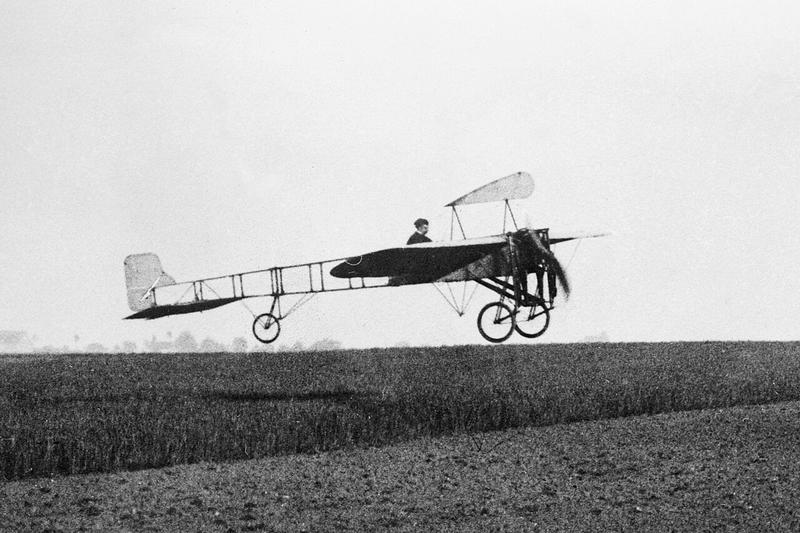
Within the book, the Lightning, a 1911 aircraft prototype developed by Blériot and the Wright brothers, achieved speeds reaching 280 km/h with a flying range of 1,400 kilometers. This represents more than a threefold improvement in airspeed compared to Blériot's historic English Channel crossing merely two years earlier, where he maintained approximately 80 km/h.
The capabilities of the aircraft comprising "BTC's" fleet dramatically exceed anything that would be manufactured until the mid-to-late 1930s, positioning them somewhat as a Deus Ex Machina enabling the alternative monetary system.
In the tenth chapter, as the "BTC"-triggered capital exodus depletes governmental resources needed to compensate their military forces, the trenches simply become vacant as soldiers peacefully abandon their posts and return home. Historical precedents before WWI contain numerous instances of unpaid armies, yet these typically feature mutiny, plundering, pillaging and in more extreme situations, the complete destruction of cities.
While the generals evacuate the trenches, Ammous eliminates several of the war's aggressive leaders from positions of power. For Tsar Nicholas II and Kaiser Wilhelm II, this occurs through assassination. Nicholas II receives a fatal gunshot from his cousin Grand Duke Nicholas Nikolaevich and is succeeded by his brother Grand Duke Michael Alexandrovich. The Kaiser suffers a fatal stabbing inflicted by his son, Crown Prince Wilhelm.
Both transitions occur without generating even minimal opposition. World history contains countless succession wars following monarchical murders or deaths. Imagining the absence of such conflicts here, on a continent fresh from warfare, with masses of unpaid soldiers, strains credibility.
Additionally, the projections into future developments are inherently speculative, as predicting the future remains impossible. Nevertheless, some predictions, such as the notion that climate change wouldn't occur, or that humanity would consume more beef, appear rather unconventional.
In the end, the book serves as "an alternative method of conveying the core principles of my three previous books," according to Ammous. He noted that certain readers prefer thinking in terms of "fiction, thought experiments, hypothetical scenarios," which represented a departure from his initial two publications.
WWI also offered a unique case study, "because understanding how the world derailed is essential" and envisioning alternative possibilities.
"If that monetary system is preserved, then individuals will save it, they will build up capital. Then the world experiences greater capital abundance. We possess more capital. Capital becomes less expensive. Individuals can invest more substantially. They can save more effectively. They can expand more rapidly. And when you combine all these elements together you create an extraordinary world and it represents a fundamentally different world," Ammous told Cointelegraph.