Britain Sidesteps American Regulatory Chaos While Completing Cryptocurrency Framework
Britain is concluding its extensive multi-year regulatory framework development for cryptocurrency and may leap ahead of America, which remains entangled in disputes over the CLARITY Act legislation.

Britain's primary financial oversight authority is putting the finishing touches on its regulatory framework designed for the cryptocurrency sector. While the rule-crafting journey has been extensive, industry analysts point out that the nation has successfully sidestepped the partisan back-and-forth currently stalling the US CLARITY Act.
The Financial Conduct Authority (FCA) published its final consultation document on Jan. 23. Members of the public now have the opportunity to provide feedback on the suggested framework, which comprises 10 distinct regulatory proposals. The three-year developmental process is anticipated to conclude in March, with complete implementation scheduled for October 2027.
These proposed regulations have undergone numerous revisions since 2023, as certain industry watchers voiced worries that the UK might lag significantly behind competing nations in the global race to establish crypto regulatory standards.
As the UK prepares to establish a comprehensive crypto framework by the close of Q1, the country appears to have narrowed the gap, at least partially, with the US.
FCA centralization a key difference with US CLARITY Act
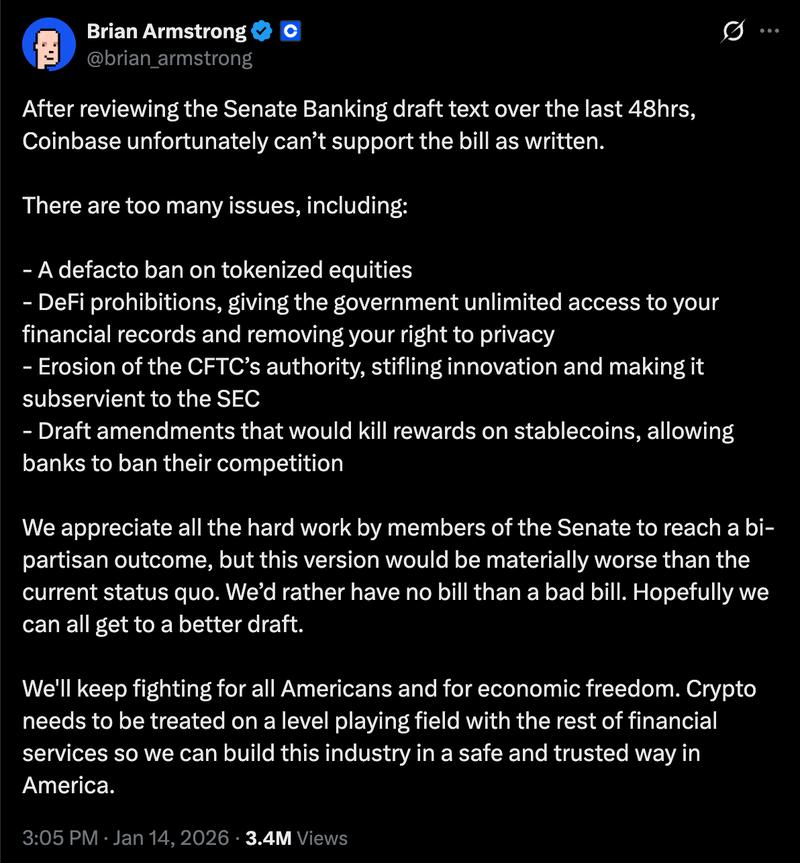
Throughout the past six years, leading global economies have competed to establish legal frameworks governing cryptocurrency. In the United States, Congress successfully enacted a stablecoin law known as the GENIUS Act and made efforts to approve a comprehensive crypto framework bill. Nevertheless, legislators encountered an obstacle with the CLARITY Act after Coinbase, a prominent crypto exchange and significant crypto lobby financial supporter, withdrew its backing.
According to Nick Jones, CEO and founder of Zumo, a UK-based digital assets platform, in his conversation with Cointelegraph, the UK has predominantly sidestepped this type of setback, attributing success to the FCA's comprehensive consultation procedures. The established timeline has produced a regulatory regime "that takes all stakeholders' concerns into account."
"It should help us to avoid the current malaise seen in the US, where Coinbase's decision to withdraw support for the CLARITY Act sent shockwaves through the digital assets sector and risks derailing market structure reform."
Significant distinctions exist between the US' proposed CLARITY Act and the FCA's suggested policies. One striking illustration is the UK's centralized methodology toward cryptocurrency oversight. The UK operates with only one securities and commodities regulatory authority, the FCA. Within its framework, the FCA has clearly delineated which digital assets fall under which specific regulations.
In the US, ongoing debate persists regarding which government agency will oversee particular segments of the crypto industry: the Commodity Futures Trading Commission or the Securities and Exchange Commission. Individual states also maintain their own financial enforcement bodies and regulatory requirements, such as New York's BitLicense regime.
This circumstance particularly applies to stablecoins. Legal partners at Morrison and Forrester observed, "The UK regulatory regime for stablecoins is centralized, with a single national regime integrating stablecoins into financial services law."
The US, in comparison, "creates a federal and state licensing regime for stablecoins issuers, involving participation by multiple states, federal banking regulators, and the U.S. Treasury." The firm indicated that such disparities could ultimately generate interoperability challenges and "compliance friction across markets."
UK crypto rules differ from Europe's MiCA, too
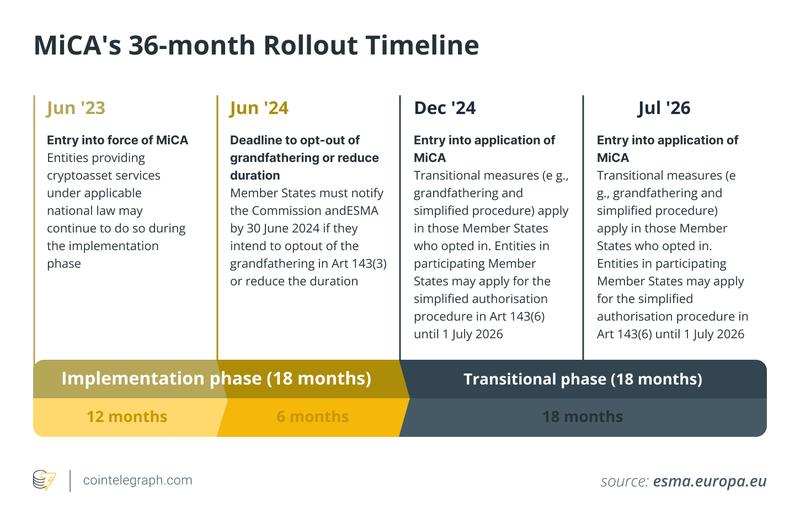
During the period spanning 2020 to 2024, the European Union undertook the development of its Markets in Crypto-Assets (MiCA) framework, which provides regulatory oversight for the crypto marketplace throughout the 27 member nations.
Jones asserted that the FCA regulations diverge substantially from the continental European methodology and communicate a message that "digital assets can successfully coexist in a reimagined future financial system. That's a strong statement of intent."
Authorities have accomplished this by "legislating to extend existing financial regulation to companies involved in crypto, rather than producing complicated rules tailored to the industry as seen with [MiCA]," Jones explained.
Marcus Bagnall, a partner at the law firm Wiggin, articulated that the proposed FCA framework eschews applying a "light-touch, 'MiCA-style' wrapper on to an unregulated sector." He indicated that while the outcome represents a more expensive and more demanding regulatory regime, it is "more due-diligence-ready for institutional money than MiCA."
Luigi Cantisani of Futura Law stated, "Services that are currently unregulated under MiCA but brought into scope in the UK could significantly increase the regulatory burden for firms seeking to serve UK clients."
FCA integrates crypto with wider financial system
In 2020, the FCA initiated a multi-year undertaking to develop cryptocurrency regulations when it assumed the role of Anti-Money Laundering and Counter-Terrorism Financing adviser for the UK's cryptocurrency industry.
Three years subsequently, in September 2023, it took measures to implement the contentious Travel Rule. This regulation mandates that crypto service providers gather and transmit user and transaction information to regulatory authorities.
Two months thereafter, in November, policy development commenced earnestly when the FCA released a discussion paper addressing stablecoins. Following that initial publication, it has issued several additional papers on subjects that encompass crypto custody, disclosure requirements and market abuse.
UK crypto hub ambitions are back
Jones stated that numerous participants in the industry have been "loudly lobbying for the appropriate regulatory framework that will facilitate new avenues of economic growth."
In April 2022, Prime Minister Boris Johnson unveiled a strategic initiative to transform the country into a "crypto hub." Shortly thereafter, the cryptocurrency market experienced a significant crash, and the initiative was deprioritized.
"The industry has been waiting for some time for the UK to make good on its 'UK Crypto Hub' ambitions," Jones explained. "The main ask has been for operational clarity that will allow crypto asset businesses to develop in the UK at scale."
With well-defined regulations approaching implementation, the UK's "crypto hub" aspirations may finally receive a fresh opportunity. Jones indicated the FCA's new framework will eliminate off-shoring practices and unregulated business models.
"There has never been a better time for crypto asset businesses to realize UK opportunities at scale."
He maintained that the advantages will extend to retail customers, who will now benefit from "specific assurances related to how their assets are held, as well as a tangible set of investor protections and the assurance of interfacing with regulated businesses held to the stringent standard of UK financial services."