
Q1 stablecoin market capitalization hits $315B milestone with USDC gaining ground over USDT
The first quarter saw stablecoins emerge as the dominant force in cryptocurrency markets as traders prioritized stability, with data from CEX.io revealing increased algorithmic activity and reduced retail participation signaling evolving market trends.

During the first three months of the year, stablecoins emerged as one of the few positive developments in an otherwise lackluster cryptocurrency sector, with expansion in supply and transaction metrics indicating continued appetite despite deteriorating conditions across the broader digital asset landscape.
Aggregate stablecoin market capitalization expanded by approximately $8 billion, reaching an all-time high of $315 billion throughout Q1, as reported by CEX.IO data. While this growth rate represented the most modest expansion trajectory since the fourth quarter of 2023, it nonetheless constituted positive momentum during a timeframe characterized by contraction across the wider cryptocurrency ecosystem.
The information indicates that market participants pivoted toward stablecoins as a risk-averse approach, elevating their proportion of total market participation. During the quarter, stablecoins represented 75% of aggregate cryptocurrency trading volume — an unprecedented high.
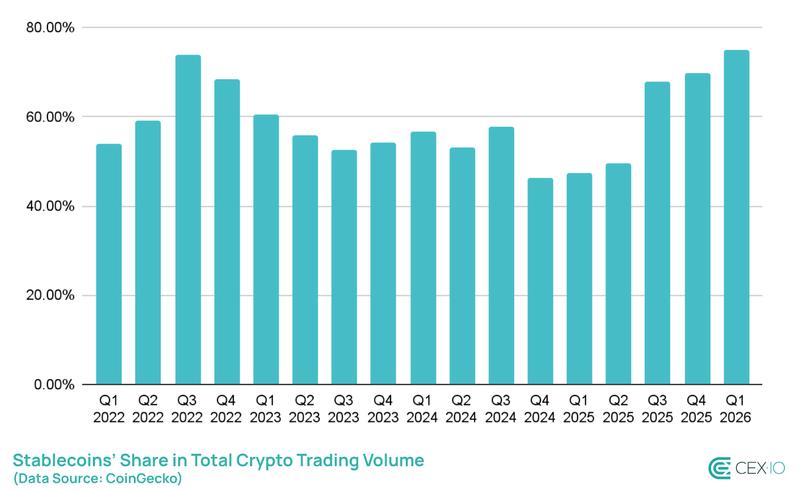
Concurrently, aggregate stablecoin transaction volume surpassed $28 trillion, highlighting their expanding function as the principal liquidity infrastructure within the digital asset ecosystem. This metric continues a sustained multi-year increase in usage, with stablecoin transaction volumes in recent periods outpacing those of leading payment processors such as Visa and Mastercard on a combined basis.
Nevertheless, metrics regarding fundamental activity revealed a more complex situation.
Retail-scale transactions — generally linked to individual market participants — decreased by 16% throughout the first quarter, representing the most severe contraction in recorded history. Conversely, automated trading activity experienced substantial growth, with algorithmic bots responsible for approximately 76% of total stablecoin transaction volume.
The transition toward automated bot-dominated transaction flows indicates that an expanding proportion of stablecoin utilization is connected to algorithmic trading strategies, arbitrage opportunities and liquidity provision operations, as opposed to retail user demand. While heightened automation levels can indicate more advanced or institutional market involvement, it could alternatively represent diminished genuine demand amid bearish market environments.
Divergence between major stablecoin issuers
A primary finding from the CEX.io analysis was an expanding gap between leading stablecoin providers. Circle's USDC (USDC) supply expanded by approximately $2 billion throughout the first quarter, whereas Tether's USDt (USDT) contracted by roughly $3 billion, representing the first significant divergence between these two assets since Q2 of 2022 during the bear market period.
This pattern corresponds with previous Cointelegraph coverage, which documented a spike in USDC transfer volume during February, suggesting elevated adoption across both trading platforms and onchain transaction activity.
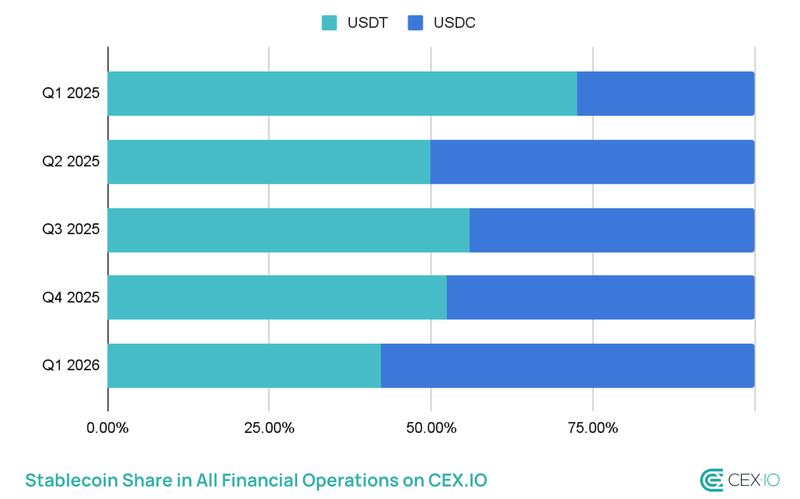
In addition to USDC, a substantial portion of stablecoin issuance expansion originated from yield-generating products — a category that has attracted heightened regulatory attention within the US. Current Congressional deliberations surrounding a cryptocurrency market structure legislative proposal have positioned yield generation at the core of policy discussions, with conventional banking institutions opposing stablecoins that provide interest-bearing returns.
The yield-bearing stablecoin sector currently maintains a market valuation of approximately $3.7 billion, with daily transaction volumes surpassing $100 million, based on information from CoinGecko.