How Bitcoin's unique characteristics compared to gold could trigger a major price surge
If just 5% of gold investments moved to Bitcoin, the cryptocurrency's market capitalization could surge by $2 trillion, pushing BTC prices to approximately $192,000.

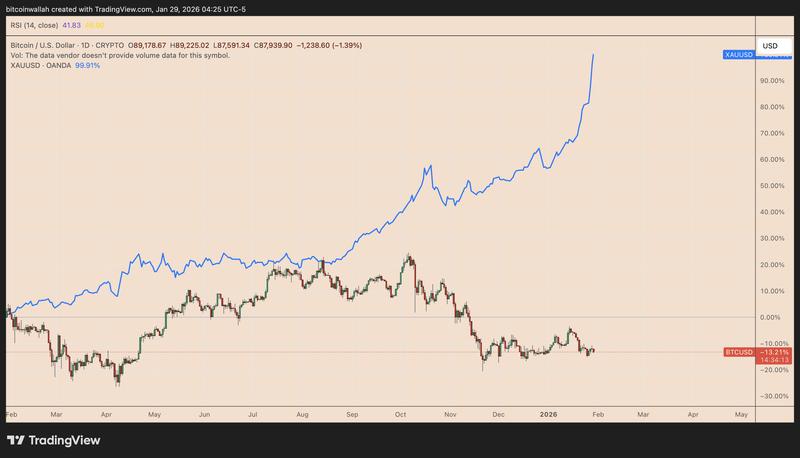
Over the past year, Bitcoin (BTC) has significantly lagged behind gold (XAU) in performance, experiencing a 13.25% decline while the precious metal surged nearly 100%. The question remains: will BTC be able to match gold's impressive performance?
Key takeaways:
- The maximum supply of Bitcoin is fixed at 21 million coins, with approximately 1 million remaining to be extracted.
- Unlike Bitcoin miners, gold mining operations expand output in response to rising prices.
- The relatively modest market size of Bitcoin compared to gold creates substantial upside potential from even small portfolio reallocations.
Bitcoin's supply remains independent of market demand
Unlike gold, Bitcoin's issuance mechanism does not react to price increases.
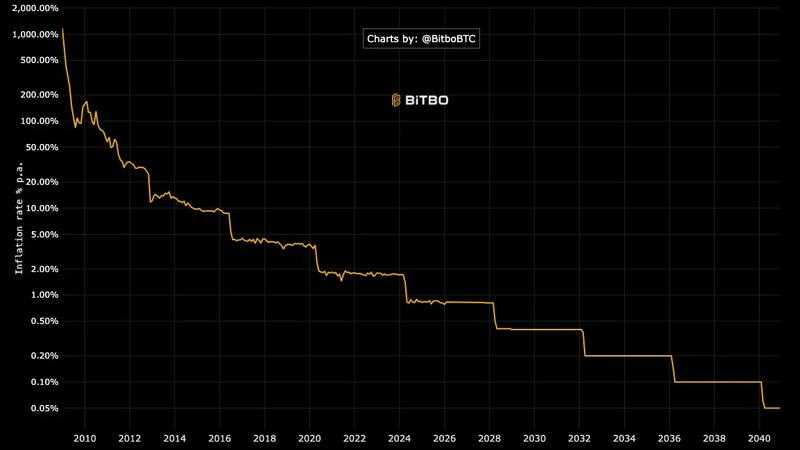
New BTC enters circulation according to a predetermined schedule that gradually decreases through halving events, ultimately approaching the absolute limit of 21 million coins.
While miners have the ability to deploy additional equipment or power down existing machines, they have no control over the quantity of coins generated by the network.
Pierre Rochard, the CEO of Bitcoin Bond Company, explained the fundamental issue with gold as a treasury reserve asset, stating that it lacks a difficulty adjustment and halving mechanism. He further elaborated:
"The higher the gold price goes, the more capital gets invested in new gold mining projects and accelerates the dilution of above ground gold supply."

According to World Gold Council data, worldwide gold extraction has grown substantially during the last 25 years, rising from approximately 2,300 tonnes in 1995 to more than 3,500 tonnes by 2018.
Production peaked at a historic high of 3,672 tonnes in 2025.
By the conclusion of 2025, approximately 93% of Bitcoin's total supply had been extracted, leaving the annual inflation rate at roughly 0.81%. Based on Bitbo data, this rate is expected to decline to 0.41% following the upcoming BTC halving scheduled for March 2028.
Bitcoin's market capitalization remains a fraction of gold's
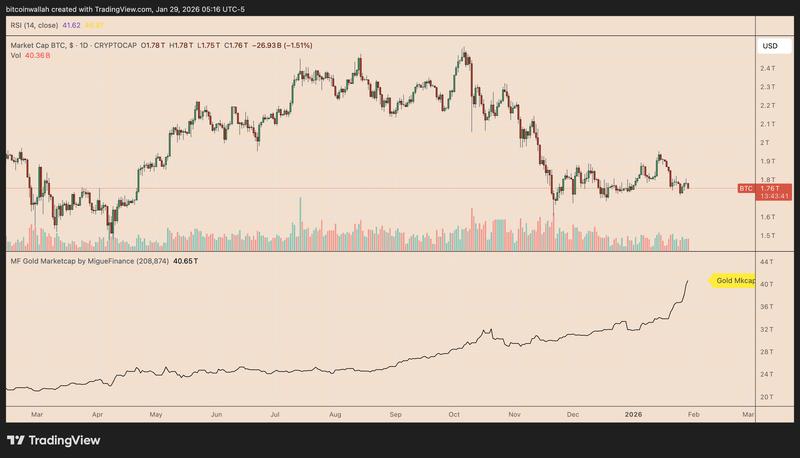
As of January, the total value of Bitcoin represented merely 4.30% of gold's massive $41.69 trillion market capitalization.
For investors who currently hold gold for hard-asset diversification purposes, whether for hedging against currency fluctuations, mitigating geopolitical uncertainties, or preserving long-term purchasing power, Bitcoin presents an opportunity for incremental allocation.
According to Jeff Walton, chief risk officer at Strive, a BTC treasury company, Bitcoin requires only a small portion of gold-oriented investment flows to shift into BTC.
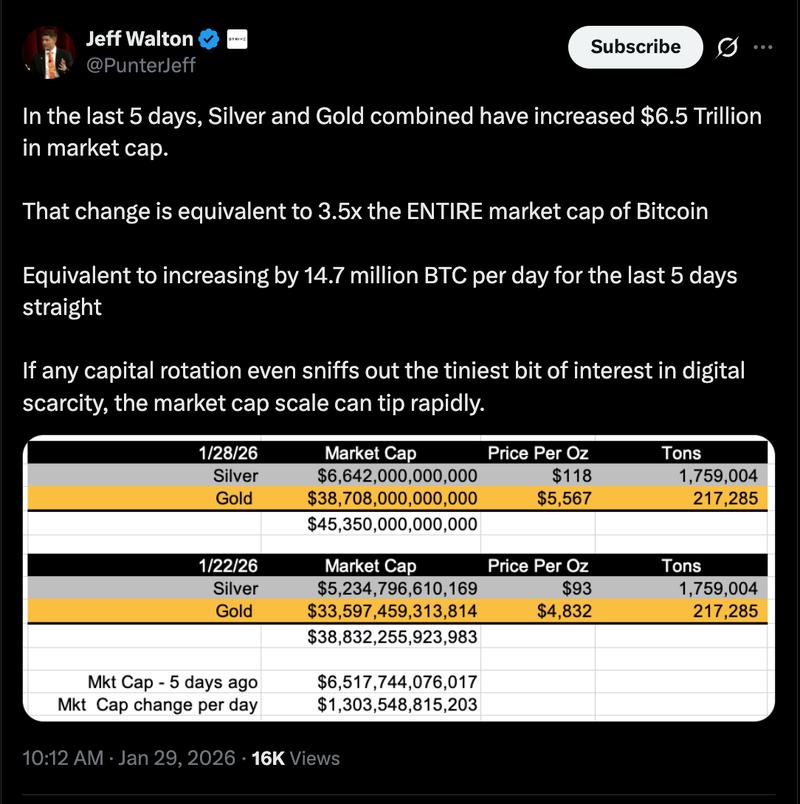
Given its comparatively smaller market capitalization, even marginal demand flows can generate substantially larger percentage price movements.
From a theoretical standpoint, if 5% of gold's value were reallocated into Bitcoin, it would represent more than $2 trillion in capital inflows, suggesting a potential 116.25% increase in BTC market cap and a projected price level of approximately $192,000, calculated using present market valuations.