Ethereum Shows Signs of Potential $3.3K Rally Despite Ongoing Crypto Market Struggles
Increased activity on Ethereum's layer-2 networks combined with a significant increase in transaction fees could signal that ETH is preparing for an upward recovery.

Key takeaways:
- The Ethereum network processed 16.4 million transactions on a weekly basis, demonstrating that fees can remain under $0.20 even during periods of elevated demand.
- Volume on decentralized exchanges throughout the Ethereum network ecosystem reached $26.8 billion, indicating renewed investor engagement.
Throughout the seven-day period concluding on Sunday, Ether (ETH) underwent a 15.9% decline in price. The price movement resulted in $910 million worth of liquidations affecting bullish leveraged positions in ETH, sparking concerns that the $2,800 support threshold—maintained consistently for two months—could finally give way. Notwithstanding this decline in market sentiment among traders, multiple onchain indicators and derivatives data points indicate the possibility of a near-term price surge toward $3,300.
Network fees at the base layer serve as a crucial indicator for measuring demand for a blockchain's native token, with growth in transaction volume and active wallet addresses following closely as secondary metrics. Although Ethereum has received criticism for emphasizing scalability via rollup solutions, this approach is demonstrating its value as usage across Base, Polygon, Arbitrum, and Optimism continues to accelerate.
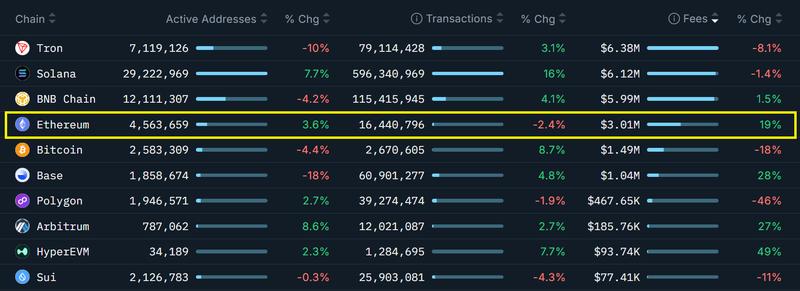
Throughout the previous week, Ethereum network fees experienced a 19% increase, whereas competing networks Tron and Solana registered decreases compared to their recent performance patterns. Even more significantly, the combined transaction count across Ethereum's layer-2 solutions climbed to 128 million, exceeding the combined totals of BNB Chain and Tron. This development indicates that the Ethereum ecosystem possesses the capability to scale efficiently while maintaining its fundamental value proposition.
Activity on decentralized exchanges (DEX) serves as a key metric for assessing capital flows and network fee generation. Although demand for trading perpetual contracts reached its peak in August 2025 and has experienced a decline thereafter, momentum is now shifting back in Ethereum's favor. This reversal can be largely attributed to average transaction fees falling to $0.20, a decrease from the $0.50 level observed in November 2025.
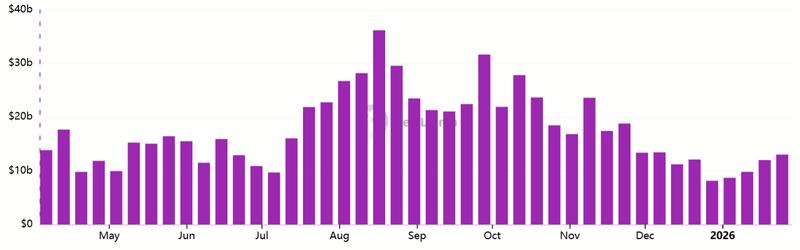
Decentralized exchange volumes on Ethereum over a seven-day period hit $13 billion, representing an increase from the $8.15 billion recorded four weeks earlier. While Solana continues to lead with $30 billion in weekly trading volume, the entire Ethereum ecosystem collectively achieved $26.8 billion. The implementation of the Fusaka upgrade in December 2025 substantially enhanced network data throughput and introduced transaction batch processing capabilities, delivering considerable improvements to the overall user experience.
Ethereum dominance sticks even as professional traders turn neutral
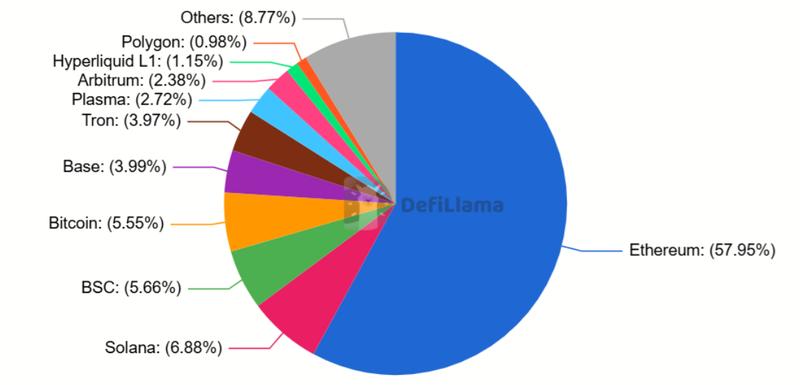
The commanding position Ethereum maintains in total value locked (TVL) continues to serve as compelling evidence of investor preference for decentralized solutions, even while BNB Chain and Solana face challenges in capturing additional market share.
Among professional market participants, sentiment is shifting back toward a neutral position between call (buy) and put (sell) options following a short-lived period of hedging against additional downside. In contrast to the common assumption that large investors accurately predict every market movement, the highest volume in put options actually materialized after ETH fell beneath the $2,800 threshold.
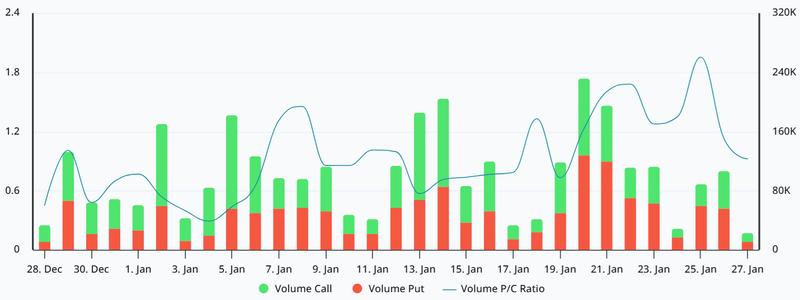
At Deribit, the ETH options put-to-call volume ratio returned to neutral levels between Monday and Tuesday, after a five-day period during which put options dominated. It's worth noting that Sunday's 2x peak represented the most elevated level witnessed in more than four months. Market confidence appears to be making a comeback as participants recognize that risks tied to a potential US government funding shutdown exerted minimal influence on the broader market.
The weakness in Ether's price stands in sharp contrast to traditional markets, with the S&P 500 is trading within 0.5% of its all-time high, while 5-year US Treasury yields have stabilized near 3.85%. Market participants continue to exercise caution regarding inflation concerns and recession probabilities; according to the CME FedWatch tool, the likelihood of the US Federal Reserve reducing interest rates to 3.25% or below by July has fallen to 28%, compared to 55% last month.
In the final analysis, ETH path to $3,200 will likely be driven by sustained DEX activity, rising network fees, and the clearing of the uncertainty recently seen in the options markets.