
Digital gold surge reflects mounting pressure on greenback
XAUt, Tether's tokenized gold product, has captured over 50% of the market for gold-backed stablecoins as dollar weakness drives fresh safe-haven appetite.

Demand for tokenized gold continues to grow alongside appetite for physical precious metals, underscoring a wider pivot toward conventional safe-haven instruments as political instability and trade policy uncertainty drive capital flows away from the US dollar.
Tether announced on Monday that its Tether Gold (XAUt) product has captured more than 50% of the gold-backed stablecoin sector, achieving a total valuation above $2.2 billion.
According to Tether's disclosure, 520,089 XAUt tokens were outstanding at the conclusion of the fourth quarter, with every token supported by physical gold reserves on a one-to-one basis.
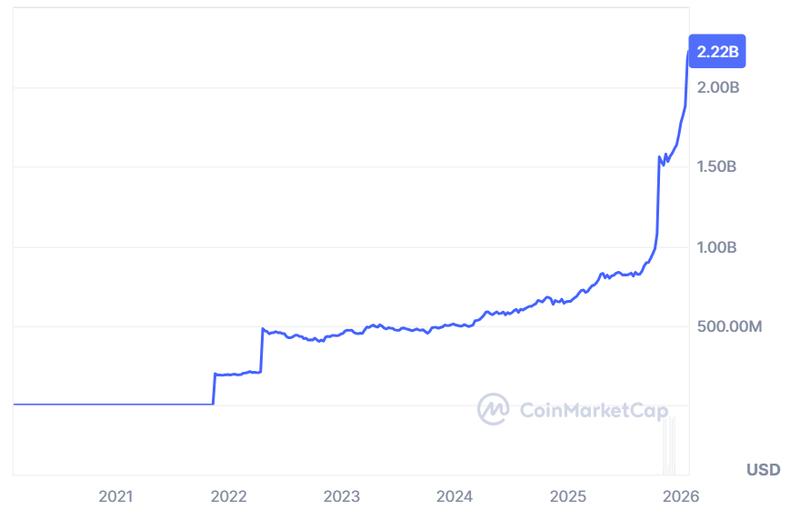
Paolo Ardoino, the company's CEO, noted that Tether's Gold investment vehicle, which maintains the bullion reserves supporting XAUt, has expanded to a size comparable to certain sovereign nations' gold holdings.
This disclosure arrived as Comex gold surpassed the $5,000 per troy ounce threshold for the first time in history, capping a year-to-date increase of approximately 17%.
Greenback weakens while official sector gold purchases gain momentum
The precious metal's ascent has been building for several years, propelled primarily by central banks progressively decreasing their exposure to the US dollar while replenishing gold reserves as protection against currency volatility, heightened geopolitical instability and, to some extent, sanctions risk.
Official sector purchasing intensified during the latter half of 2025, with central banks acquiring a net total of 220 tonnes of gold throughout the third quarter, based on World Gold Council statistics. This resurgent accumulation demonstrates a wider initiative by reserve managers to shift allocations away from dollar-based instruments and into value stores existing beyond the conventional financial infrastructure.
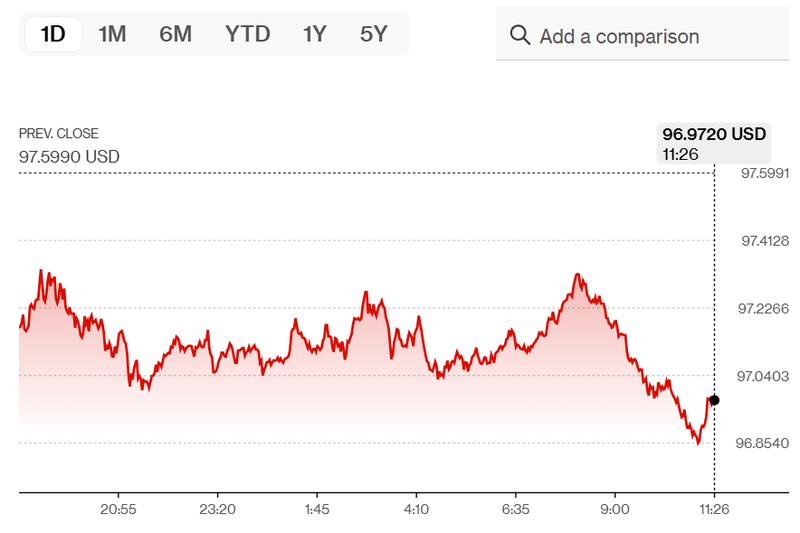
These capital movements have aligned with a persistent decline in the dollar following US President Donald Trump's assumption of office in early 2025. The US Dollar Index (DXY) decreased 9.4% over the previous year, marking its most severe annual decline since 2017, while continuing its descent this month by reaching its weakest point since September.
From Jan. 19, the index has fallen an additional 2.4%, based on Bloomberg data.
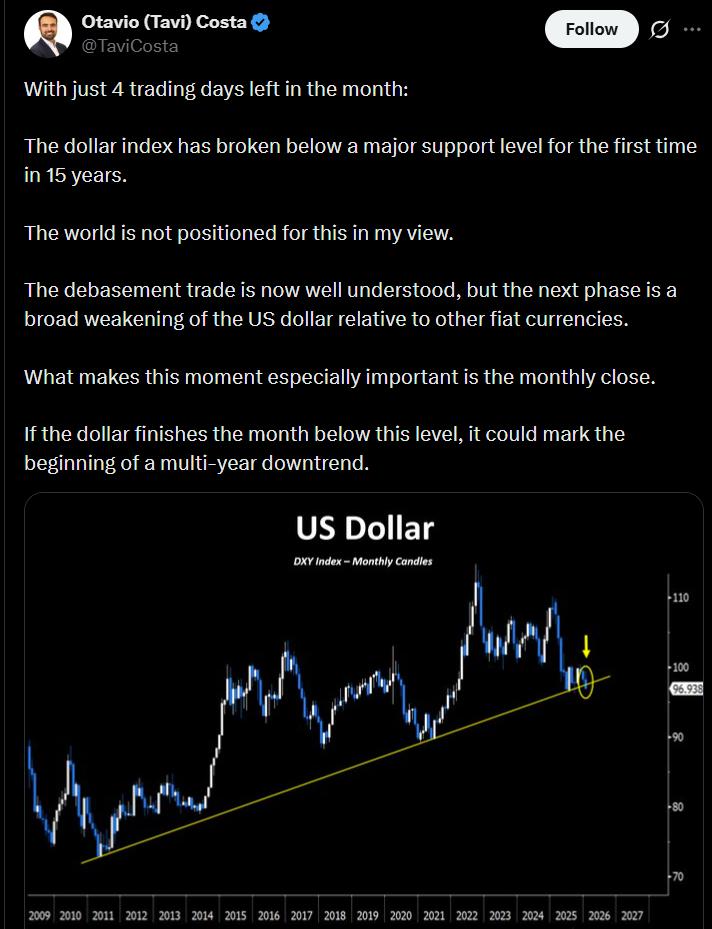
Certain market observers caution that additional downside could materialize. Azuria Capital's Otavio Costa noted that the dollar has penetrated a long-standing support trendline for the first time in over ten years, with monthly confirmation appearing likely.
The debasement trade is now well understood, but the next phase is a broad weakening of the US dollar relative to other fiat currencies.
Otavio Costa
Bitcoin (BTC) has not yet substantially supplanted gold in this capacity. Despite frequent positioning as protection against monetary debasement, Bitcoin has proven unable to capture the same consistent, extended-duration capital allocation, especially from older demographic cohorts and more risk-averse market participants.
Research conducted by Karel Mercx, an investment strategist with Dutch financial advisory platform and investment publication Beleggers Belangen, concluded that Bitcoin has thus far underdelivered on its proposition as a debasement hedge, maintaining gold's position as the favored protective asset.