
Arthur Hayes: Bitcoin-Tech Stock Split Signals 'Warning Siren' for Traditional Currency
BitMEX founder Arthur Hayes predicts artificial intelligence job displacement will trigger a credit market collapse, compelling monetary authorities to increase money supply, propelling Bitcoin to record heights.

According to Arthur Hayes, the growing separation between Bitcoin's performance and technology equities serves as a crucial indicator of an impending artificial intelligence-fueled credit market crisis that will ultimately force central banking institutions to expand monetary supply.
"Bitcoin is the global fiat liquidity fire alarm. It is the most responsive freely traded asset to the fiat credit supply," said the crypto entrepreneur in his latest blog post on Wednesday.
The cryptocurrency veteran proceeded to warn that the emerging gap between Bitcoin (BTC) and the technology-focused Nasdaq 100 Index "sounds the alarm that a massive credit destruction event is nigh."
Whenever these two asset categories that previously moved in tandem begin to separate, "it warrants further investigation into any trigger that could cause a destruction of fiat" — primarily dollars and credit, a phenomenon also referred to as deflation, according to his analysis.
The former BitMEX CEO maintains that employment displacement stemming from AI implementation will significantly affect consumer credit and home loan obligations "because of the inability of white-collar knowledge worker debt donkeys to meet their monthly payments."
"That's a bold statement to call for a financial crisis because of job losses caused by AI adoption."
AI job losses could trigger another banking crisis
Throughout 2025, corporations referenced AI when disclosing 55,000 employment cuts, exceeding by more than 12 times the quantity of terminations linked to AI merely two years prior, according to CBS News reporting in early February.
"This AI financial crisis will restart the money printing machine for realz," said Hayes.
The model he developed indicates that a 20% decrease among the 72 million "knowledge workers" across the United States might generate approximately $557 billion in consumer credit and home loan defaults, equating to a 13% reduction of US commercial bank equity.
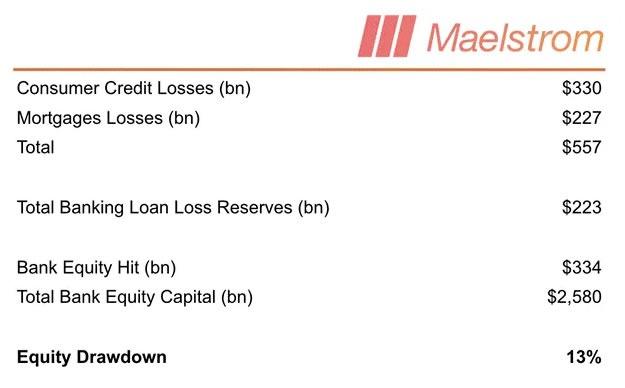
According to Hayes' projection, financially vulnerable regional banking institutions would collapse initially, account holders would withdraw their funds, and lending markets would freeze. The Federal Reserve would ultimately respond with panic and begin expanding the monetary base.
"While the Fed is fighting windmills, AI-related job losses will destroy the balance sheets of American banks," he said.
"Finally, the monetary mandarins panic and press that Brrrr button harder than I shred pow the morning after a one-meter dump."
The crypto investor forecasted that this spike in fiat credit expansion would "pump Bitcoin decisively off its lows," and that the anticipated increase in fiat currency creation necessary to rescue the financial system would "propel Bitcoin to a new all-time high."
Beyond Bitcoin, Hayes revealed that the two alternative cryptocurrencies that his investment firm, Maelstrom, will "deploy excess stables into once the Fed blinks" are Zcash (ZEC) and Hyperliquid (HYPE).
More money-printing theories abound
This isn't the first time Hayes has presented an unconventional monetary expansion hypothesis.
During January, he stated that the Federal Reserve would expand the money supply to resolve the Japanese bond market crisis.
In December 2025, he forecasted that BTC would climb to $200,000 by March driven by monetary expansion through a novel Fed liquidity mechanism called Reserve Management Purchases, which bears similarity to quantitative easing.