Societe Generale's FORGE brings euro-pegged stablecoin to XRP Ledger in blockchain diversification strategy
Societe Generale's crypto division launches EUR CoinVertible on XRP Ledger as its third blockchain deployment, joining existing networks Ethereum and Solana.

SG-FORGE, the digital asset division of French banking giant Societe Generale, has launched EUR CoinVertible, its euro-backed stablecoin, on the XRP Ledger, representing the token's third public blockchain deployment following launches on Ethereum and Solana.
The expansion, announced on Wednesday, leverages Ripple's custody infrastructure and may facilitate integration with various Ripple products, potentially including applications as collateral for trading purposes. The digital asset unit emphasized that this deployment broadens institutional accessibility to the euro-denominated token across an additional public blockchain network.
This development follows approximately one month after the global banking network SWIFT conducted testing of SocGen's euro-denominated stablecoin during a pilot program focused on the exchange and settlement of tokenized bonds using both traditional fiat and digital currencies. According to SG-FORGE, EUR CoinVertible represents the first digital asset compliant with MiCA regulations specifically engineered for direct integration with SWIFT's interoperability infrastructure.
EUR CoinVertible maintains backing through bank cash deposits or securities of high quality on a one-to-one ratio. Current circulation figures show approximately 70.51 million tokens in active use.
Both the SWIFT pilot program and the multi-chain deployment strategy are occurring amid an extensive policy discussion throughout Europe regarding the trajectory of digital currency development.
Joachim Nagel, who serves as president of Germany's central bank, stated on Monday that Europe ought to pursue development of both a retail euro central bank digital currency (CBDC) and stablecoins denominated in euros, making the case that domestically developed digital payment instruments could bolster the region's autonomy in payment infrastructure.
Earlier during this month, Nagel issued a warning to attendees at a Euro50 Group gathering that allowing US dollar–denominated stablecoins to achieve a dominant position in Europe could compromise domestic monetary policy effectiveness and diminish European sovereignty should euro-backed alternatives not achieve adequate market penetration.
Europe's evolving stablecoin landscape under MiCA
The stablecoin regulatory framework within the European Union's Markets in Crypto-Assets (MiCa) regime became operational on June 30, 2024, mandating that issuers conducting operations in the European Economic Area secure an e-money license from at least one EU member state. These regulatory requirements led multiple exchanges and token issuers to delist or impose restrictions on tokens lacking proper authorization under the newly established framework.
Several major platforms including Coinbase, OKX, Bitstamp, Uphold and Binance were among numerous cryptocurrency exchanges that proceeded to remove or restrict access to non-compliant stablecoins as a direct response to the newly implemented regulatory provisions.
In November 2024, Tether made the announcement that it would discontinue its euro-denominated stablecoin EURT, suspending minting operations across all blockchain networks and providing holders with a one-year window to redeem their tokens.
Despite numerous exchanges and issuers opting to exit the EU market, other industry participants took steps to comply with the new regulatory requirements. Circle achieved a significant milestone in July 2024 by becoming the first global stablecoin issuer to obtain regulatory authorization under MiCA, an achievement that corresponded with a notable increase in trading volume for its USDC token during that same month.
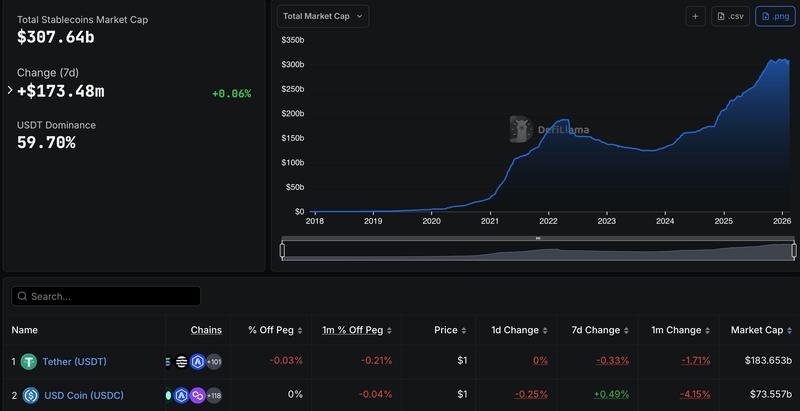
Concurrently, in the United States, the enactment of the GENIUS Act in July 2025 has catalyzed increased activity within the stablecoin marketplace, with aggregate market capitalization climbing from approximately $260 billion on July 19 to around $307.6 billion, based on data from DefiLlama.
The asset category continues to demonstrate significant concentration in tokens pegged to the US dollar, with issuances from Tether (USDT) and Circle (USDC) representing more than 80% of the aggregate market capitalization.
This market imbalance has captured the focus of European central banking officials, who maintain that fortifying the region's native stablecoin infrastructure is essential to counterbalancing increasing dollar dominance within digital asset markets.
In December, BNP Paribas announced its participation alongside nine other EU-based banking institutions to introduce a euro-backed stablecoin during the second half of 2026 via a newly established Amsterdam-based organization, Qivalis.