Former Fidelity Executives Launch Blockchain-Based Gold Trading Platform for Everyday Investors
A DeFi platform called Altura, spearheaded by ex-employees from Fidelity and PwC, is offering retail traders access to a blockchain gold arbitrage vault promising 20% annual returns during a period when gold prices hover near all-time peaks.

A decentralized finance platform known as Altura, established by professionals who previously worked at Fidelity and PwC, is rolling out a blockchain-based gold arbitrage approach designed for everyday investors, with projected annual returns of 20%, based on a Thursday announcement provided to Cointelegraph.
The Altura platform operates by collecting user funds into a vault structure that repeatedly cycles capital through physical gold transactions of short duration. In contrast to services such as Robinhood or Revolut that provide passive exposure to gold pricing, Altura maintains that it is tokenizing the actual arbitrage mechanism at its core.
The firm reports securing $4 million in investment capital and has already processed the transfer of approximately 185 kilograms of physical gold, which translates to around $28.5 million in total transaction value, based on the announcement.
Matthew Pinnock, co-founder and chief operating officer of Altura, told Cointelegraph the goal is to "bring an institutional-style gold strategy onchain in a way that retail investors can actually access."
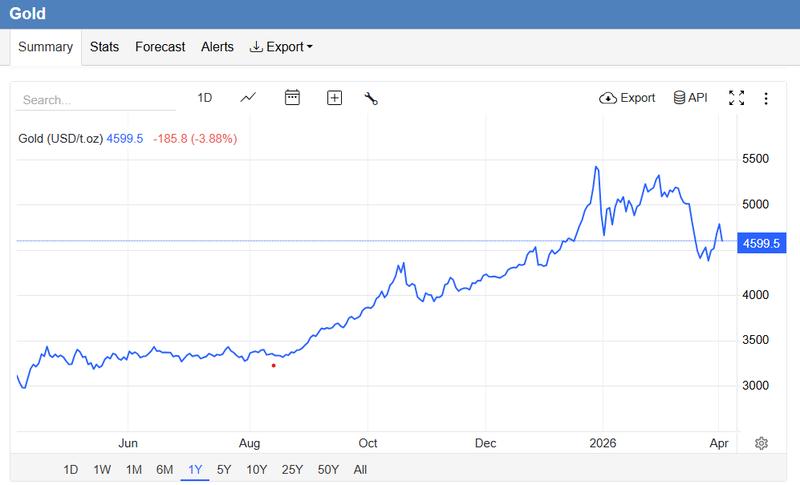
This product debut arrives while physical gold is trading close to historic peak values following a surge to an unprecedented high exceeding $5,300 per ounce during January, although prices have subsequently experienced a significant retreat. The introduction of Altura's platform signals an emerging evolution in tokenized real-world assets, where initiatives are moving beyond simply providing passive commodity exposure and are instead attempting to repackage institutional-grade trading methodologies as blockchain-based DeFi yield instruments for everyday users.
A strategy typically reserved for institutional traders
According to Pinnock, Altura's "revenue-generating trading strategy" was historically used by institutional commodities desks, and that high capital requirements, legal complexity and counterparty risk in traditional bullion arbitrage have effectively kept smaller investors out of this type of trade.
Physical gold acquired on Altura's behalf through its trading collaborator Inessa undergoes tokenization at the point of purchase, according to Pinnock, with these digital tokens placed in escrow throughout each transaction while custody transfers are documented using dual cryptographic signatures. He noted that depositors don't receive direct ownership rights to the physical bullion but instead obtain exposure to profits generated through the trading activity.
The operational framework of Altura relies on a web of offchain participants. The platform indicates it collaborates with Aurellion Labs and Inessa, which subsequently works alongside air-cargo specialist Zeal Global, to carry out and validate transactions.
Regarding the 20% yield target, Pinnock explained the approach is engineered to be "close to delta-neutral," with transaction terms finalized prior to initiating logistics operations so that profits derive from pricing disparities among counterparties instead of speculative positions on gold's directional price movement.
Each arbitrage iteration generally concludes in one to two days, which enables capital to be redeployed numerous times and restricts exposure to spot price fluctuations, according to his explanation, though he recognized that returns would diminish if market pricing inefficiencies become less pronounced.
Rising interest in real-world yields
The platform's introduction coincides with growing enthusiasm for "real-world" DeFi returns, as tokenized asset and RWA protocols expanded to approximately $17 billion in total value locked in December 2025, according to DefiLlama data.
Nevertheless, a collaborative study published by RWA.io and Veritas Protocol during that identical month revealed that financial losses stemming from blockchain operational breakdowns in tokenized RWA markets climbed to $14.6 million during the first half of 2025, representing a 143% increase from the previous year, underscoring how intricate offchain infrastructure can nonetheless result in investor losses.