Federal Reserve Minutes Reveal Potential Return to Rate Increases as Inflation Worries Mount
Central bank officials indicated that monetary policy easing might need to wait until there's concrete evidence showing disinflation trends are definitively resuming.
Recently published documents from a January meeting reveal that United States Federal Reserve officials contemplated the potential for raising interest rates once again.
Wednesday saw the publication of the Federal Open Market Committee meeting minutes from the final days of January, which disclosed that certain policymakers were considering rate increases in response to persistently elevated inflation levels.
Multiple participants noted their willingness to consider "the possibility that upward adjustments to the target range for the federal funds rate could be appropriate if inflation remains at above-target levels," according to the official minutes.
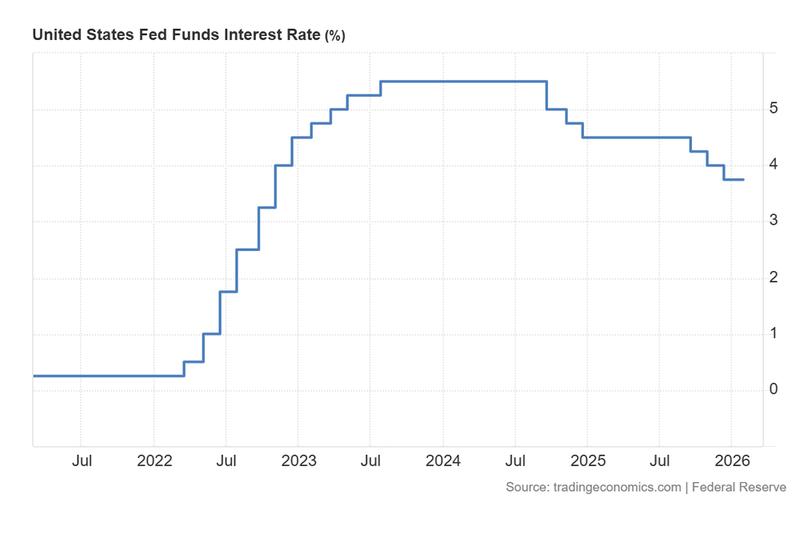
At their January gathering, central bank officials decided to maintain interest rates at their current level between 3.5% and 3.75% following a series of three rate reductions implemented at the conclusion of 2025, bringing rates down from 4.5% to their present position.
Should this action be implemented, it would mark the first instance of a rate increase since July 2023. Nevertheless, CME futures markets are currently showing a 94% probability that interest rates will stay at their current level during the Fed's upcoming meeting scheduled for March 18.
Two principal mandates guide the Federal Reserve's approach to interest rate policy: controlling inflation and supporting the labor market.
High inflation concerns persist
The released minutes also disclosed the presence of a substantial "hawkish" faction within the committee that remains hesitant to embrace additional rate cuts at this time.
Certain participants expressed their view that maintaining the policy rate at its current level for an extended period would probably be the most prudent course of action, allowing them additional time to evaluate incoming economic information.
That said, several of these same participants concluded that "additional policy easing may not be warranted until there was a clear indication that the progress of disinflation was firmly back on track."
The majority of participants expressed concern that advancement toward achieving the 2% inflation objective "might be slower and more uneven than generally expected," with many believing there exists a substantial risk of inflation persisting above the desired target level.
Should inflation decrease in accordance with current projections, implementing rate reductions "would likely be appropriate," the meeting minutes indicated.
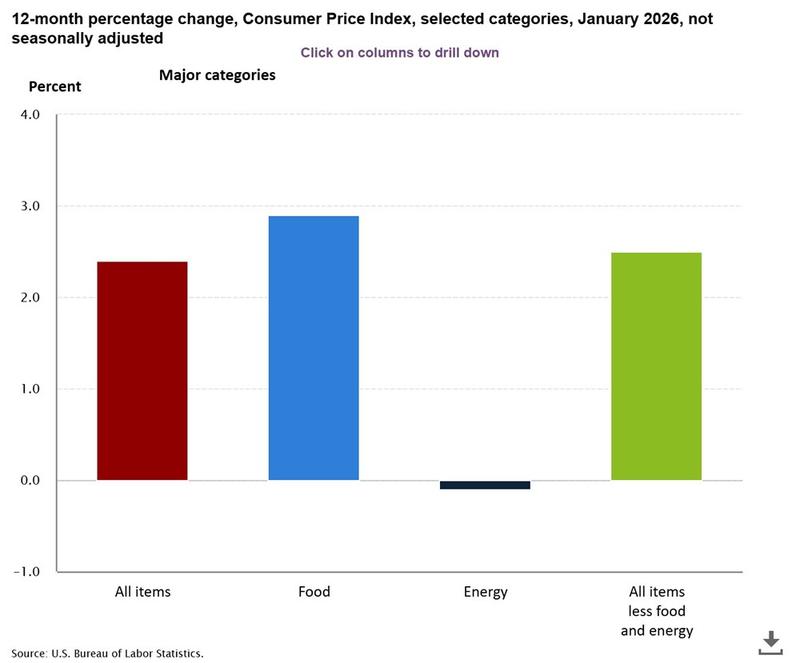
According to data from the Bureau of Labor Statistics, US inflation as calculated by the Consumer Price Index (CPI) currently stands at 2.4%, having risen 0.2% during January.
Rate hikes are typically bad for crypto prices
Elevated interest rates tend to create bearish conditions for high-risk investment vehicles such as cryptocurrencies, primarily because lower-risk alternatives like Treasury bonds or cash deposits provide superior returns without the associated volatility.
Additionally, higher interest rates increase the cost of borrowing capital, which in turn dampens speculative trading activity, reduces the use of leverage, and limits venture capital funding opportunities.
The cryptocurrency market's overall sentiment, which has already reached extremely pessimistic levels, faces the possibility of deteriorating even further in response to a hawkish stance from the Federal Reserve.