Ethereum Development Timeline May Accelerate Thanks to AI 'Vibe Coding,' Says Vitalik Buterin
Despite acknowledging significant limitations, Vitalik Buterin suggests AI-assisted coding could accelerate Ethereum's development timeline beyond current expectations.

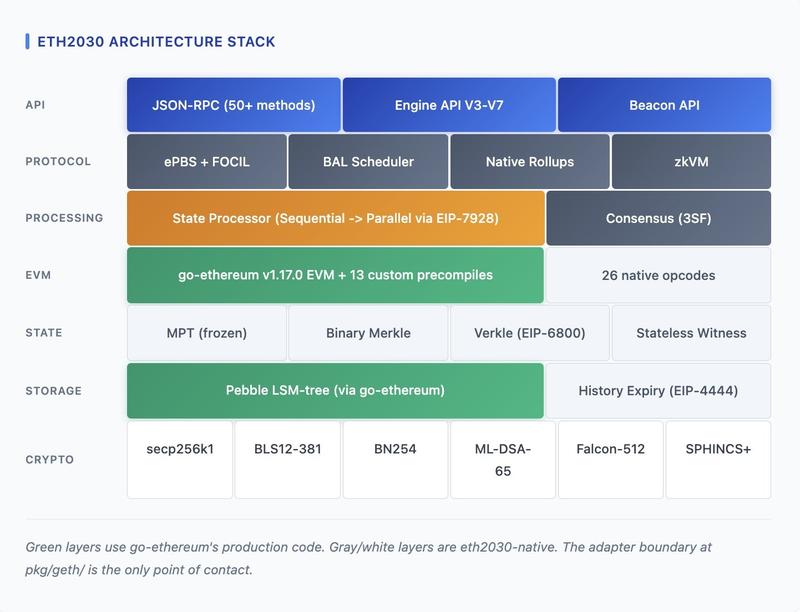
Vitalik Buterin, the co-creator of Ethereum, believes that a recent trial using artificial intelligence to rapidly develop a prototype of the blockchain's development plan through 2030 in merely a matter of weeks offers valuable insights for the developer community.
"This is quite an impressive experiment. Vibe-coding the entire 2030 roadmap within weeks," Buterin posted to X on Saturday after a developer made a bet with Vitalik in February that one person could use AI to code a reference implementation of the blockchain's roadmap.
Buterin added that AI is "massively accelerating coding" and that people "should be open to the possibility that the Ethereum roadmap will finish much faster than people expect, at a much higher standard of security than people expect."
The term vibe coding refers to a development approach where artificial intelligence generates application code, enabling developers to build software solutions at rapid speeds. This methodology has gained increasing traction as AI language models have demonstrated enhanced coding capabilities; nevertheless, critics point out that code produced by AI can contain security vulnerabilities.
Vitalik says AI code would have "critical bugs"
Vitalik said that there were "massive caveats" to using AI, as the speed at which the code was written means it "almost certainly lots of critical bugs, and probably in some cases 'stub' versions of a thing where the AI did not even try making the full version."
"But six months ago, even this was far outside the realm of possibility, and what matters is where the trend is going," he added.
According to Buterin, the priority should shift away from pure velocity toward placing greater importance on robust security measures.
"The right way to use it is to take half the gains from AI in speed, and half the gains in security: generate more test-cases, formally verify everything, make more multi-implementations of things."
He expressed personal enthusiasm regarding the prospect that error-free code, "long considered an idealistic delusion," will finally become first possible and "then a basic expectation."
Buterin has been active commenting on the recently released roadmap from the Ethereum Foundation called "Strawmap," which lays out all upgrades planned for the next four years.
He has previously proposed plans to make Ethereum quantum-resistant and on Sunday said that account abstraction, or smart accounts, would "happen within a year."