
Michael Saylor identifies protocol change advocates as primary Bitcoin risk
According to Strategy co-founder Michael Saylor, significant modifications to Bitcoin's protocol ought to be infrequent and carefully considered.

According to Michael Saylor, co-founder of Strategy, a Bitcoin (BTC) treasury firm, the most significant danger facing the Bitcoin network comes from "ambitious opportunists" seeking to implement protocol modifications.
The remarks from Saylor ignited an online discussion. According to Bitcoin maximalist Justin Bechler, these comments targeted software developers advocating for Bitcoin use cases beyond monetary applications, including non-fungible tokens (NFTs) and onchain imagery stored within blocks.

Investor Fred Krueger stated that "The greatest risk to Bitcoin is quantum," while others, including Mert Mumtaz, CEO of Helius, a remote procedure call (RPC) node provider, expressed disagreement with Saylor's position. According to Mumtaz:
"Absolute cancer of a mindset. 'Ambitious people wanting to evolve this technology are our biggest risk.' Nothing is infallible. certainly not Bitcoin, which has had tons of bugs until now, like all other software — perhaps let's let those bugs stay instead of patching them."
Multiple users, including Mark of Bitcoin, referenced the current spam wars and Bitcoin Improvement Proposal 110 (BIP-110), which represents a temporary soft fork designed to remove non-monetary data from Bitcoin's ledger.
The debate between Bitcoiners favoring protocol ossification and software developers pushing for additional Bitcoin features, such as quantum-resistant wallet addresses and onchain file storage capabilities, was intensified by Saylor's post.
Quantum computing threat remains contentious topic within Bitcoin community
Within the Bitcoin community, quantum computing remains a topic of vigorous debate. Nic Carter, founding partner at venture firm Castle Island, has consistently issued warnings that the protocol must transition to post-quantum standards with urgency.
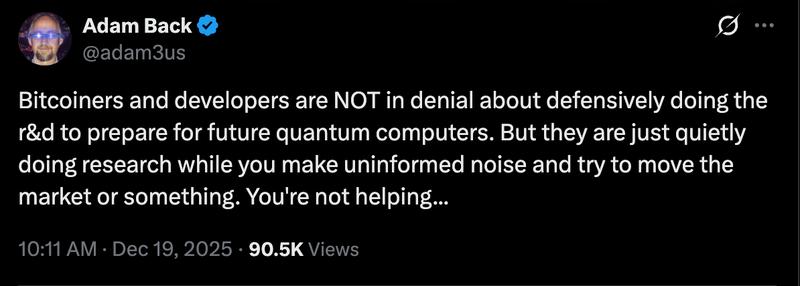
Nevertheless, Adam Back, CEO of Blockstream, a digital asset infrastructure company, dismissed Carter's assertions, characterizing them as "uninformed."
Back stated: "Bitcoiners and developers are not in denial about defensively doing the research and development to prepare for future quantum computers. But they are just quietly doing research while you make uninformed noise."
According to Bitcoin market analyst James Check, concerns about quantum computing have not impacted Bitcoin's market valuation, and he explained the recent market decline as a result of long-term Bitcoin holders selling their holdings into the market.