Stablecoin Payments Startup OpenFX Secures $94M Series A Investment
In a major Series A funding round, OpenFX secured $94 million to grow its stablecoin-powered foreign exchange network as companies seek enhanced cross-border payment solutions.

A fintech company specializing in foreign exchange transactions and cross-border remittances, OpenFX, has successfully secured $94 million through a Series A investment round aimed at growing its payments network powered by stablecoins.
Notable investors participating in the funding round included Accel, Atomico, Lightspeed Faction, M13, Northzone and Pantera. According to the company's announcement, the newly raised capital will be allocated toward boosting liquidity levels, penetrating additional markets and broadening its footprint across Southeast Asia and Latin America.
"The global FX market processes more than $200 trillion annually, yet the core settlement infrastructure remains largely unchanged from decades ago,"founder Prabhakar Reddy said, adding that he launched OpenFX in 2024 to address what he described as a gap in the FX market.
The company represents one of several emerging market infrastructure providers leveraging blockchain-based digital currencies to facilitate faster money movement, especially for enterprises conducting large-value transfers across international borders.
OpenFX targets Southeast Asia and Latin America expansion
According to OpenFX's strategic plans, the freshly obtained funding will support market penetration efforts in Southeast Asia and Latin America. The firm's current operational presence spans the United States, United Kingdom, the United Arab Emirates and India.
Information available on the company's official website indicates that OpenFX channels payment transfers through a unified liquidity network and reports that 90% of all transactions achieve settlement within 60 minutes, while 30% complete the process in under 10 minutes. Additionally, the platform promotes round-the-clock accessibility and competitive fee structures between 0.01% and 0.3%.
OpenFX disclosed that in 2025, the company completed a separate funding initiative that brought in $23 million, with Accel serving as the lead investor and additional backing from NFX, Lightspeed Faction, Castle Island Ventures, Flybridge, Hash3 and various other strategic fintech investment partners.
Cointelegraph reached out to OpenFX for comment, but had not received a response by publication.
Stablecoins are "ChatGPT moment" for corporate crypto adoption
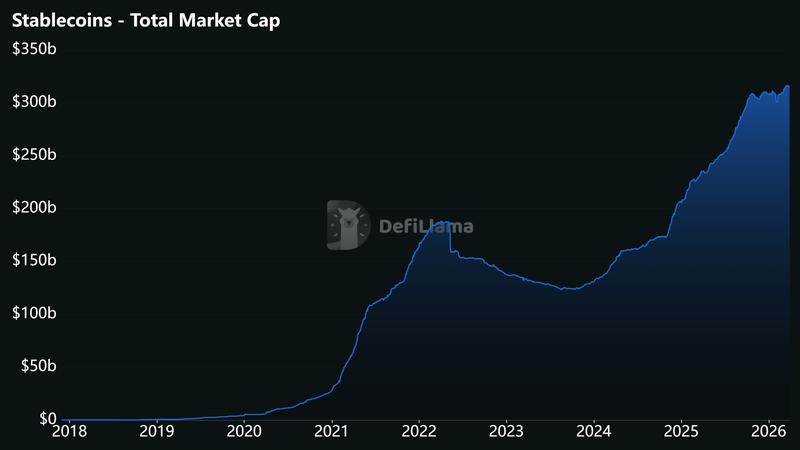
This investment deal illustrates a broader industry perspective suggesting that stablecoins are transitioning from being primarily crypto-native instruments for trading purposes into legitimate mainstream infrastructure for corporate payment systems.
Brad Garlinghouse, CEO of Ripple, recently characterized stablecoins as potentially representing a pivotal inflection point for cryptocurrency adoption within the business community, describing them as the industry's "ChatGPT moment." According to Garlinghouse, senior corporate executives, including chief financial officers and treasury managers at prominent companies, are now actively investigating methods to incorporate stablecoins into their operational frameworks, with particular emphasis on payment applications.
Data from across the industry validates this mounting interest. Transaction volumes processed through stablecoins exceeded $33 trillion over the past year, while projections from Bloomberg Intelligence suggest that these flows could expand at an 80% compound annual growth rate to reach $56.6 trillion by 2030.
Nevertheless, investing in stablecoin-powered foreign exchange infrastructure remains in its nascent stages and confronts obstacles extending beyond transaction speed advantages. Regulatory frameworks governing stablecoins are evolving differently across key jurisdictions, with authorities in regions such as the UK having considered implementing restrictions including holding limits, underscoring how licensing requirements, compliance obligations and banking relationship access may impede widespread adoption despite improvements in settlement technology capabilities.