
US Bitcoin miners bounce back from winter storms, driving 15% difficulty surge
Mining difficulty for Bitcoin surged to 144.4 trillion following recovery from January's severe weather that temporarily reduced hash rate, as American mining operations generated income by returning power to electrical grids.

On Feb. 20, Bitcoin's mining difficulty experienced an approximately 15% surge, reaching 144.4 trillion based on CoinWarz data. This increase reversed an earlier 11% decrease that occurred this month, which represented the most significant reduction since the mining prohibition implemented by China in 2021.
The previous reduction came as a consequence of a significant hash rate decrease following devastating winter weather systems that moved through large portions of the United States, creating disruptions to electrical infrastructure and compelling mining operations to shut down. During late January, the computing power of Foundry USA, which holds the position as the largest mining pool measured by hash rate, experienced a temporary decline to approximately 198 exahashes per second from its previous level of nearly 400 EH/s, prior to making a recovery.
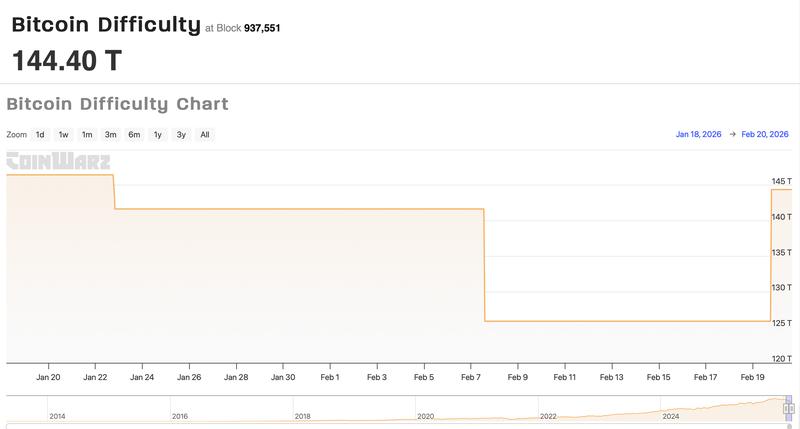
The hash rate represents a measurement of the aggregate computing power that secures the blockchain network, whereas mining difficulty undergoes adjustments every 2,016 blocks, which occurs approximately once every two weeks, in order to maintain block production intervals close to the 10-minute benchmark.
Following the restoration of operations by US-based miners in the aftermath of the severe weather event, the hash rate experienced a rebound, which triggered the most recent upward adjustment to difficulty levels.
Although elevated difficulty levels enhance the security of Bitcoin's (BTC) blockchain network, they simultaneously increase the amount of computational work necessary to obtain block rewards, creating tighter profit margins for mining operations already confronting various cost-related challenges.
US miners monetize grid curtailments during winter storm
Despite the fact that the winter storm in January compelled numerous US Bitcoin mining operations to go offline, this didn't automatically translate to eliminated revenue streams. A substantial number of these operations are enrolled in demand response programs or maintain power contracts with flexible terms, which enable them to temporarily halt mining activities and redirect electricity back to the power grid during periods when electricity prices experience significant increases.
In January, our power infrastructure highlighted the flexibility of our operating model.
Bruce Rodgers, chairman and CEO of Bitcoin miner LM Funding America
Based on a report published in February, the mining company reduced its operations throughout the duration of Winter Storm Fern and rerouted its contracted electrical power back to the grid, which resulted in revenue generation exceeding one quarter of the company's standard quarterly energy and curtailment income during just a single weekend period.
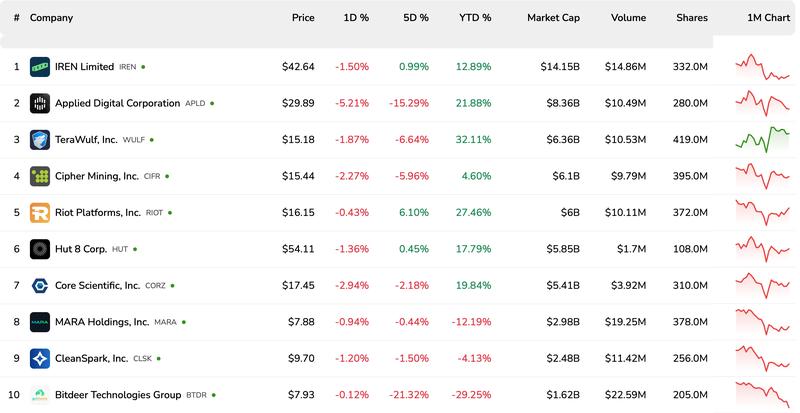
Canaan Inc., a mining hardware manufacturing company based in Singapore that maintains operational facilities in the US, also indicated in its production update for January that its American mining operations took part in power curtailment activities in regions impacted by the storm through collaborative coordination with site partners in order to assist with balancing demand on the electrical grid.
Following China's mining crackdown implemented in 2021, the United States has emerged as the global leader in Bitcoin-mining activity, providing home to substantial operations located in states with crypto-friendly regulatory environments such as Texas and Georgia.
Based on information provided by the Cambridge Centre for Alternative Finance, the US is responsible for more than one-third of the worldwide Bitcoin hash rate.