
The Divergent Response of Bitcoin and Gold to Iran's Military Crisis
When tensions escalated with Iran, gold demonstrated traditional safe-haven behavior while Bitcoin's performance was driven more by market liquidity and investor sentiment than by its role as a conventional crisis protection asset.

Main points to understand
A significant geopolitical shock emerged from the 2026 Iran conflict, sparking volatility throughout global financial markets. Investors were compelled to reevaluate classic safe-haven instruments like gold alongside newer options such as Bitcoin.
Initial safe-haven flows boosted gold, but subsequent weakness appeared when the US dollar gained strength and bond yields climbed higher. This illustrated how fundamental macroeconomic factors can overwhelm crisis-driven purchases.
Bitcoin demonstrated volatility followed by a swift recovery, underscoring its expanding importance as an alternative investment. Nevertheless, price action remained tightly linked to prevailing market sentiment and available liquidity.
US dollar performance emerged as a crucial determinant affecting both gold and Bitcoin outcomes, with increased demand for dollar-based liquidity shaping international asset allocation patterns.
Across the span of financial history, military conflicts and episodes of political upheaval have repeatedly caused significant adjustments within investment markets. As geopolitical risks intensify, market participants typically attempt to protect their wealth by moving capital into assets perceived as safe havens that should maintain or appreciate in value when uncertainty prevails.
For generations, gold has served as the quintessential safe-haven instrument, valued for its limited supply, worldwide recognition and proven history as a wealth preserver. More recently, though, Bitcoin (BTC) has emerged and sparked considerable discussion. Might this peer-to-peer digital asset ultimately fulfill a similar function as a contemporary, jurisdiction-independent option?
This analysis explores the contrasting ways Bitcoin and gold behaved in response to the Iran war's geopolitical disruption. It evaluates their respective price trajectories, market conduct and protective characteristics, while investigating what these differences tell us about market psychology, availability of capital and the ongoing discourse surrounding conventional versus digital value storage mechanisms.
The 2026 Iran military crisis: A significant geopolitical disruption affecting worldwide markets
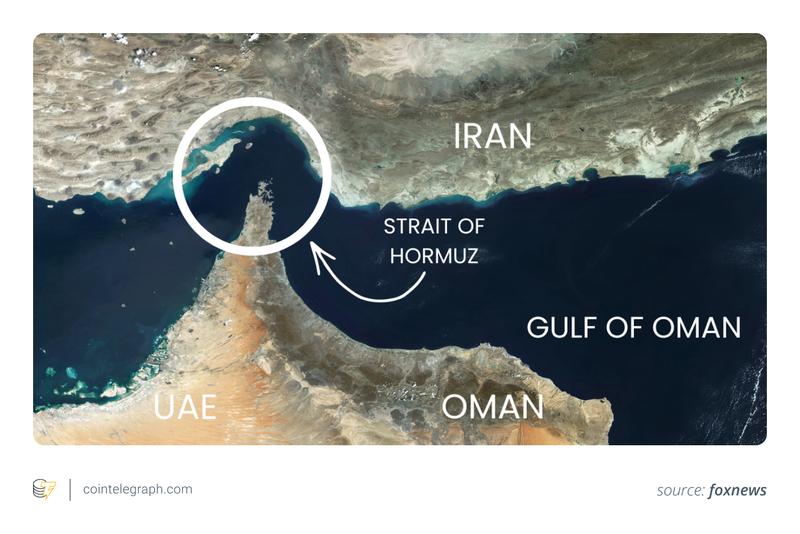
The military escalation involving Iran in 2026 presented an exceptional, live opportunity to assess Bitcoin's behavior as a protective asset during crisis conditions. The confrontation created widespread disturbances across international financial systems. Intensifying military operations and warnings about potentially blocking the Strait of Hormuz triggered serious concerns regarding substantial interruptions to petroleum distribution. Approximately 20% of global oil supplies are believed to transit through this strategically vital maritime passage, underscoring its critical importance to worldwide energy infrastructure.
With escalating hostilities, petroleum prices surged dramatically, while financial markets entered periods of pronounced volatility. Equity indices across multiple regions declined as market participants reconsidered exposure to inflation threats, supply chain vulnerabilities and prospects for economic expansion.
During episodes of comparable uncertainty, capital typically migrates toward assets regarded as dependable repositories of wealth. This particular instance, however, revealed a more nuanced pattern across various investment categories than typically observed.
Gold's inconsistent behavior as a protective investment
Initially, gold demonstrated the anticipated response characteristic of geopolitical turmoil. Purchasing activity intensified as market participants pursued security throughout the uncertain environment.
Throughout the conflict's escalation, gold valuations advanced upward as traders redirected capital into conventional protective instruments.
Nevertheless, gold's appreciation proved short-lived. Valuations subsequently retreated considerably once the US dollar strengthened and yields on US Treasury securities increased. These conditions typically diminish the precious metal's appeal because it generates neither interest income nor dividend payments.
During one particular interval, gold declined over 1% despite ongoing escalation of hostilities. This underscored how comprehensive economic dynamics, including interest rate fluctuations or currency valuation shifts, can occasionally supersede protective buying patterns over shorter timeframes.
These price oscillations revealed that even a historically established crisis protection instrument like gold can undergo temporary fluctuations when investors prioritize liquidity requirements or respond to changes in overarching economic circumstances.
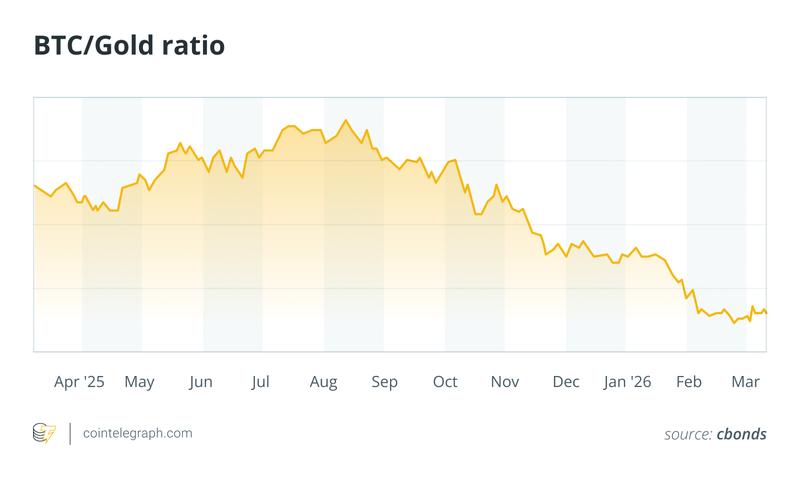
Understanding why gold sometimes gets liquidated during crisis events
A particularly interesting feature of the recent Iran crisis was the temporary liquidation of gold positions alongside other investment holdings. When confronted with exceptional market uncertainty and widespread panic, investors frequently prioritize rapidly accumulating cash rather than retaining commodities or financial securities.
Throughout the conflict's opening period, the spike in US dollar demand and general liquidity needs momentarily exceeded gold's attractiveness as a protective holding. Additionally, soaring petroleum costs intensified inflation worries, which pushed bond yields upward and created additional negative pressure on gold valuations.
This behavior pattern reveals an important consideration. Gold maintains its historical reputation as a long-range protection against geopolitical disruption and economic instability. Nevertheless, during the immediate onset of crisis situations, investors commonly prefer instant cash availability and liquidity to address risks, satisfy margin requirements or implement portfolio modifications.
Did you know? The United States maintains the world's most substantial gold holdings, approximately 8,133 metric tons. This represents roughly 78% of its official foreign reserve position, demonstrating how fundamentally gold continues to be integrated within the international monetary framework.
Bitcoin's crisis response: Turbulent but showing strength
Bitcoin exhibited a distinct pattern compared to gold throughout the military confrontation. During the initial phase of geopolitical intensification, cryptocurrency markets encountered severe volatility as trading participants broadly decreased risk positions and implemented de-risking strategies across their holdings.
However, Bitcoin demonstrated recovery following the initial turbulence. On Feb. 28, 2026, coinciding with the war's commencement, Bitcoin touched a low point of $63,106. By March 5, 2026, it had climbed back to $73,156 and subsequently maintained a consistent upward path to $71,226 by March 10, 2026.
Bitcoin's valuation trajectory indicates returning investor attention toward alternative protection mechanisms against economic and geopolitical disruption. Throughout its history, Bitcoin's price behavior has maintained tight correlation with general market psychology and current liquidity availability rather than responding exclusively to geopolitical threats.
Did you know? Global central banking institutions collectively maintain approximately 36,000 metric tons of gold within their reserve holdings, establishing it as among the most significant reserve instruments following the US dollar.
US dollar performance as a determining factor
An essential element influencing both instruments was US dollar behavior throughout the military crisis. As market participants rushed toward liquidity and perceived security, the dollar experienced substantial appreciation. Because gold receives pricing in dollars across international markets, a strengthening dollar typically creates downward force on gold prices by increasing its cost for purchasers holding alternative currencies.
Bitcoin likewise demonstrates sensitivity to dollar movements. When investment flows gravitate toward traditional protective instruments including cash and reserve currencies during uncertain periods, cryptocurrency demand may temporarily weaken, contributing to valuation pressure.
These interconnected elements, encompassing dollar strength, liquidity priorities and risk-averse sentiment, provide explanation for gold and Bitcoin performance throughout this situation. They further illuminate why neither gold nor Bitcoin produced a clear, sustained protective rally during the conflict's initial stage, notwithstanding their differing long-range attributes.
Petroleum prices and inflation concerns shaped significant market reactions
Energy market dynamics emerged as a controlling influence determining investor conduct during the military crisis. The escalation propelled oil prices higher, driven by worries regarding possible disruptions to maritime shipping through the Strait of Hormuz. Any meaningful interruption affecting this vital chokepoint could raise worldwide energy and transportation expenses, contributing to wider inflation pressures internationally.
Although inflation expectations generally provide support for gold across extended timeframes as a traditional inflation protection instrument, they can generate contrary effects over shorter intervals. Increasing inflation concerns frequently lead central banking authorities or markets to expect more restrictive monetary policies, driving interest rates and bond yields upward. Elevated yields enhance the competitiveness of interest-generating assets relative to non-yielding commodities like gold, establishing downward pressure on gold valuations in the immediate term.
Bitcoin's relationship with inflation expectations proves considerably less predictable. Bitcoin typically receives treatment as a high-beta investment rather than an established inflation protection mechanism. Consequently, its reaction to inflation indicators tends toward greater irregularity and influence from current risk sentiment.
Did you know? Gold's function as a protective asset gained particular prominence throughout financial catastrophes like the Great Depression, when governmental authorities imposed restrictions on private gold possession to regulate capital movement and maintain monetary system stability.
Insights from the divergence regarding safe-haven characteristics
The Iran military crisis revealed a core distinction between well-established and developing protective investment instruments.
Gold maintains deep integration throughout global financial and monetary structures. Its multi-century track record, extensive accumulation by central banking institutions and continuing function as a reserve instrument deliver substantial credibility and confidence during intervals of geopolitical or economic pressure.
Bitcoin, conversely, operates within a comparatively recent and developing digital financial environment. Its valuation movements receive influence not exclusively from geopolitical developments but additionally from elements including network expansion, regulatory evolution, technological achievements and comprehensive investor risk preferences across conventional and cryptocurrency markets.
This fundamental distinction provides understanding regarding why Bitcoin and gold demonstrate different reactions throughout the opening stages of crisis situations.
A practical examination of the "digital gold" concept
Throughout recent years, Bitcoin supporters have characterized it as "digital gold," referencing a contemporary, decentralized substitute for the traditional protective instrument. The Iran crisis presented a practical examination of this assertion.
Although Bitcoin exhibited resilience throughout the military conflict, its conduct departed from that of a traditional safe-haven vehicle. Gold's valuation movement, however, stayed connected to recognizable macroeconomic influences including dollar strength, inflation projections and bond yield trajectories. Bitcoin's volatility and subsequent recovery received greater influence from changing investor psychology, risk tolerance and current liquidity conditions across wider markets.
This episode suggests that Bitcoin, despite showing increasing legitimacy as a value repository under duress, has not yet completely developed into a reliable safe-haven instrument. Rather, it continues advancing as a hybrid investment within the international financial architecture.