
Stablecoin conversion spreads reach peak levels in Africa, new data reveals
Analysis of 66 African corridors reveals stablecoin conversion fees ranging between 1.5% and 19% during January, with competitive dynamics creating significant price variations.

In January, Africa experienced the highest median spreads for stablecoin-to-fiat conversions among all monitored regions, based on findings from payments infrastructure provider Borderless.xyz. The analysis encompassed 66 currency corridors and gathered close to 94,000 rate observations throughout the month.
The median spread across the African continent reached 299 basis points, equivalent to approximately 3%, which stands in stark contrast to Latin America's roughly 1.3% and Asia's 0.07%. Within Africa itself, the conversion costs demonstrated considerable variation, starting at approximately 1.5% in South Africa and climbing to almost 19.5% in Botswana.
The analysis focuses on "spreads," which represent the difference between what a provider charges when buying versus selling a stablecoin-to-fiat currency pair. This concept mirrors the bid-ask spread found in conventional financial markets and indicates the actual cost users incur when they exchange stablecoins for their local fiat currencies.
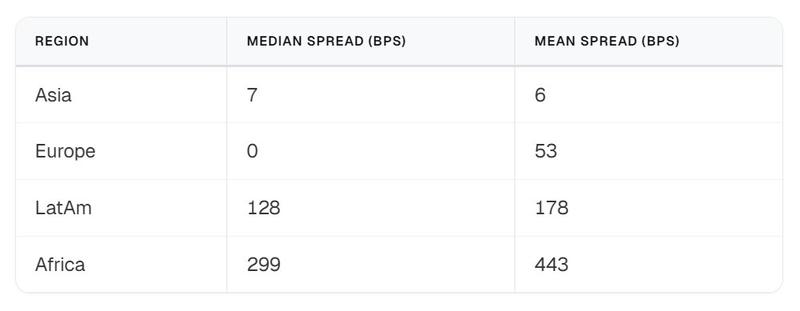
Competition drives pricing gaps
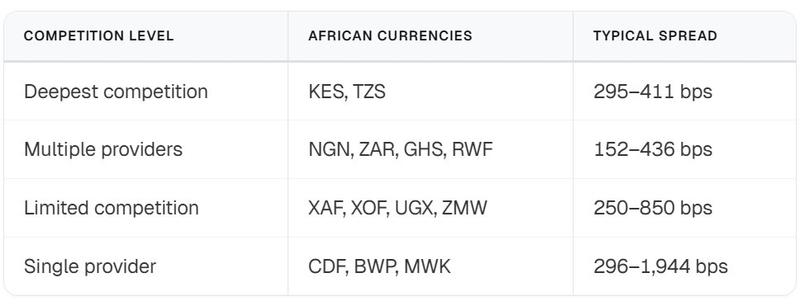
According to the findings from Borderless.xyz, markets featuring multiple competing service providers typically demonstrated conversion costs ranging from approximately 1.5% to 4%. However, in markets dominated by a single provider, costs frequently surpassed 13%.
Botswana's median conversion cost topped the charts in January at 19.4%, although the pricing situation showed signs of improvement as the month progressed. Congo also experienced costs exceeding 13%. South Africa presented a contrasting picture, with costs hovering around 1.5%, attributable to its more competitive foreign exchange marketplace.
According to the report's conclusions, these variations stem predominantly from local market dynamics, including factors like liquidity and competitive pressure, rather than from any limitations of the underlying blockchain technology. In nations where multiple service providers compete for business, conversion costs remained closer to regional median figures.
Stablecoins versus traditional foreign exchange
The analysis additionally examines how stablecoin mid-rates stack up against traditional interbank foreign exchange rates, using a measurement the report identifies as the "TradFi premium."
This particular metric reveals whether stablecoin exchange rates present a more affordable or costlier option compared to traditional FX mid-market rates.
Looking at 33 currencies on a global scale, the median difference separating stablecoin exchange rates from traditional mid-market foreign exchange rates stood at approximately 5 basis points, or 0.05%, showing that the two pricing mechanisms were essentially aligned.
Within Africa, however, the median gap expanded to around 119 basis points, approximately 1.2%, although this difference fluctuated substantially from one country to another.
Speaking at the World Economic Forum in Davos on Jan. 24, economist Vera Songwe said that stablecoins are helping reduce remittance costs across Africa, where traditional transfer services can charge about $6 per $100 sent.
The newly released data provides important context, indicating that although stablecoins deliver faster settlement times and potential cost advantages relative to legacy transfer services, conversion costs within particular corridors continue to remain elevated.