
P2P.me faces backlash after revealing Polymarket betting activities tied to funding round
As prediction market platforms face mounting regulatory pressure, P2P.me's trading platform team has come forward to reveal they placed wagers on Polymarket concerning their own fundraising campaign.
The developers behind P2P.me, a decentralized platform for trading, have revealed that they established betting positions on Polymarket, a prediction market platform, concerning their own capital raising efforts.
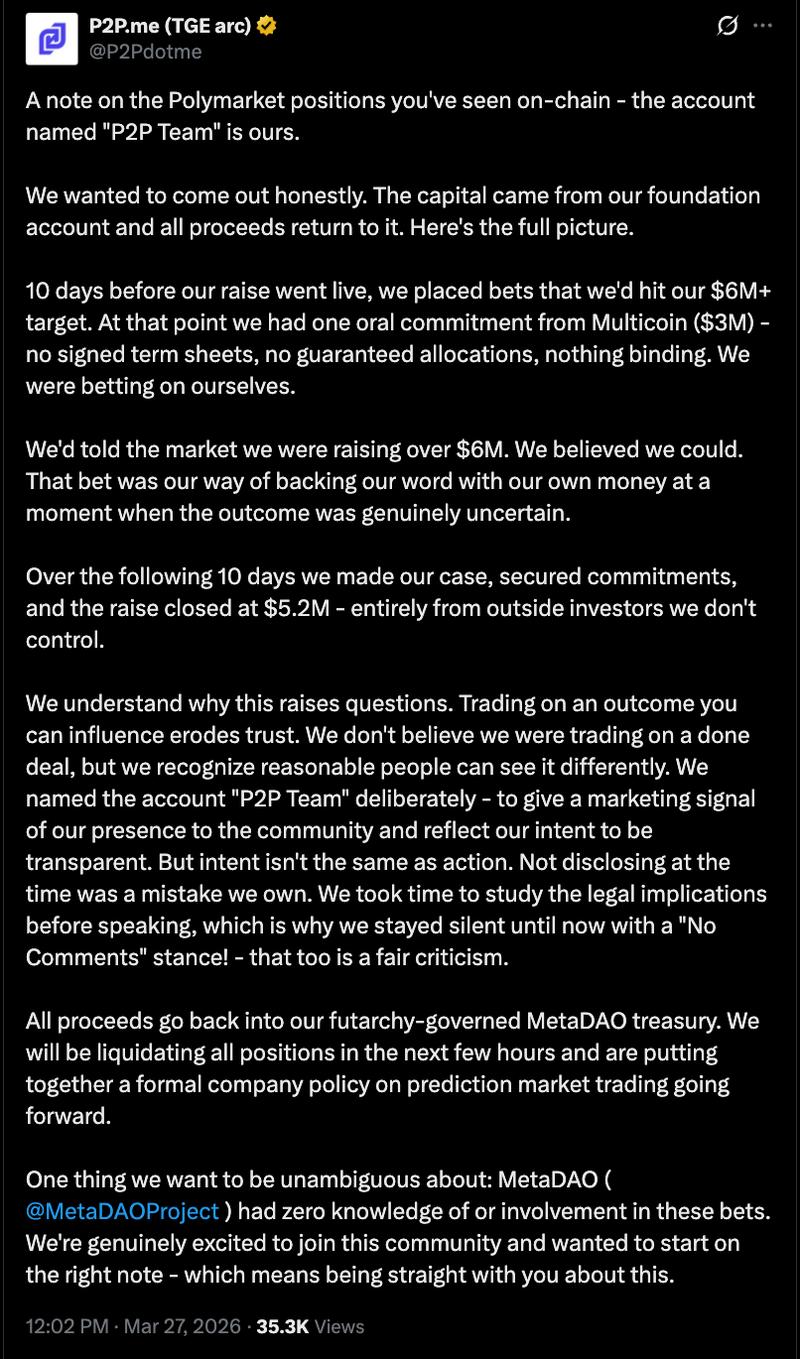
According to a statement released on X, the social media network, the team placed these wagers approximately 10 days prior to launching their fundraising campaign, betting on whether they would successfully reach their $6 million fundraising goal.
When these betting positions were established, the P2P.me team had secured only a verbal pledge from Multicoin Capital, a venture capital firm, for $3 million worth of investment, with "no signed term sheets" and "no guaranteed allocations" in place, the team stated.
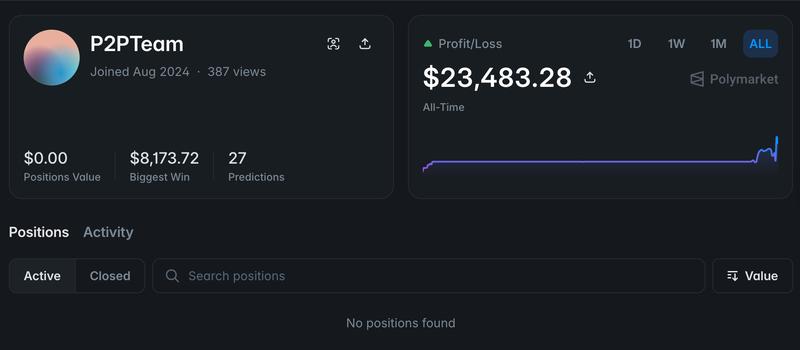
The fundraising campaign ultimately fell short of its target, securing only $5.2 million, which caused the prediction market to settle with a "no" resolution. In response to the situation, the team stated:
"Trading on an outcome you can influence erodes trust. We don't believe we were trading on a done deal, but we recognize reasonable people can see it differently. We named the account 'P2P Team' deliberately to give a marketing signal of our presence. But intent isn't the same as action. Not disclosing at the time was a mistake we own."
All earnings generated from the prediction market wagers will be returned to MetaDAO's treasury, the financial reserve managed by the decentralized autonomous organization (DAO) that oversees the platform's governance, according to the P2P.me team.
Additionally, the team announced plans to close all existing positions on Polymarket and implement a "formal company policy" governing future participation in prediction market trading activities.
Cointelegraph attempted to contact P2P.me for additional commentary regarding the disclosure, but had not received a reply at the time this story was published.
Prediction market platforms have faced growing examination from United States legislators concerning insider trading practices, prompting leading prediction market services such as Polymarket and Kalshi to roll out new measures designed to prevent insider trading.
US lawmakers take steps to curb insider trading activity on prediction markets
Legislators in the United States are working to limit insider trading practices on prediction market platforms, especially those connected to electoral outcomes, legislative matters and geopolitical developments with implications for national security.
On Wednesday, Congressional representatives Adrian Smith and Nikki Budzinski put forward the "Preventing Real-time Exploitation and Deceptive Insider Congressional Trading Act," known by its acronym as the PREDICT Act, which would prohibit the United States president and members of Congress from participating in prediction markets.
Another legislative proposal was put forward on Thursday, which similarly seeks to restrict political insider trading behavior on platforms offering prediction markets.