
Market analysts warn investors about 'TACO' strategy miscalculations
Investors may be underestimating the prolonged economic impact from energy market disruptions and critical oil supply chain interruptions.
Market participants are underestimating both the intensity and longevity of the economic consequences stemming from the Middle East conflict and are currently betting on a "TACO" trade, an acronym meaning "Trump always chickens out," as explained by Nic Puckrin, market analyst and founder of the Coin Bureau.
Wall Street created this terminology to describe scenarios where US President Donald Trump retreats from geopolitical confrontations. Puckrin cautioned, however, that "Trump is not in sole control of the situation," emphasizing that swift or simple resolutions to the ongoing war are unlikely.
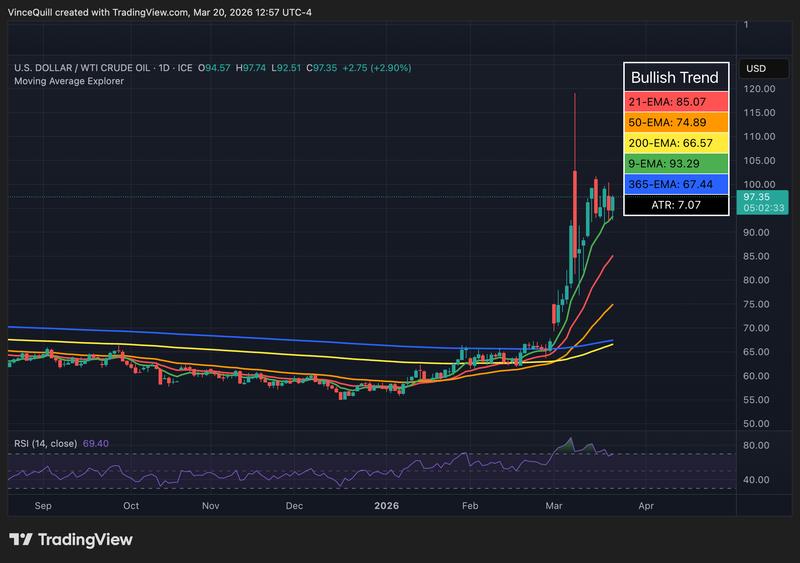
Should oil prices remain elevated beyond $100 per barrel, Puckrin indicated that economic expansion will decelerate, while Personal Consumption Expenditures (PCE) inflation could climb by as much as 1 percentage point.
Such conditions have the potential to trigger stagflation, an economic phenomenon characterized by simultaneous increases in inflation alongside declining economic growth and employment rates, which Puckrin described as a "dreaded" circumstance. He further elaborated:
"If oil stays above $100 throughout Q2 and into Q3, stagflation becomes a real problem for the Fed. In the 1970s, the S&P 500 went essentially nowhere in real terms for an entire decade once stagflation took hold."
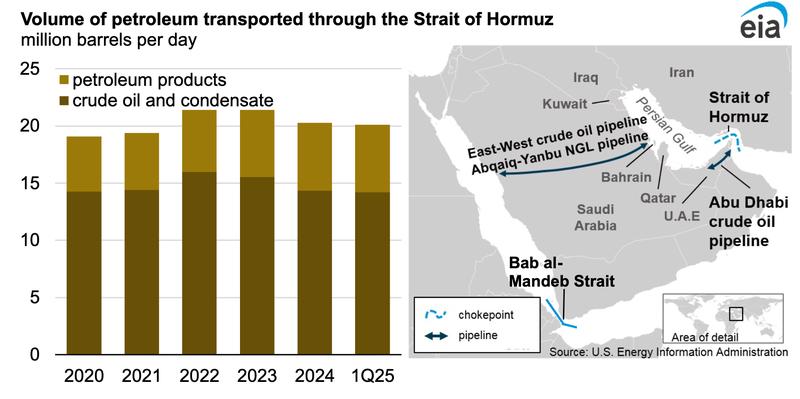
According to Puckrin, markets could experience a "rude awakening" regarding the Middle East conflict, emphasizing that prolonged closure of the Strait of Hormuz, a strategic waterway through which 20% of the global oil supply passes, will result in increasingly severe economic ramifications.
"Even if the Strait of Hormuz were to open today, the disruption to the Gulf's oil-producing infrastructure will take months to rebuild," he said.
As energy serves as a fundamental component for virtually all economic activities, increases in energy costs generally translate to higher prices across the spectrum of goods and services.
Persistent inflation suggests that interest rate reductions, which typically provide stimulus for risk assets such as cryptocurrency, are unlikely to occur, and the Federal Reserve might instead implement rate increases to counter inflation, eliminating prospects for relaxed liquidity conditions that could fuel a cryptocurrency market upswing.
Federal Reserve chairman says Middle East war clouds the central bank's forecasts
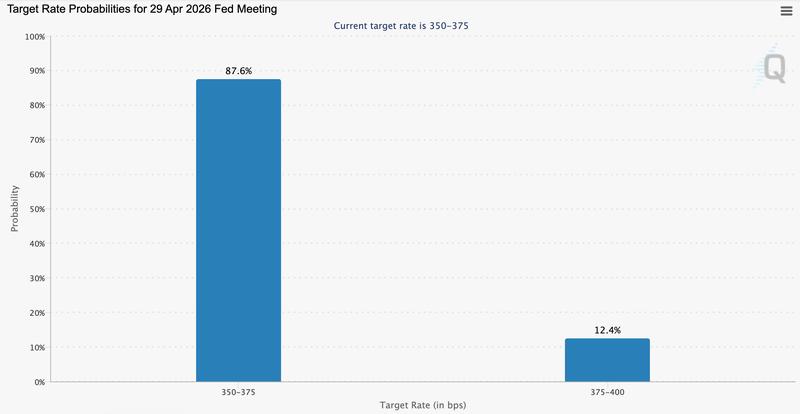
In March, the Federal Open Market Committee (FOMC), the body responsible for establishing interest rate policy in the United States, maintained interest rates at their current levels, keeping the Federal Funds rate within the 3.5% to 3.75% range.
Expectations for rate cuts at the forthcoming April FOMC meeting have essentially disappeared. At the same time, there exists a modest yet increasing likelihood — approximately 12% — that the FOMC will implement a rate increase during next month's meeting, based on data from the Chicago Mercantile Exchange's (CME) FedWatch tool.
"The implications of events in the Middle East for the US economy are uncertain in the near term. Higher energy prices will push up overall inflation," Federal Reserve Chairman Jerome Powell said at a press conference on Wednesday.
Powell did note, however, that it remains "too soon" to make precise assessments regarding the magnitude and intensity of potential economic consequences arising from the conflict and the interruption to global energy infrastructure.