
Lyn Alden: Fed shifting to 'gradual print' strategy for monetary expansion
Alden argues that debates over quantitative easing terminology miss the point, as monetary policy inevitably trends toward currency debasement regardless of labels.

According to economist and Bitcoin advocate Lyn Alden, the Federal Reserve of the United States has begun transitioning into an extended period of "gradual" monetary expansion that will provide a "mild" boost to asset valuations, but won't deliver the aggressive "big print" scenario that many Bitcoin (BTC) enthusiasts had been expecting.
"Overall, it means I continue to want to own high-quality scarce assets, with a tendency to rebalance away from extremely euphoric areas and toward under-owned areas."
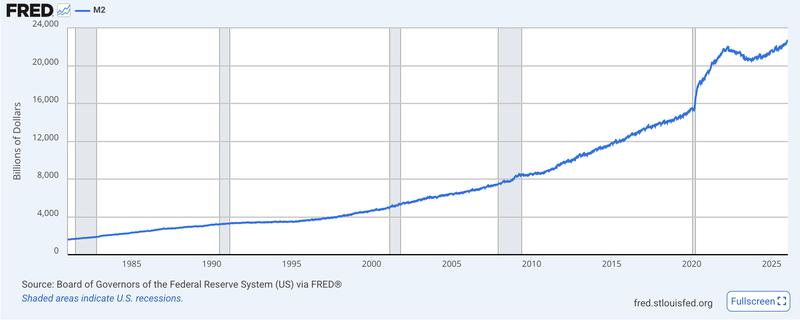
Alden's remarks came in the wake of President Donald Trump's decision to nominate Kevin Warsh as the upcoming Chairman of the Federal Reserve, a move that triggered significant concern among market participants who view Warsh as taking a more hawkish stance on interest rates compared to alternative candidates for the Fed leadership position.
Monetary policy decisions regarding interest rates can have substantial impacts on cryptocurrency valuations. Credit expansion through an increased money supply is generally viewed as a positive catalyst for asset prices, while monetary contraction achieved through elevated interest rates tends to trigger economic deceleration and downward pressure on valuations.
No rate cut expected at next FOMC meeting
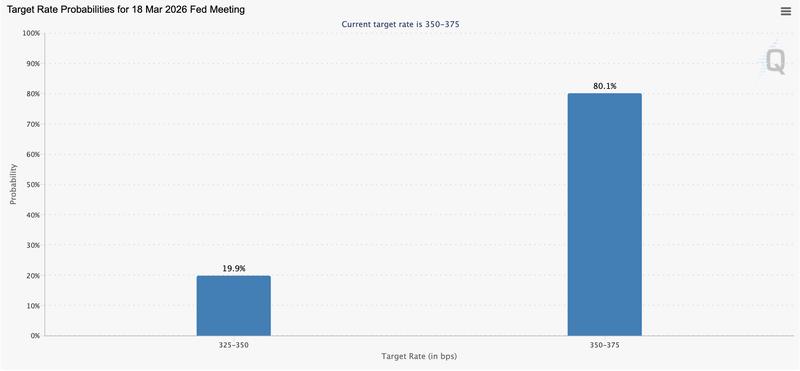
According to current data, approximately 19.9% of market participants are anticipating an interest rate reduction at the upcoming Federal Open Market Committee (FOMC) gathering scheduled for March, representing a decline from Saturday's figures when CME Fedwatch data indicated that 23% of survey participants were forecasting a rate decrease.
Jerome Powell, the current Chairman of the Federal Reserve, has consistently provided ambiguous forward guidance regarding the trajectory of interest rate policy even as the central bank has implemented multiple rate reductions throughout 2025.
"In the near term, risks to inflation are tilted to the upside and risks to employment to the downside, a challenging situation. There is no risk-free path for policy," Powell said following the December FOMC meeting.
With Powell's tenure as Federal Reserve chairman set to conclude in May 2025, and Warsh still awaiting confirmation from the US Senate to assume the chairmanship, investors face mounting uncertainty regarding the trajectory of interest rate policies heading into 2026.