
Federal Reserve Research Recommends Specialized Margin Requirements for Cryptocurrency Derivatives
A new Federal Reserve research paper argues that existing risk assessment frameworks and weightings fail to properly capture the extreme volatility and unique market dynamics of cryptocurrencies.
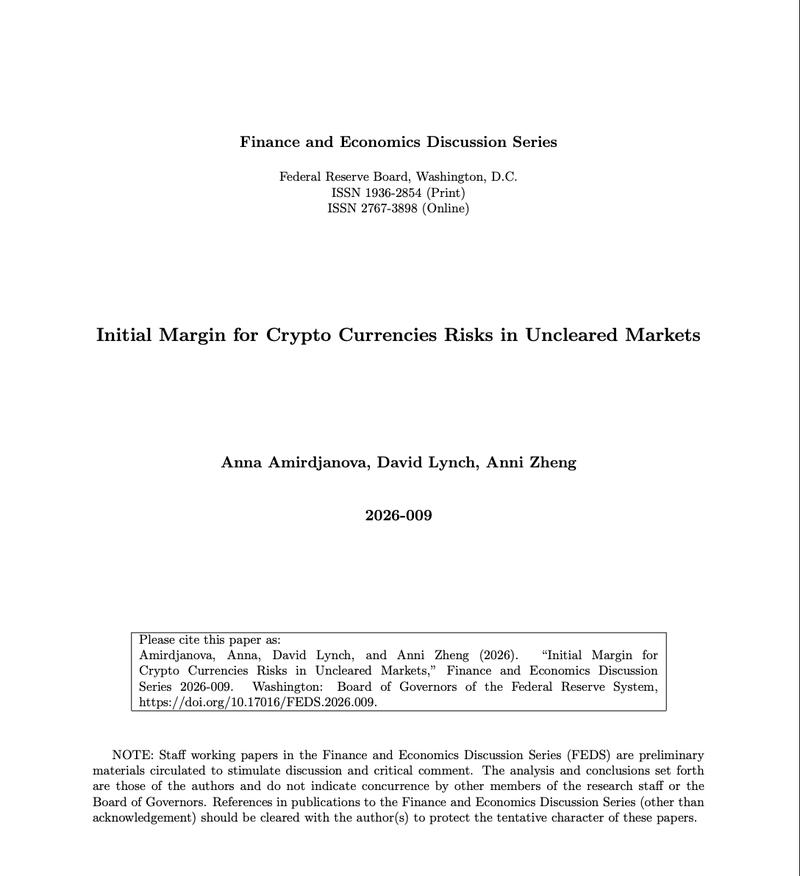
A fresh research paper released on Wednesday by the Federal Reserve suggests that cryptocurrencies should be classified as their own separate asset category when determining initial margin requirements for derivatives transactions that occur in "uncleared" markets, which encompasses over-the-counter trading and other deals that don't go through a centralized clearinghouse.
According to the research document, this recommendation stems from the fact that cryptocurrencies demonstrate significantly higher volatility compared to conventional asset categories and cannot be adequately accommodated within the risk classifications established by the Standardized Initial Margin Model (SIMM), which is used to categorize different asset types.
The existing categories encompass interest rates, equities, foreign exchange and commodities, as detailed by the paper's authors Anna Amirdjanova, David Lynch and Anni Zheng.
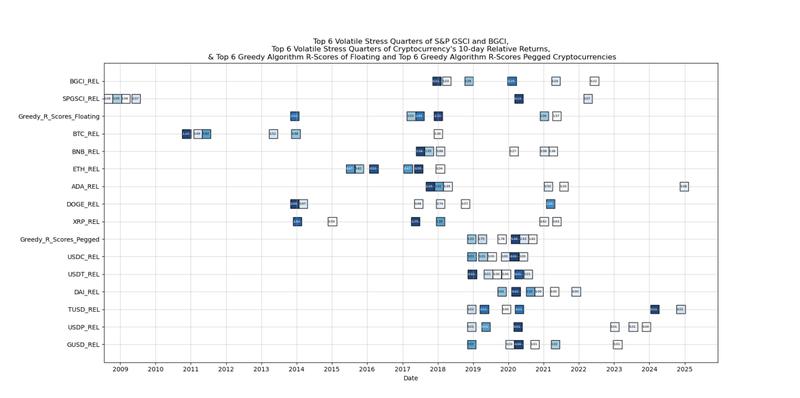
The three researchers recommend establishing a unique risk weighting methodology for "floating" cryptocurrencies, which would include Bitcoin (BTC), Binance (BNB), Ether (ETH), Cardano (ADA), Dogecoin (DOGE), XRP (XRP), as well as "pegged" digital currencies such as stablecoins.
According to their proposal, a benchmark index split evenly between floating digital currencies and pegged stablecoins could serve as a reference point for understanding crypto market volatility and behavioral patterns, the researchers indicated.
The way the benchmark index performs and behaves could subsequently be utilized as data input to develop more precise "calibrated" risk weightings specifically designed for cryptocurrencies, the authors explained.
Requirements for initial margin play a crucial role in derivatives trading environments, where market participants are required to deposit collateral as protection against the possibility of counterparty default when initiating a position. The elevated volatility characteristic of cryptocurrencies necessitates that traders deposit greater amounts of collateral to serve as a cushion against potential liquidation.
The recommendations outlined in the working paper demonstrate the evolution and maturation of cryptocurrencies as a legitimate asset category and illustrate how Federal regulators in the United States are developing regulatory structures to support and manage the expanding industry.
Fed clears the way for banks to engage with crypto
Last December, the nation's central bank overturned its earlier policy guidance, which was originally released in 2023 and had restricted the extent to which US banking institutions could participate in cryptocurrency-related activities.
Uninsured and insured banks supervised by the Board will be subject to the same limitations on activities, including novel banking activities, such as crypto-asset-related activities.
Fed's 2023 guidance
The Federal Reserve has additionally floated the concept of providing cryptocurrency firms with access to "skinny" master accounts, which are banking accounts that offer direct connectivity to the central banking infrastructure but come with more limited privileges compared to standard full master accounts.