
Congressional Committee Explores Tokenized Securities Regulation in Recent Session
Business leaders from the cryptocurrency sector informed members of Congress that current regulations governing investor safeguards and financial monitoring should extend to tokenized securities.
Leaders from the cryptocurrency sector testified before the US House of Representatives Committee on Financial Services on Wednesday, asserting that current regulations governing investor safeguards and financial monitoring systems should extend to tokenized securities.
The congressional session took place as lawmakers deliberate on the Capital Markets Technology Modernization Act of 2026 and examine how asset tokenization affects capital markets, including the "need to balance innovation with investor protection and market integrity," as noted in a statement from committee chairman, Representative French Hill.
Traditional financial instruments represented through tokens on blockchain networks, known as tokenized real-world assets (RWA), decrease transaction expenses and settlement durations, according to Summer Mersinger, CEO of crypto advocacy organization Blockchain Association, who addressed the committee.
"By replacing flawed manual record-keeping processes with more transparent timestamps and stamped records, tokenization lowers the cost and re-imagines US financial markets," she said.
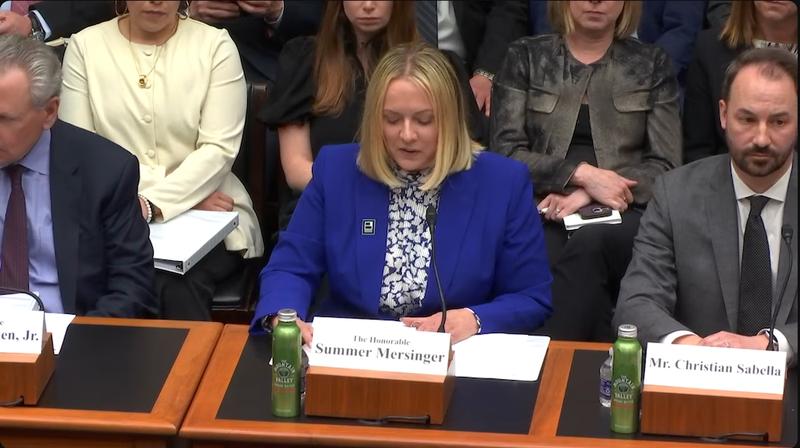
Both Mersinger and other witnesses concurred that current securities regulations are applicable to tokenized instruments, maintaining that the underlying technology and the medium utilized for recording securities transactions do not fundamentally change investor protection laws or jurisdictional authority.
Advocates for RWA tokenization assert the technology eliminates intermediaries from the settlement and clearing procedures, decreasing transaction expenses and enhancing capital velocity through the introduction of near-instantaneous settlement periods.
AML provisions and sanctions compliance remain lawmaker priority
Members of Congress questioned the witnesses regarding the methods by which tokenized asset issuers and platforms would implement know-your-customer (KYC) checks, anti-money laundering provisions, and sanctions compliance.
Illinois Representative Bill Foster asked: "Once things are tokenized, are they going to be treated on a private, permissioned blockchain, or a variety of public blockchains, which often allow anonymous participation through self-hosted wallets?"
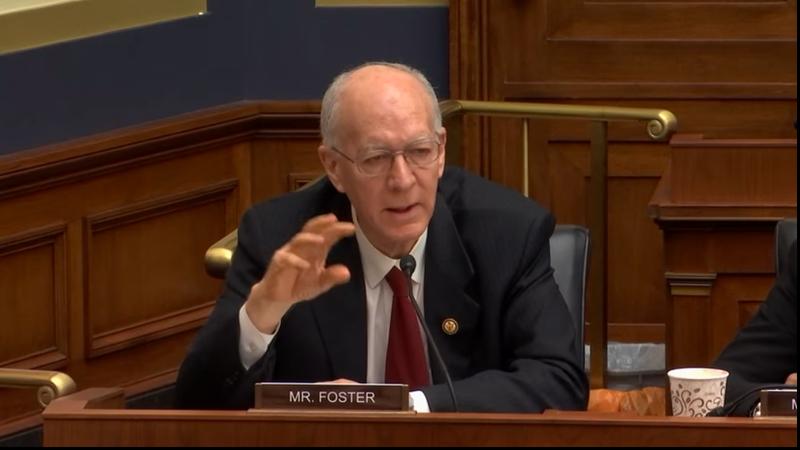
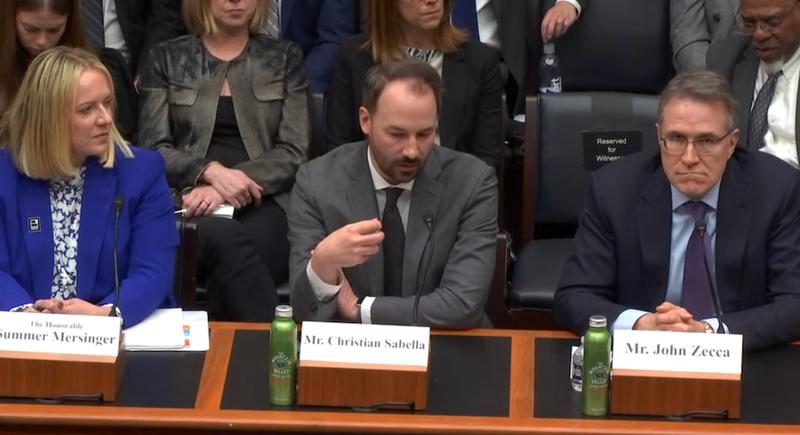
John Zecca, Nasdaq executive vice president and global chief legal, risk, and regulatory officer, informed Foster that the exchange possesses the capability to gather KYC information at the protocol level due to its system operating on a permissioned blockchain network.
Christian Sabella, managing director and deputy general counsel of the Depository Trust and Clearing Corporation (DTCC), the world's largest clearinghouse company, indicated it was also feasible to incorporate identifying information at the token level.
These identifiers would be immutable and would persist irrespective of whether the RWA token was conducting trades on a permissioned or a permissionless network, Sabella added.
Salman Banaei, general counsel for Plume Network, a permissionless RWA-focused blockchain, stated the network incorporates anti-money laundering (AML) and sanctions compliance checks at the token level, which enables tokens to be frozen.
However, Banaei told Foster that government regulators do not yet have a technological solution to identify wash trades or identify market participants with 100% confidence.