
Chinese authorities prohibit foreign and domestic firms from issuing stablecoins and RWAs
The People's Bank of China's recent directive comes after several months of policy reversals regarding yuan-backed stablecoins issued by private entities.

On Friday, the People's Bank of China (PBOC), which serves as the nation's central banking authority, together with seven additional Chinese regulatory bodies, released a collaborative announcement prohibiting the unauthorized creation and distribution of Renminbi-backed stablecoins and real-world asset tokens (RWAs).
According to the official statement, which received endorsements from both the Ministry of Industry and Information Technology and China's Securities Regulatory Commission, the prohibition encompasses stablecoin and tokenized RWA issuers operating within China's borders as well as those based internationally. The translated version of the public announcement stated:
"Stablecoins pegged to fiat currencies perform some of the functions of fiat currencies in disguise during circulation and use. No unit or individual at home or abroad may issue RMB-linked stablecoins without the consent of relevant departments."
In a conversation with Cointelegraph, Winston Ma, who serves as an adjunct professor at New York University (NYU) Law School and previously held the position of Managing Director at CIC, which is China's sovereign wealth fund, explained that the prohibition covers both the domestic and international variants of China's Renminbi, commonly known as the yuan.
"The Beijing crypto ban rule applies across all RMB-related markets, whether CNH or CNY," he said. Ma explained that CNH represents the offshore variant of the Renminbi, which was created to provide the currency with enhanced flexibility within international foreign exchange trading environments, while simultaneously maintaining existing currency control mechanisms.
"This is the latest step in a multi‑year project: Keep speculative crypto outside the formal financial system, while actively promoting the usage of e-CNY, the sovereign CBDC issued by China's central bank," he said.
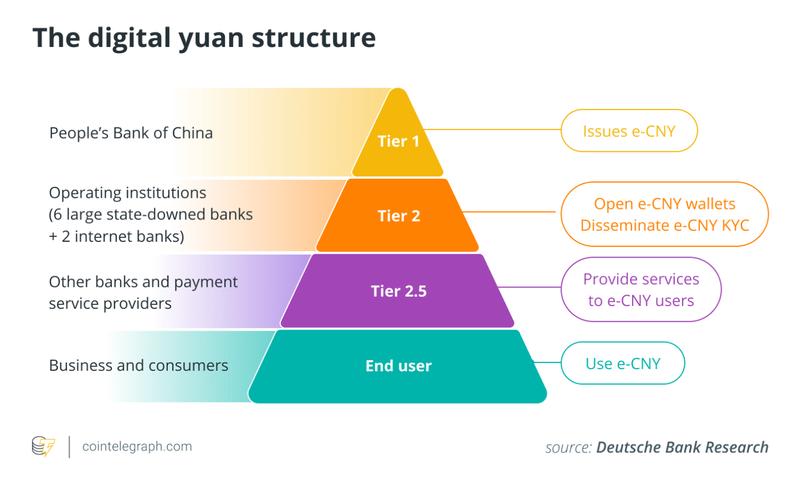
Chinese government briefly considered yuan-pegged stables, but focused on CBDC instead
Reports emerged in August 2025 suggesting that Chinese governmental authorities were evaluating the possibility of permitting private sector entities to create yuan-pegged stablecoins, which would have represented a significant departure from the country's established regulatory stance.
Nevertheless, during September of that same year, the Chinese government implemented restrictions on stablecoin and digital asset creation, directing stablecoin issuance companies to suspend or completely terminate their stablecoin testing programs pending additional official guidance.
During January 2026, the PBOC granted authorization to commercial banking institutions to offer interest payments on digital yuan wallet holdings as part of an initiative designed to enhance the CBDC's appeal to potential investors.