
Bitcoin's Path to $150K: Critical Indicators That Signal the Next Bull Market
A $150,000 Bitcoin price target remains achievable before year-end, though several crucial indicators must confirm the correction has concluded and a fresh bull market is underway.

According to a recent outlook from Bernstein, Bitcoin (BTC) has the potential to bounce back from its current downturn and climb to $150,000 before the close of the year.
Key takeaways:
- Bitcoin must hold the 200-week SMA and see new-investor flows turn positive.
- Sidelined capital must flow back into crypto, and the quantum threat needs to be addressed.
- More rate cuts from the Fed in 2026 will bring risk-on investors back to BTC.
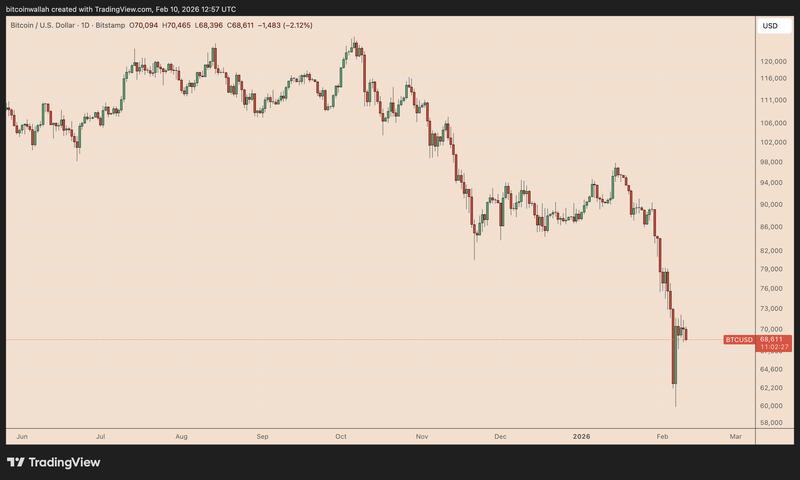
Maintaining support above this critical trend line is essential for Bitcoin
A consistent factor that has marked Bitcoin's shift from bear markets into fresh bull cycles involves how the price behaves around the 200-week simple moving average (200-week SMA, the blue wave).
Throughout Bitcoin's history, this moving average has served as a gravitational pull during significant downturns and established itself as a robust support level after selling momentum diminishes.
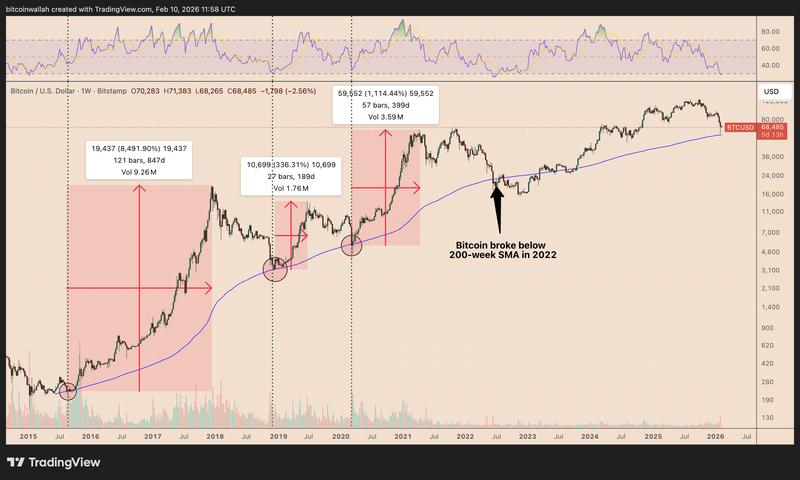
During both 2015 and 2018, Bitcoin established bottoms in proximity to the 200-week SMA before launching into bull runs lasting multiple years. During the bear market of 2022, the BTC price momentarily dipped beneath this level, though the breakdown was quickly reversed.
Should Bitcoin maintain its position above the 200-week SMA, it will lower the probability of an extended capitulation similar to what occurred in 2022, simultaneously preserving the possibility for a fresh bullish phase.
Fresh capital from new Bitcoin investors must make a comeback
An additional requirement for a durable bull run involves seeing new investor flows reverse direction.
Data from February reveals that wallets associated with first-time and short-term holders display approximately $2.7 billion in aggregate outflows, marking the most significant exodus since 2022.
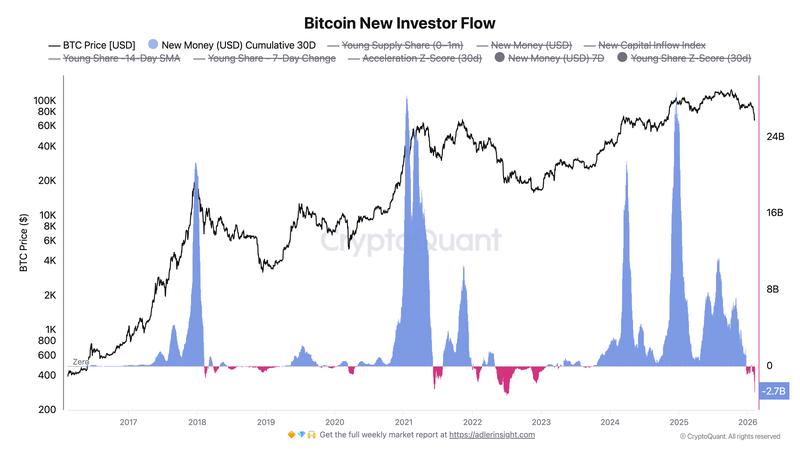
During robust bull markets, price corrections typically draw in new capital and boost overall participation rates. Yet in today's market environment, the reverse pattern is unfolding, as noted by IT Tech, an onchain analyst affiliated with CryptoQuant.
Current readings resemble post-ATH transitions, in which marginal buyers exit and price is driven by internal rotation, not net inflows.
Throughout previous market cycles, such as those witnessed in 2020, 2021 and 2022, sustainable bullish recoveries materialized only after new-investor flows converted convincingly back to positive values.
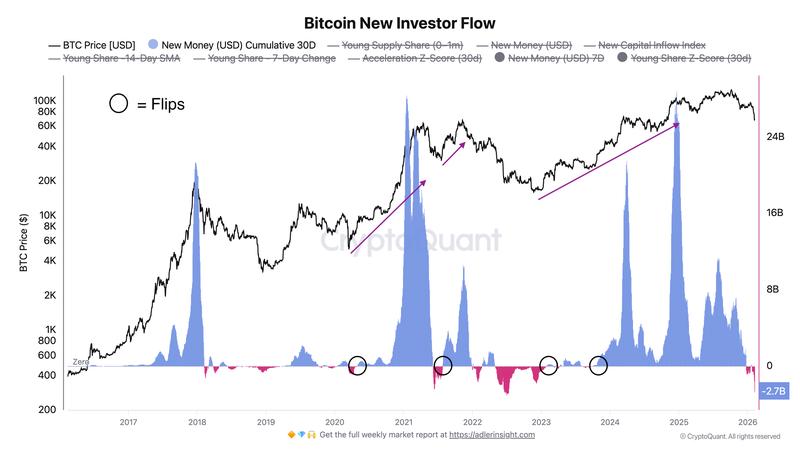
An identical shift must occur in 2026 to establish a compelling bullish argument for Bitcoin. On Monday, Bitcoin ETF net flows reversed to positive territory, potentially representing an initial indication that these investor flows are beginning to return.
Capital parked in Tether must rotate back into cryptocurrency markets
The proportion of Tether (USDT) relative to the overall crypto market has climbed in recent weeks, approaching a well-established resistance area between 8.5% and 9.0%.
An increase in USDT dominance indicates investors are securing funds in stablecoins while steering clear of risk. Conversely, declining dominance typically signals the reverse: capital flowing back into Bitcoin alongside the wider crypto ecosystem.
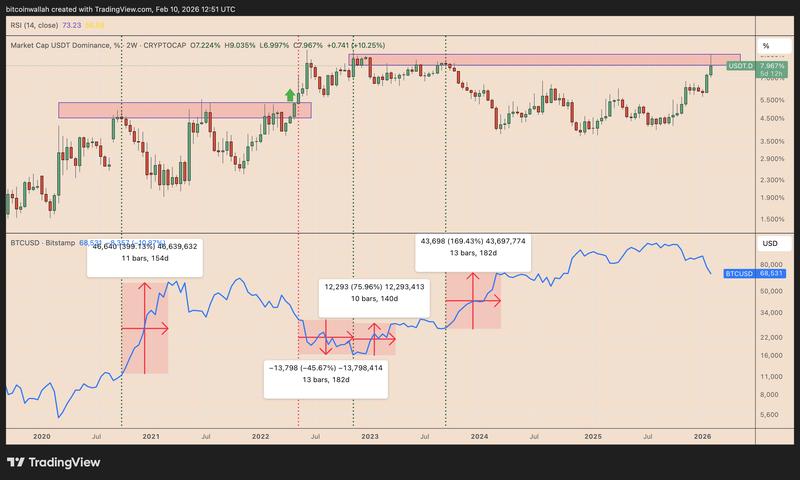
Starting from November 2022, distinct pullbacks from this 8% to 9% zone have coincided with powerful Bitcoin recoveries.
A single rejection preceded a 76% surge spanning 140 days, whereas another came before gains of 169% across 180 days. A comparable pattern emerged between 2020 and 2022, during which the critical resistance level resided around 4.5% to 5.75%.
When USDT dominance broke through that threshold in May 2022, Bitcoin subsequently dropped by 45%, further demonstrating the inverse relationship between these two metrics.
Consequently, Tether dominance needs to decline for a new Bitcoin bull run to commence.
Concerns about quantum computing must be resolved
An additional obstacle Bitcoin must navigate involves the potential quantum computing threat. These concerns center on theories suggesting that advanced quantum computers in the future could compromise Bitcoin's cryptographic security, exposing BTC wallets to vulnerability.
Certain analysts highlight that 25% of Bitcoin addresses face this risk already.
Multiple security-focused authorities characterize this as a challenge that remains considerably distant in the future.
As an example, during November 2025, cryptographer and Blockstream CEO Adam Back stated Bitcoin encounters no substantial quantum threat for "20 to 40 years," further noting the network can achieve "quantum ready" status well in advance of it becoming a genuine concern.
Bitcoin Optech additionally observed that immediate quantum risk would be limited to specific edge cases, including reused addresses, instead of threatening the complete network simultaneously.
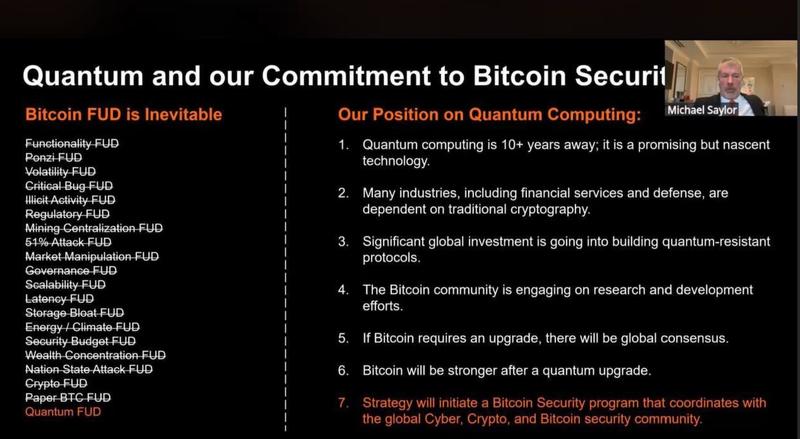
To construct a bullish case in 2026, Bitcoin must see this threat properly addressed so that buyers can restore their confidence.
Taking action on precisely that front, Coinbase and Strategy have introduced initiatives, assembling experts and developing a comprehensive roadmap for Bitcoin security enhancements.
Additional rate reductions by the Federal Reserve
The likelihood of Bitcoin returning to a bull cycle during 2026 increases if the US Federal Reserve implements a minimum of two rate reductions next year, which represents what CME futures pricing currently suggested as of February.
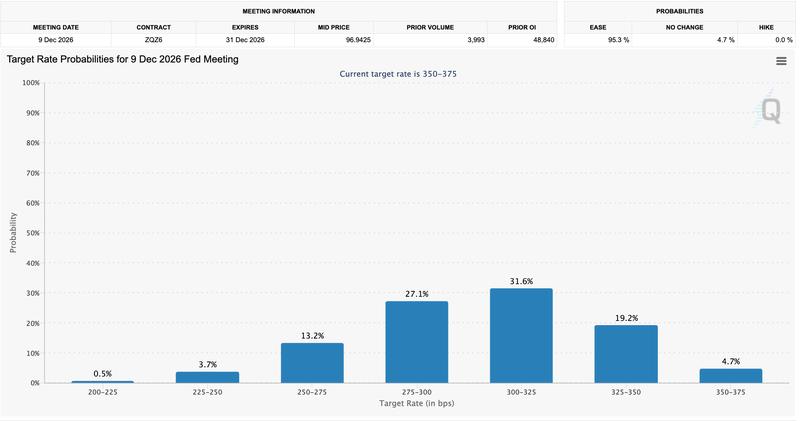
Reduced interest rates typically diminish the attractiveness of yield-generating assets such as U.S. Treasurys, driving investors toward pursuing superior returns in alternative markets. This rotation generally benefits risk assets, which encompasses both equities and cryptocurrencies.
According to Lee Ferridge, strategist at State Street Corp., Donald Trump may pressure the incoming Fed chair for three rate reductions in 2026.
Should three rate cuts materialize this year, Bitcoin's attractiveness among risk-oriented traders may experience further amplification.