
Binance refutes allegations of Iran sanctions violations and compliance team dismissals
The crypto exchange states that a comprehensive internal audit, conducted alongside external legal advisors, revealed no breaches of sanctions regulations, affirming its continued adherence to regulatory requirements under monitorship.
Cryptocurrency exchange platform Binance has strongly contested a recent Fortune publication, dismissing claims that the platform facilitated transactions in violation of sanctions connected to Iran and terminated compliance investigators who flagged these issues.
A Friday report from Fortune alleged that internal compliance investigators at Binance uncovered over $1 billion in fund transfers connected to Iranian entities that passed through the exchange platform during the period spanning March 2024 through August 2025. According to the report, these transactions involved Tether's USDt (USDT) stablecoin operating on the Tron blockchain network.
According to unnamed sources cited in the publication, the report alleged that no fewer than five investigators, multiple individuals having law-enforcement experience, were subsequently terminated following their documentation of this activity. The publication further claimed that additional members of senior compliance personnel left the organization in the preceding months.
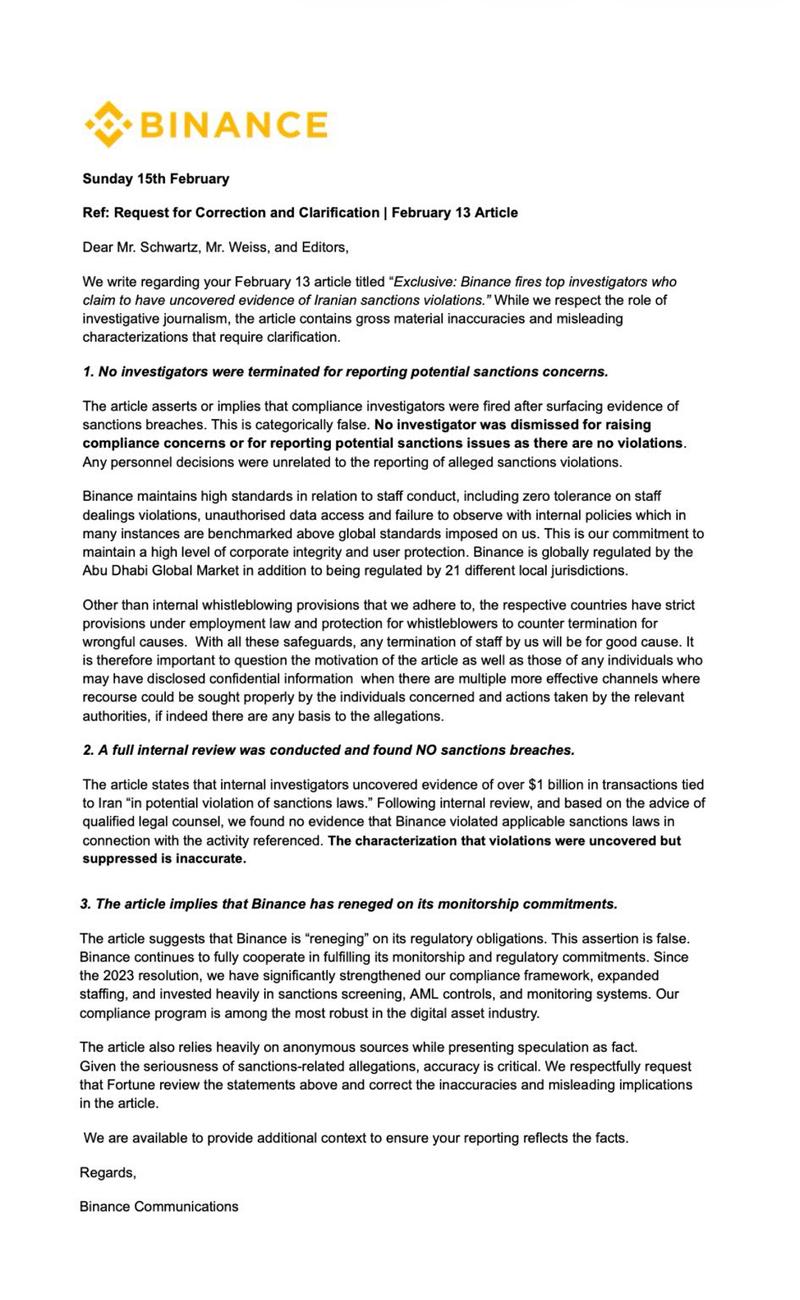
Nevertheless, Binance challenged the portrayal in an official statement. "This is categorically false. No investigator was dismissed for raising compliance concerns or for reporting potential sanctions issues as there are no violations," the platform stated in an email that CEO Richard Teng shared publicly.
Binance denies sanctions violations after internal review
The exchange stated that it performed a comprehensive internal audit with assistance from external legal counsel and discovered no proof that it breached relevant sanctions legislation in relation to the activity in question. The platform also dismissed any implication that it had fallen short of fulfilling its regulatory responsibilities under current oversight arrangements.
This controversy emerges while Binance continues to face elevated regulatory scrutiny following its 2023 resolution with United States authorities, wherein the company consented to pay $4.3 billion for violations related to Anti-Money Laundering (AML) and sanctions compliance. Company founder Changpeng Zhao resigned from his position as CEO and subsequently completed a four-month incarceration period. The platform also accepted monitorship conditions and committed to enhancing its compliance infrastructure.
The exchange further denied assertions that it is not fulfilling regulatory responsibilities, stating that it maintains cooperation with its monitorship arrangement and oversight mandates. "The article suggests that Binance is 'reneging' on its regulatory obligations. This assertion is false," the platform declared.
While Binance acknowledged receiving Cointelegraph's request for additional comment, no response had been provided at the time of publication.
FT report questions Binance compliance controls
An earlier December publication from the Financial Times similarly alleged that Binance permitted a collection of questionable accounts to transfer substantial amounts through the platform even following its US criminal resolution in 2023, which mandated stricter oversight measures. Internal records examined by the newspaper revealed that 13 user accounts handled approximately $1.7 billion in transaction volume starting from 2021, with roughly $144 million occurring subsequent to the plea arrangement.
"We take compliance seriously and reject the framing of the Financial Times report," a representative for Binance informed Cointelegraph during that period, further explaining that all transactions undergo evaluation "based on information available at the time," and emphasizing that none of the referenced wallets were under sanctions when the cited activity took place.