Decibel Unveils Native Stablecoin USDCBL Prior to Mainnet Debut on Aptos
USDCBL, a dollar-pegged token, will function as collateral for perpetual futures contracts on the blockchain, while yield from cash holdings and Treasury assets remains within the protocol ecosystem.

The Decibel Foundation has announced the upcoming introduction of USDCBL, a stablecoin native to its protocol and issued by Bridge, in advance of its Aptos-based decentralized derivatives exchange launching on mainnet in February.
In an announcement provided to Cointelegraph on Thursday, the foundation indicated that this token, denominated in US dollars, will function as collateral for perpetual futures trading conducted onchain, enabling the platform to capture reserve-related economic benefits internally instead of depending on stablecoin issuers from outside the ecosystem.
Developed under the incubation of Aptos Labs, Decibel is preparing to go live this month with a perpetual futures trading venue that operates entirely onchain and utilizes a unified cross-margin account system. The platform reported that its testnet phase in December drew over 650,000 unique accounts while surpassing 1 million daily trades, although these numbers remain unverified by independent sources.
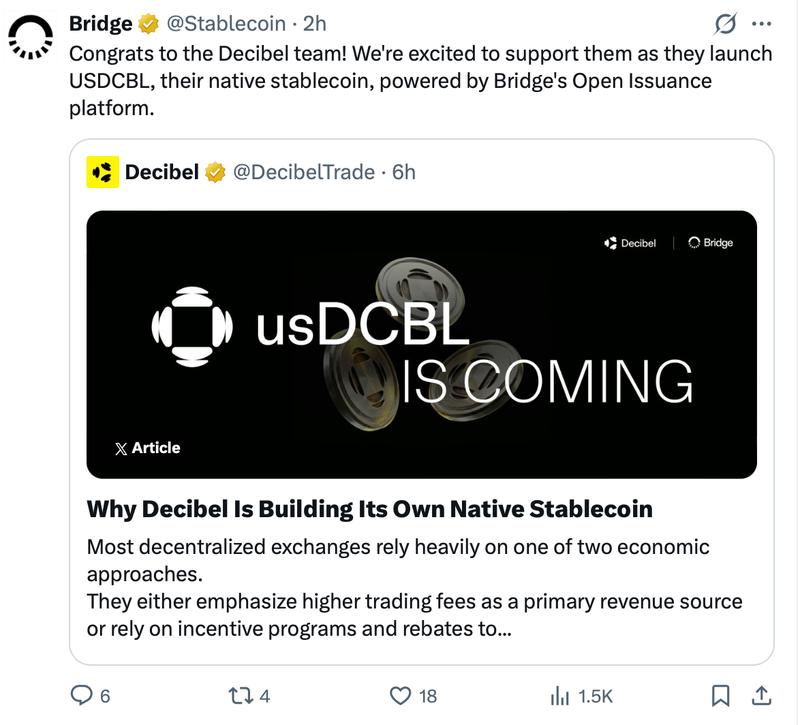
Upon launch, participants will make USDC deposits and then convert those holdings into USDCBL during the onboarding sequence. The issuance of USDCBL will occur via Bridge's Open Issuance platform, a system that permits projects to develop regulated, fully collateralized stablecoins featuring built-in on-ramp and off-ramp capabilities. Stripe completed its acquisition of Bridge in late 2025.
In a Thursday X post from Decibel, the foundation stated that USDCBL backing will consist of a combination of cash holdings and short-term US Treasury securities, with the yield produced by these assets staying within the protocol ecosystem.
The foundation explained that retaining reserve income has the potential to decrease dependence on trading fees or token incentive programs as main revenue streams, enabling resources to be channeled back into protocol development efforts and ecosystem expansion initiatives.
This is not about launching another stablecoin
The foundation stated, characterizing USDCBL as essential exchange infrastructure instead of a retail-focused token operating independently.
Rise of ecosystem-native stablecoins across crypto and banking
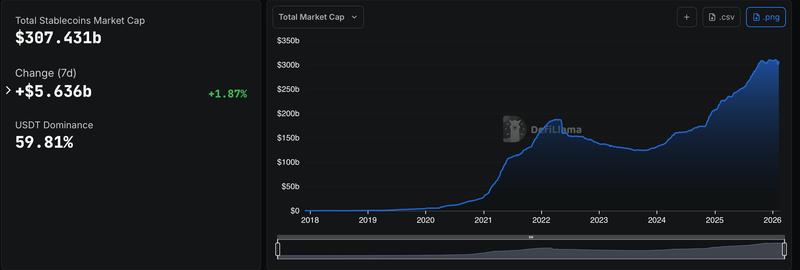
The movement toward ecosystem-specific dollar tokens extends across both cryptocurrency platforms and traditional financial institutions, as operators of various platforms are progressively issuing stablecoins customized for deployment within their proprietary networks instead of depending exclusively on third-party issuers.
Hyperliquid, a decentralized exchange specializing in perpetual futures, presents perhaps the most comparable case to Decibel, having launched USDH, its native stablecoin, in September following an intense competitive process for securing issuance rights.
This dollar-pegged asset is created on HyperEVM, the platform's Ethereum-compatible execution layer, and functions as collateral throughout the exchange while minimizing dependence on issuers operating outside the ecosystem.
This trend reaches beyond platforms originating in the cryptocurrency space. JPMorgan Chase rolled out JPM Coin in November for institutional settlement purposes on its proprietary blockchain infrastructure, representing tokenized deposits denominated in US dollars and maintained at the banking institution.
This deposit token underwent pilot testing on Base, Coinbase's blockchain network, providing institutional clients with around-the-clock blockchain-enabled transfer capabilities. In contrast to stablecoins that circulate publicly, JPM Coin operates on a permissioned basis and remains accessible exclusively to the bank's institutional client base.
Fintech companies have joined this movement as well. In 2023, PayPal introduced PYUSD as a dollar-backed stablecoin integrated natively into its payment infrastructure, providing the company with enhanced control over settlement operations within its proprietary network.
During 2025, the company unveiled a rewards program offering 3.7% annually for US users maintaining PYUSD balances in their PayPal or Venmo wallets, thereby deepening the integration of the stablecoin throughout its consumer payment infrastructure.