Crypto ATM Giant Bitcoin Depot Implements Mandatory Identity Verification for Every Transaction
Amid heightened regulatory scrutiny over fraudulent activities and money laundering issues, Bitcoin Depot announces mandatory identification requirements for every transaction conducted at its cryptocurrency ATM network.

In response to mounting regulatory and legislative pressure to combat illegal operations, Bitcoin Depot has initiated a gradual implementation of mandatory identification verification for all transactions conducted at its cryptocurrency ATM machines.
The company announced on Tuesday that the implementation process commenced in early February throughout its network of ATMs located across the United States, with the primary objective of enabling real-time detection of questionable transactions and preventing exploitation by malicious individuals engaging in activities such as sharing accounts, stealing identities, and hijacking customer accounts.
"Continuous verification allows us to detect suspicious activity based on customers, locations, or transaction amount before a transaction is approved," Bitcoin Depot CEO Scott Buchanan said in a statement.
While Bitcoin Depot had already established identification requirements back in October, those measures only applied to individuals registering as new customers on its platform. According to Buchanan, "by requiring identity verification at every transaction, we are taking an additional step to strengthen security, protect customers, and maintain the integrity of our services."
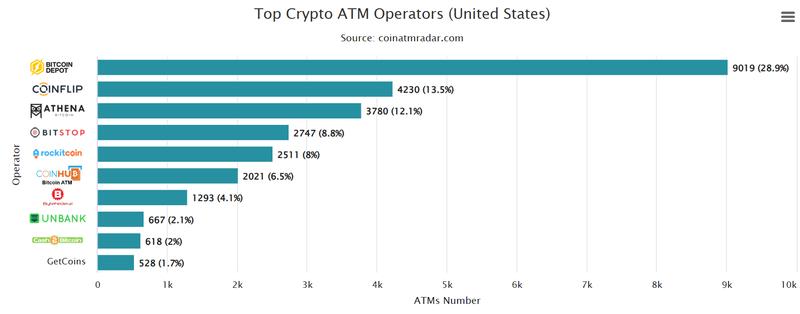
The United States stands as the dominant market for Bitcoin (BTC) ATM installations, with data from Coin ATM Radar indicating 31,360 operational machines, which represents 78% of the global total. Within the US market, Bitcoin Depot maintains its position as the leading operator with a network of 9,019 kiosks.
Bitcoin Depot faces state-level lawsuits
Fraudsters have historically leveraged crypto ATMs as their preferred method for collecting payments from unsuspecting victims, given that these kiosks are readily accessible in numerous locations and their transactions cannot be reversed, prompting regulatory authorities and legislative bodies to increase enforcement actions against cryptocurrency ATM operators.
According to a February report from the advocacy organisation, the American Association of Retired Persons, legislation mandating crypto ATM operators to establish protective measures, including maximum daily transaction amounts, conspicuous fraud alerts, and licensing obligations, has been enacted in 17 US States.
State regulatory agencies have taken enforcement action against Bitcoin Depot, with Massachusetts Attorney General Andrea Campbell filing a lawsuit against the company in early February, claiming Bitcoin Depot has failed to establish adequate safeguards for preventing fraudulent schemes. Campbell is requesting judicial intervention to prohibit Bitcoin Depot from executing high-value transactions without implementing enhanced customer protection measures.
Earlier in January, Maine Attorney General Aaron Frey secured a $1.9 million settlement agreement with Bitcoin Depot designed to compensate victims who suffered financial losses from scams perpetrated through the company's ATM network.
During the previous year, Iowa Attorney General Brenna Bird initiated legal proceedings against both Bitcoin Depot and its competitor Coinflip, contending that these operators neglected to establish sufficient protective measures to prevent fraudulent activities.