Bitcoin's Price Movements Now Follow Liquidity Flows Over Federal Reserve Rate Decisions
Recent Bitcoin price movements correlate more closely with liquidity tensions than Federal Reserve rate reductions. Discover the role of balance sheet operations and monetary flows in influencing cryptocurrency markets.

Essential points
Bitcoin's sensitivity to liquidity now exceeds its response to rate reductions. Though rate cuts previously triggered cryptocurrency rallies, Bitcoin's current price movements mirror genuine cash availability and risk capital within the financial system, rather than merely reflecting borrowing costs.
Liquidity and interest rates represent distinct concepts. Rates indicate the cost of capital, whereas liquidity represents the volume of money in circulation. Bitcoin exhibits stronger reactions when liquidity expands or contracts, regardless of whether rates move in the same direction.
Abundant liquidity environments enable leverage expansion and increased risk-taking, driving Bitcoin prices upward. Conversely, liquidity contractions trigger rapid leverage unwinding, frequently aligning with pronounced sell-offs throughout equities and commodities.
Balance sheet operations and monetary flows carry greater weight than policy announcements. The Federal Reserve's balance sheet strategy, Treasury's cash management practices, and money market mechanisms directly determine liquidity levels and frequently exert more influence on Bitcoin than minor policy rate adjustments.
Throughout recent years, reductions in US Federal Reserve interest rates have served as a crucial macroeconomic indicator for Bitcoin (BTC) market participants. Declining rates traditionally signaled less expensive borrowing, enhanced appetite for risk, and initiated upward movements in cryptocurrency markets. Nevertheless, this traditional relationship between Fed rate reductions and Bitcoin price action has diminished in strength during recent months. Bitcoin currently exhibits greater responsiveness to genuine liquidity levels within the financial ecosystem than to anticipated changes or gradual modifications in borrowing expenses.
This analysis elucidates why expected rate reductions have failed to elevate Bitcoin prices lately. It demonstrates why periods of liquidity restriction have caused coordinated downturns throughout crypto, equities, and even gold and silver markets.
Understanding rates versus liquidity: A crucial distinction
Interest rates signify the price tag attached to money, whereas liquidity indicates the volume and movement of available money within the economic system. Financial markets occasionally conflate these two concepts, yet they can move in opposite directions considerably.
The Fed could reduce rates, yet liquidity might still decrease if reserves drain through other channels. For example, liquidity can contract via quantitative tightening programs or through the US Department of the Treasury's operations. Liquidity can also expand without accompanying rate cuts through alternative inflows or policy modifications.
Bitcoin's price behavior increasingly mirrors this liquidity rhythm more precisely than gradual rate modifications.
Did you know? Bitcoin frequently responds to liquidity fluctuations before conventional markets register the change, giving it a distinction among macro traders as a "canary asset" that indicates tightening conditions in advance of wider equity market downturns.
The diminishing influence of rate cuts on Bitcoin
Multiple elements have reduced the influence of rate reductions:
Extensive advance pricing: Financial markets and futures contracts frequently anticipate cuts far ahead of their implementation, incorporating them into prices long before they materialize. When a cut actually occurs, asset valuations may already incorporate its effects.
Situational factors are crucial: Cuts motivated by economic distress or financial market instability can overlap with risk reduction. Within such conditions, investors typically decrease exposure to volatile holdings even as rates decline.
Cuts do not ensure liquidity: Continued balance sheet reduction, substantial Treasury bond issuance, or reserve depletion can maintain system constraints. Bitcoin, being a volatile instrument, typically responds swiftly to these stresses.
Bitcoin functions as a liquidity-responsive, high-volatility instrument
Bitcoin's purchasers depend on leverage accessibility, available risk capital, and broader market circumstances. Liquidity impacts these elements:
Within conditions of plentiful liquidity, leverage circulates readily, volatility receives greater acceptance, and capital migrates toward higher-risk instruments.
When liquidity faces constraints, leverage positions unwind, liquidations multiply, and risk appetite evaporates throughout markets.
This pattern indicates Bitcoin operates less as a policy rate-driven trade and more as an immediate indicator of liquidity circumstances. When available cash grows scarce, Bitcoin typically declines alongside equities and commodities, independent of the Fed funds rate level.
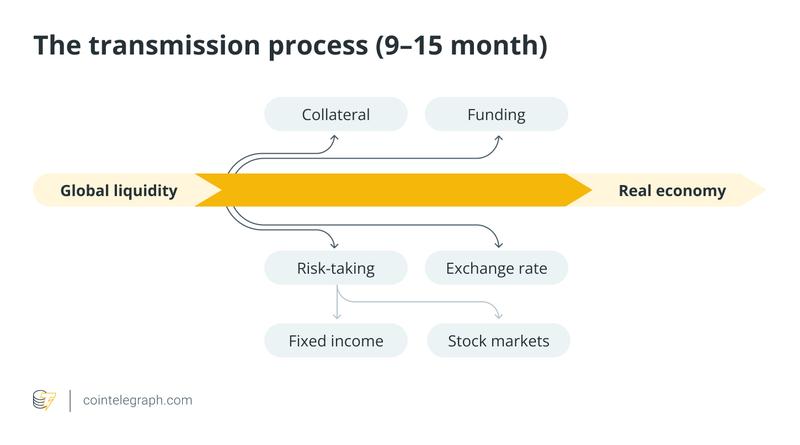
Understanding the mechanisms behind liquidity
To comprehend how Bitcoin responds across different scenarios, examining factors beyond rate decisions and into financial system mechanics proves helpful:
Fed balance sheet: Quantitative tightening (QT) reduces the Fed's asset holdings and withdraws reserves from banking institutions. Though markets can absorb initial QT phases, it ultimately limits risk-taking. Indications about possible balance sheet growth can sometimes impact markets more significantly than modest changes in policy rates.
Treasury cash management: The US Treasury's cash reserves function as a liquidity control mechanism. When the Treasury increases its cash reserves, funds exit the banking system. When it reduces the balance, liquidity enters circulation.
Money market tools: Instruments like the overnight reverse repo (ON RRP) either absorb or inject cash. Diminishing cushions render markets more sensitive to minor liquidity movements, and Bitcoin captures those fluctuations swiftly.
Did you know? Several of Bitcoin's most dramatic intraday price swings have happened on dates without any Fed statements but aligned with substantial Treasury operations that quietly extracted cash from the banking infrastructure.
The macroeconomic nature of recent sell-offs
Recently, Bitcoin price declines have corresponded with drops in equity indices and precious metals, indicating widespread liquidity pressure rather than cryptocurrency-specific problems. This cross-market alignment emphasizes Bitcoin's incorporation into the worldwide liquidity structure.
Fed leadership and policy intricacies: Changes in anticipated Fed leadership, especially perspectives on balance sheet strategy, introduce additional layers of complexity. Doubt regarding aggressive expansion indicates tighter liquidity conditions approaching, which impacts Bitcoin valuations more severely than minor rate adjustments.
Liquidity surprises deliver greater impact: Liquidity movements are less foreseeable and transparent, and markets demonstrate less proficiency at predicting them. They rapidly influence leverage and market positioning. Rate modifications, conversely, receive extensive discussion and modeling. Unanticipated liquidity withdrawals can surprise traders, with Bitcoin's volatility amplifying the consequences.
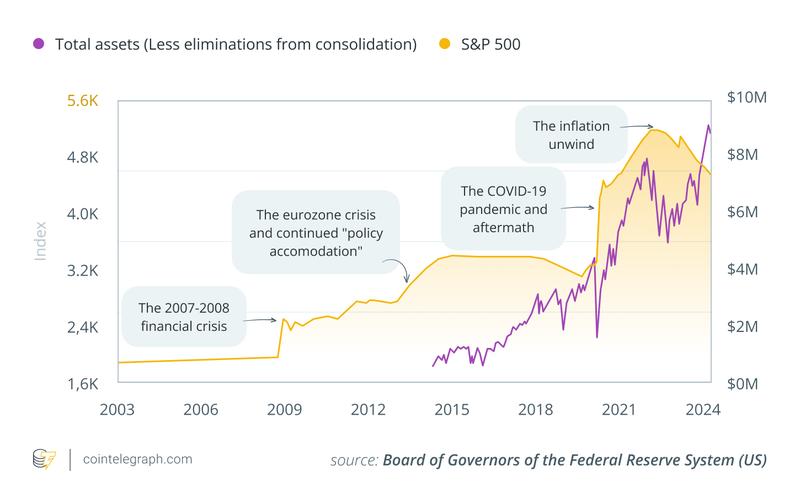
Understanding Bitcoin's macroeconomic responsiveness
Across extended timeframes, interest rates influence valuations, discount rates, and opportunity costs. Within the present regime, nevertheless, liquidity establishes the immediate-term parameters for risk appetite. Bitcoin's reactions become more pronounced when liquidity undergoes changes.
Critical elements to track include:
Central bank balance sheet indicators
Treasury monetary flows and Treasury General Account (TGA) positions
Tension or relief indicators in money markets.
Rate cut storylines can influence market sentiment, but persistent purchasing activity depends on whether liquidity conditions facilitate risk-taking.
The fundamental transformation
Bitcoin was historically perceived as protection against monetary debasement. Presently, it is progressively recognized as an immediate gauge of financial system conditions. When liquidity grows, Bitcoin gains advantages; when liquidity contracts, Bitcoin typically experiences the impact early.
Throughout recent periods, Bitcoin has demonstrated greater responsiveness to liquidity circumstances than to rate cut announcements. Within the current stage of the Bitcoin market cycle, numerous analysts are concentrating less on rate trajectory and more on whether system liquidity proves adequate to sustain risk-taking.