Local Communities Push Back Against AI Data Centers Like They Did With Crypto Mining
Growing community resistance to AI data center development mirrors the opposition that previously hindered Bitcoin mining operations, with concerns centered on energy consumption, infrastructure strain and financial burden.

The similarities between these situations are growing harder to overlook. Bitcoin mining operations frequently made pledges about creating employment opportunities and strengthening municipal revenue streams, yet these promised advantages didn't consistently come to fruition, driving resistance across multiple jurisdictions.
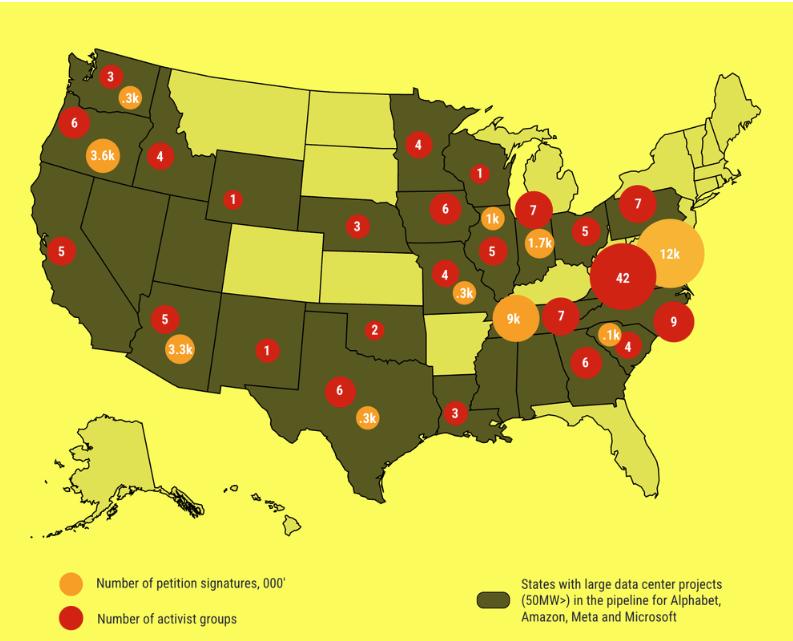
Similar concerns are now being raised about AI data centers, especially across states like Texas, Georgia, Illinois and Mississippi, where community members and municipal authorities are raising questions about the lasting financial implications of accommodating power-hungry technological infrastructure.
Across the country, local governments and residents are no longer waiting passively for assurances that AI infrastructure will be different.
Miner Mag
As a reaction, certain municipalities are implementing temporary moratoriums on new AI data center construction while authorities examine zoning regulations, emergency power generation strategies and the pressure being placed on municipal infrastructure systems.
Industry data cited by Miner Mag shows that about $64 billion in US data center projects have already been delayed or blocked due to local opposition.
Microsoft and OpenAI chart new paths
In light of mounting community resistance, corporations like Microsoft and OpenAI are implementing more community-focused infrastructure approaches to tackle the escalating expenses of electricity generation and electrical grid enhancements linked to their data center initiatives.
OpenAI has said it will "pay its own way" for energy costs associated with its expanding AI footprint, signaling a shift toward greater cost accountability as communities and regulators scrutinize AI-driven electricity demand.
As Miner Mag noted, the approach sounds familiar to the Bitcoin mining industry. Mining companies that faced local pushback were often forced to renegotiate power contracts and invest in mitigation measures to demonstrate clearer community benefits tied to their operations.
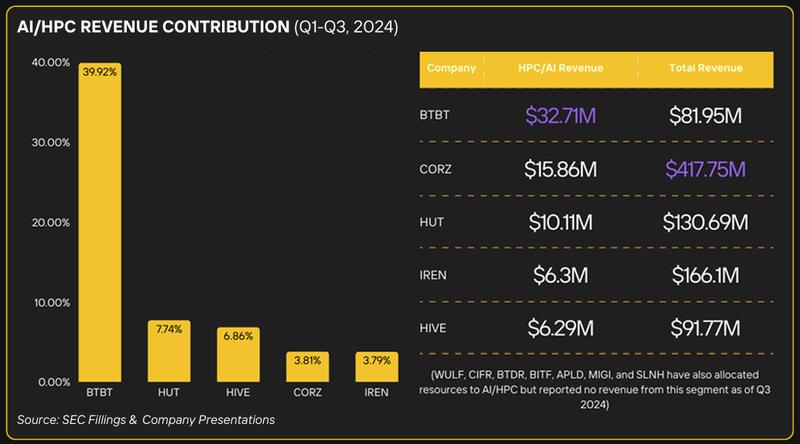
At the same time, Bitcoin miners have been moving toward AI and high-performance computing workloads for several years. Companies such as Hut 8, MARA Holdings, Riot Platforms, TeraWulf and HIVE Digital Technologies have pursued this shift amid intensifying competition in the mining sector and tighter margins following the 2024 Bitcoin halving.