Bitcoin mining company stocks surge as winter storm causes network hashrate plunge
Extreme winter conditions forced numerous Bitcoin mining operations offline, causing network hashrate to decline dramatically and increasing profits for miners that maintained operations.

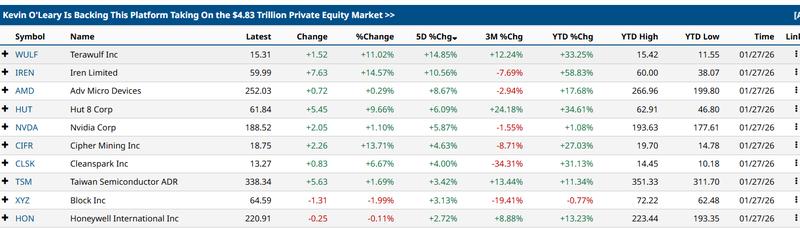
Shares of Bitcoin mining companies experienced substantial gains on Wednesday following a severe US winter storm that compelled numerous operators to shut down their facilities, resulting in reduced competition for mining blocks and enhanced profitability for continuing operations.
Multiple major mining firms recorded impressive double-digit percentage increases throughout the previous 24-hour period. According to Barchart data, TeraWulf's shares climbed approximately 11%, while Iren Limited experienced gains of roughly 14%, and Cipher Mining saw increases of around 13%.
This stock market surge came several days following the Bitcoin network's hashrate plummeting to its lowest point in seven months, reaching 663 exahashes per second (EH/s) on Sunday, representing a dramatic 40% decline over just two days as a result of severe winter storm conditions sweeping across the United States.
By Wednesday, the hashrate had rebounded to 814 EH/s, though it remained significantly below the 1.1 zettahash per second (ZH/s) threshold recorded prior to the weekend drop, according to data provided by Coinwarz.
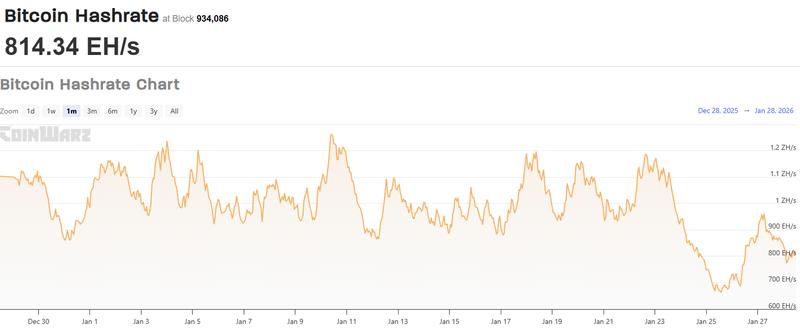
When the hashrate decreases, it indicates that a smaller number of miners are actively operating on the network, which decreases the level of competition for successfully mining blocks on the Bitcoin blockchain, thereby increasing the profitability of Bitcoin (BTC) mining activities for those miners who maintain their operations.
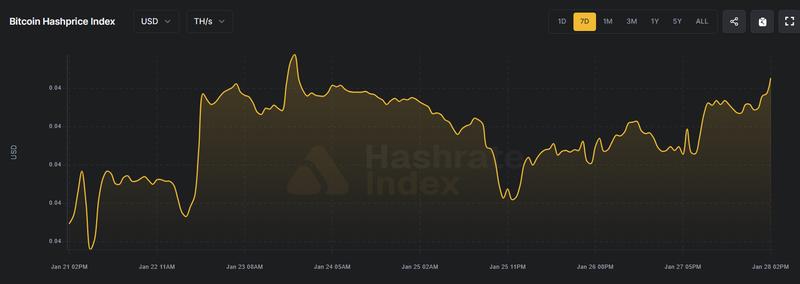
The Bitcoin hash price index, which serves as a key benchmark for evaluating miner profitability by calculating the revenue generated per terahash of computing power, similarly indicated more favorable mining conditions during this period.
According to data from the HashrateIndex, the Bitcoin hashprice index increased to $0.040 per terahash per day on Wednesday, representing an uptick from the previous level of $0.038 TH/s per day.
Bitcoin miners wind down operations amid US winter storm
These profitability improvements underscore how larger, well-funded mining companies with substantial capital reserves can capitalize on temporary disruptions to the network, whereas smaller operations or those with less efficient infrastructure may find themselves forced to cease operations entirely.
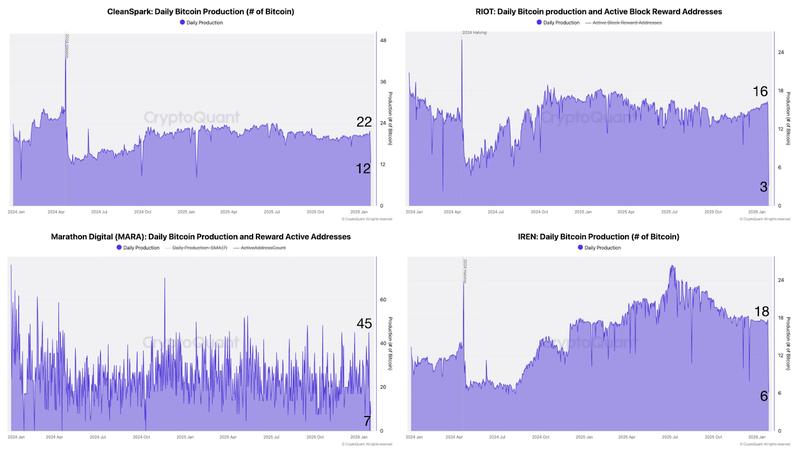
According to Julio Moreno, who serves as the head of research at data analytics platform CryptoQuant, the severe US winter storm conditions compelled several Bitcoin mining companies to scale back their operations significantly in order to provide support to the electrical power grid.
In a Monday post on X, Moreno detailed that CleanSpark experienced a reduction in daily Bitcoin production from 22 BTC down to 12 BTC, Riot Platforms saw their output decrease from 16 BTC to merely 3 BTC, Marathon Digital Holdings witnessed a substantial decline from 45 BTC down to just 7 BTC, and Iren's daily mining production dropped from 18 BTC to 6 BTC.
At the same time, Bitcoin mining ecosystem company Braiins noted that the extreme winter weather conditions affecting the United States "punished weak mining operations," representing an additional contributing factor to the dramatic decrease in the global hash rate.
In a Tuesday post on X, Braiins emphasized that "Winter punishes poor preparation and rushed decisions," while cautioning miners that the majority of equipment damage typically occurs when mining hardware is powered back on in subfreezing temperatures, or when mining facilities are lacking adequate airflow management and proper temperature regulation systems.