Alabama Joins Wyoming as Second US State to Provide Legal Recognition for DAOs Through DUNA Framework
According to a16z's Miles Jennings, the new law "embraces innovation, protects participants, and empowers internet-native communities to compete with big tech incumbents."
Alabama has now become the second jurisdiction within the United States, following Wyoming's pioneering move, to provide decentralized autonomous organizations (DAOs) with official legal recognition through the DUNA Act framework.
Known as the Decentralized Unincorporated Nonprofit Association (DUNA) Act (Senate Bill 277), the legislation was first presented in February by Republican Senator Lance Bell. After passing the House with a vote of 82-7 and 16 abstentions on March 17, Alabama Governor Kay Ivey has officially signed the bill into law, as confirmed by a16z Crypto.
Commenting on the successful passage of this legislation, Miles Jennings, who serves as a16z Crypto's head of policy and general counsel, stated on Wednesday that "Decentralized governance is essential to crypto's future—it's one of the core constructs in market structure legislation."
This legislation addresses a critical question that has remained unanswered within the cryptocurrency space for an extended period: the legal standing of DAOs in the physical world. The bill establishes legal status and offers limited liability protections to these organizations.
According to Jennings, the legislation provides decentralized communities with "the certainty to build, govern, contract, and scale in the real world."
Full legal entity status for DAOs
For a DAO to meet the qualifications under this framework, it must consist of no fewer than 100 members who have come together for a shared nonprofit objective, which could include managing a blockchain network or overseeing a smart contract system.
The governance structure can function completely through blockchain technology and smart contracts, with all voting procedures, proposals and consensus mechanisms being recorded onchain.
Under this new framework, these organizations receive complete legal entity status, granting them the ability to own property, initiate or defend lawsuits, and establish contractual agreements, all while protecting individual members and administrators from personal liability exposure.
Jennings further emphasized that "As federal crypto market structure legislation moves closer to becoming law, builders need effective domestic legal structures."
West Virginia DUNA Act awaits approval
In West Virginia, a comparable DUNA bill (HB 5060), which was introduced by Representative Tristan Leavitt in February, successfully passed through the House on March 4 and is currently pending the governor's signature for final approval.
The state of Wyoming established its DUNA Act into law when Governor Mark Gordon signed it in March 2024. Notably, Wyoming had already approved the nation's first legally recognized DAO in the United States back in July 2021.
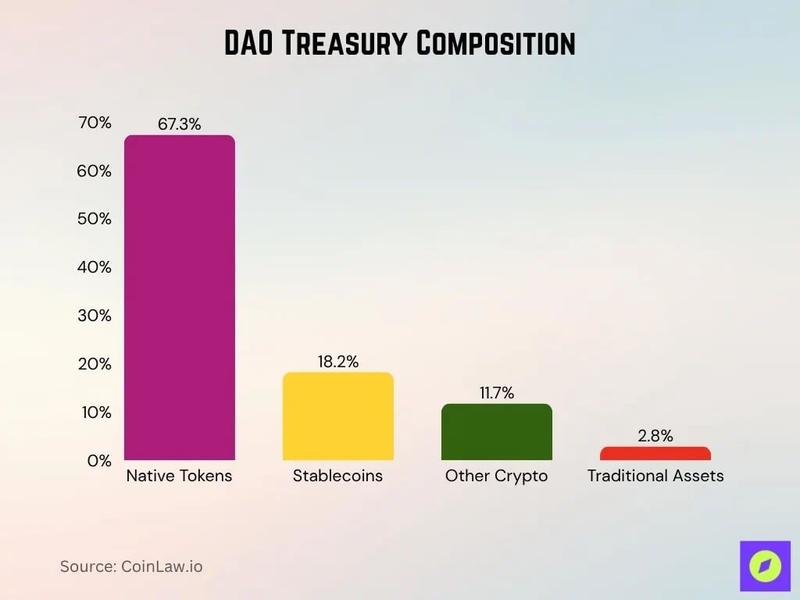
Global DAO statistics reveal that more than 13,000 DAOs are operating worldwide, with collective treasury assets under DAO management exceeding $24.5 billion as of 2025, based on data from CoinLaw. The typical DAO treasury contains approximately $1.2 million, while Ethereum along with its layer-2 networks serve as the home for more than 85% of all DAOs, as PatentPC reported in March.